

- CLIENT:
- SkinApe
- INDUSTRY:
- Entertainment / GameTech
Moving from mobile to web without losing users or business logic
Project summary
LIVE PROJECT- CLIENT
- SkinApe
- INDUSTRY
- Entertainment / GameTech
- PRODUCTS
- Website, Mobile App
- TEAM
- Front-end Developer
- Tester
Results
Access from any browser
no installation and no app store in the middle
User accounts carried over
the same accounts, coins and progress on mobile and web
Backend left untouched
fully compatible with the existing Firebase setup
An architecture ready to grow
reusable components and modular landing pages
CHALLENGE
The plan was to deliver a web application that is:
- responsive and replicates the key features of the mobile version,
- fully integrated with the existing Firebase backend,
- optimized for desktop and mobile devices,
- free from Google Play and App Store distribution restrictions,
The biggest challenge was moving the entire mobile product to the web without losing consistency and while keeping the integration with the existing backend.
SOLUTION
The application was designed as a single-page application (SPA) built on:
- Frontend: Next.js (SPA + SSR for a fast start and SEO), React, Tailwind CSS (mobile-first).
- Backend: the existing Firebase setup (no changes to the backend core), ensuring full compatibility with the mobile app.
- Firebase Authentication: Google, Facebook, Apple, Email (Magic Link) and anonymous sign-in.
- External systems
- Ghost CMS (the existing blog) - the source of blog articles, categories, tags and featured content.
- Zendesk - customer support (Get Help).
- Offerwall partners and task providers.
KEY FEATURES
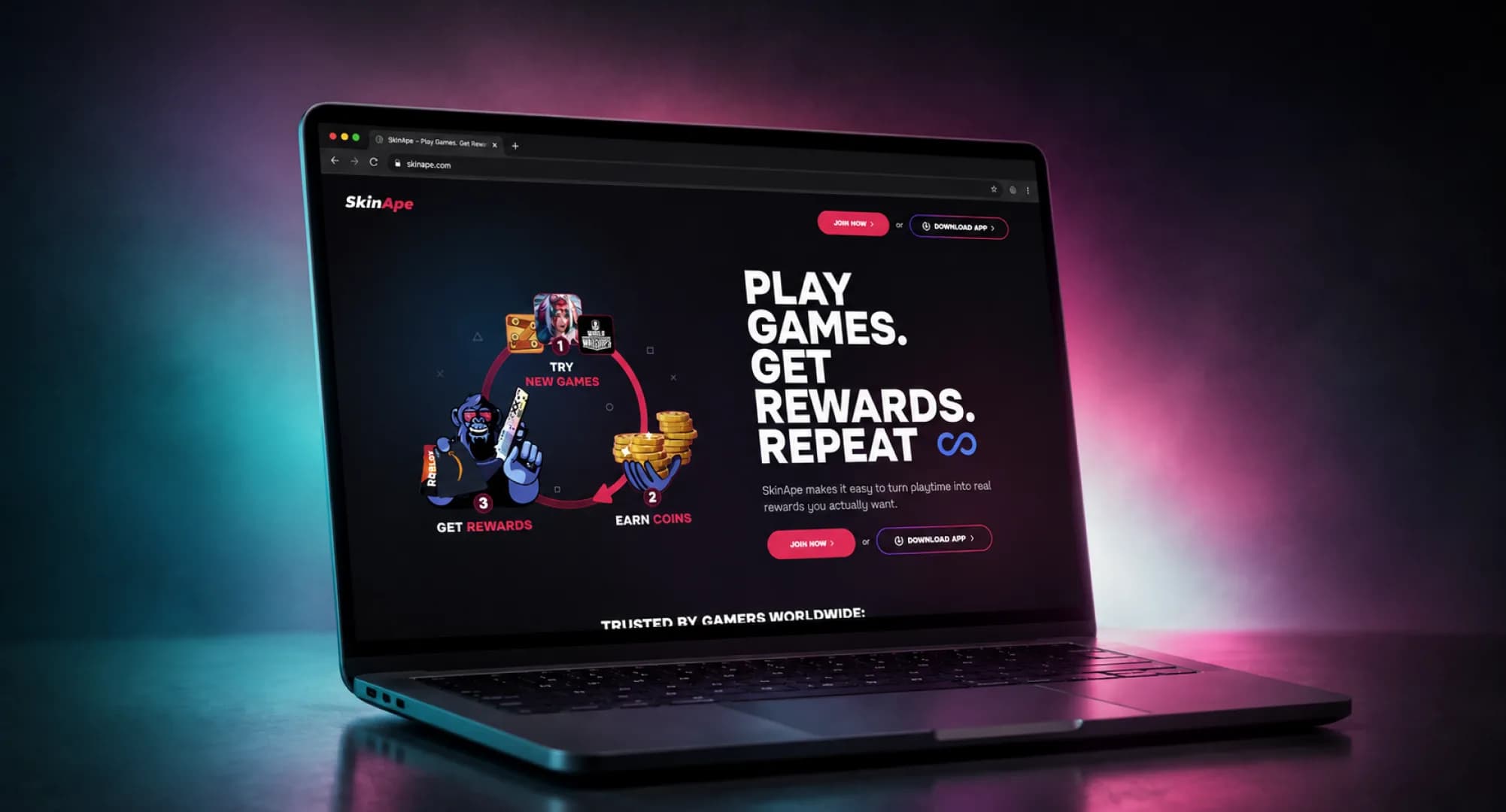
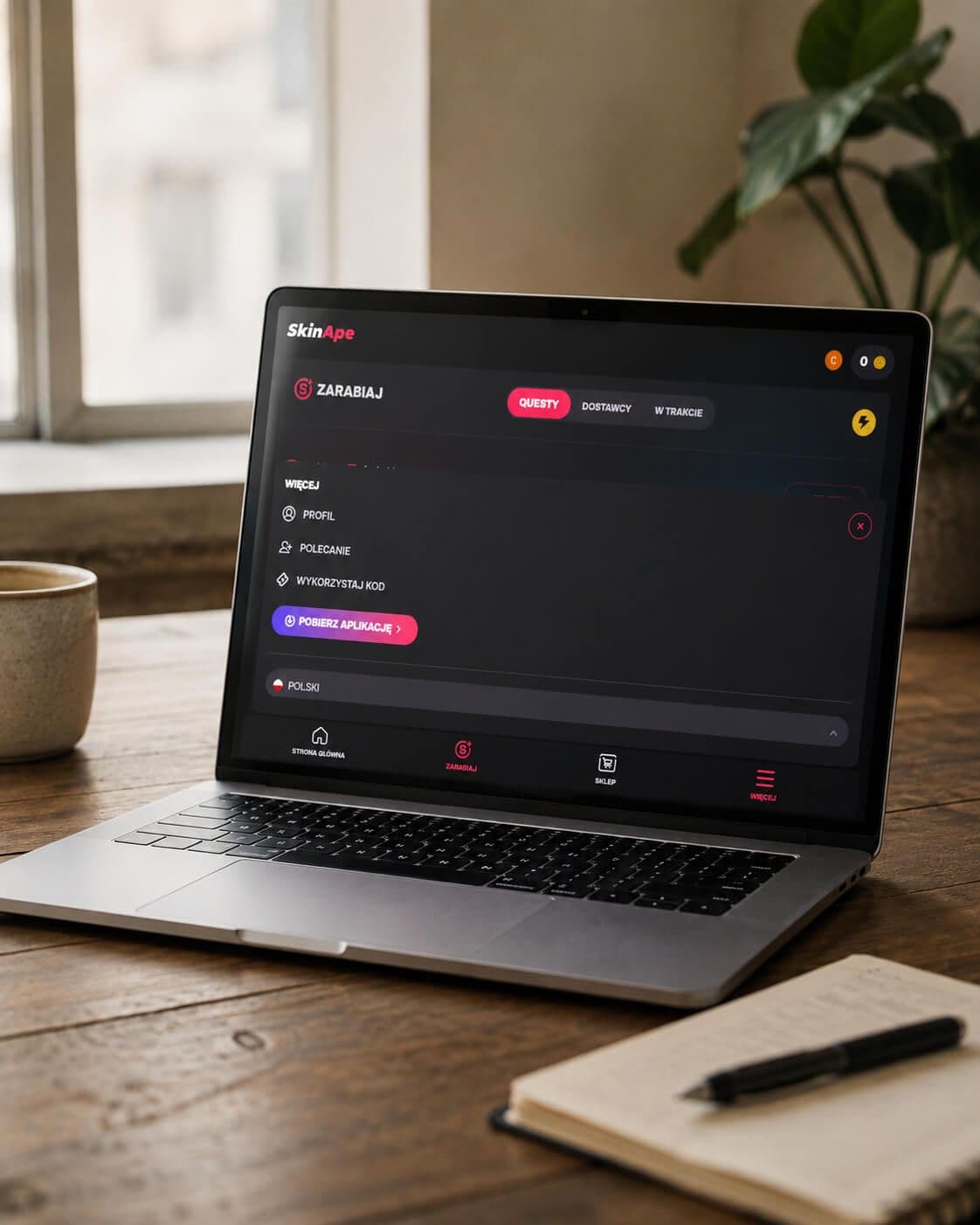
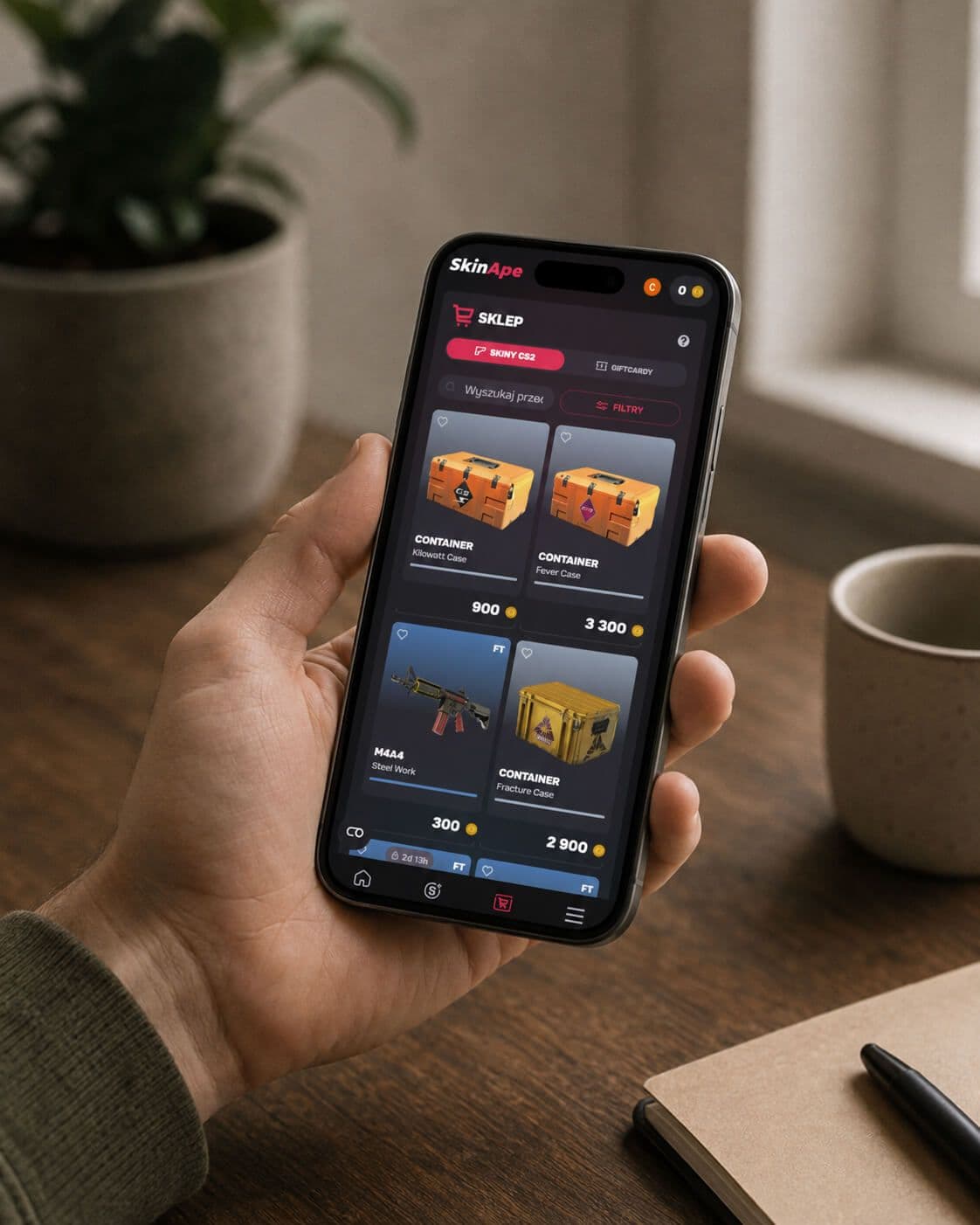
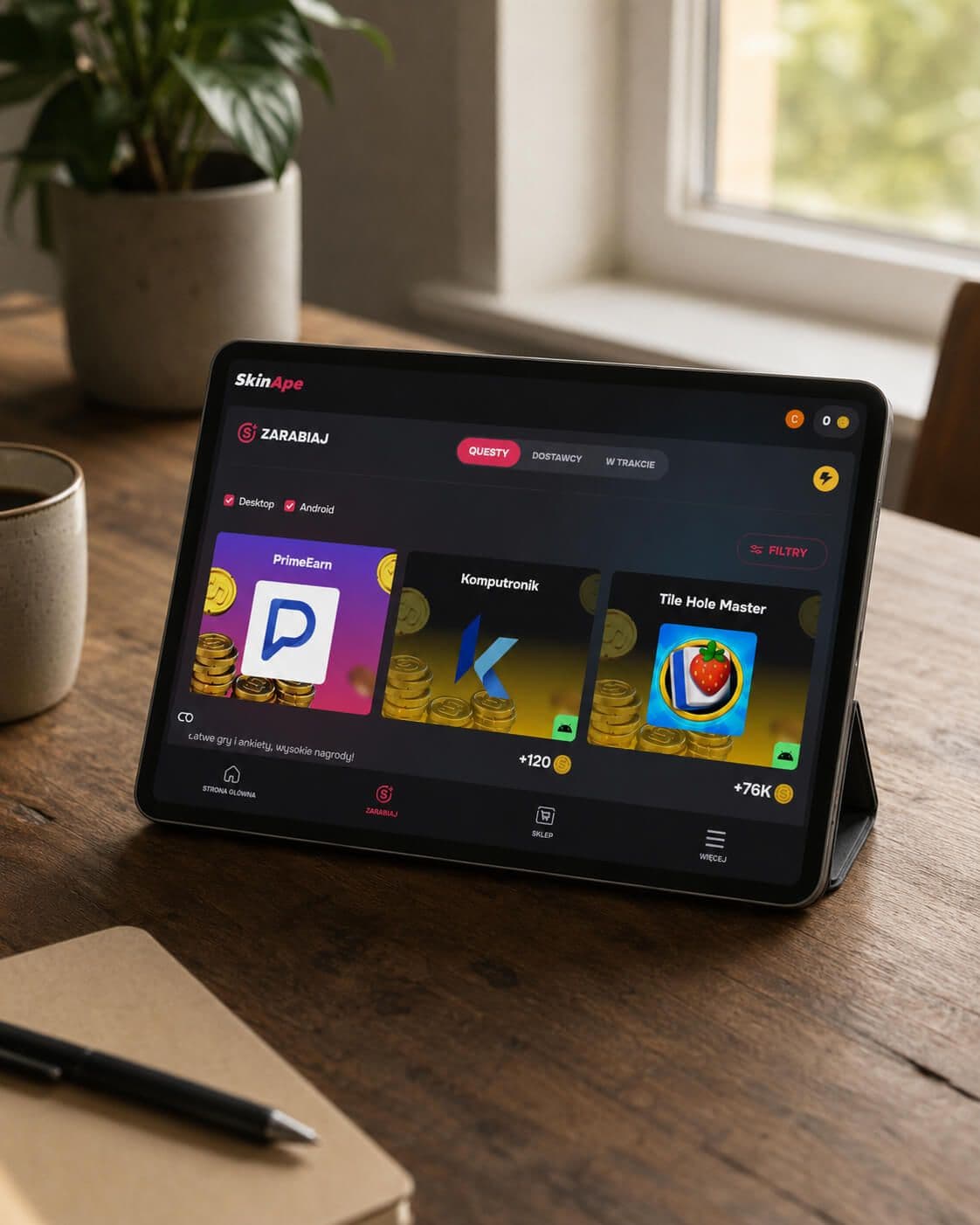
For SkinApe, we designed and built a coherent ecosystem of the product's key elements: scalable landing pages based on reusable components (with a strong hero, clear CTAs, trust-building sections, a quick path to downloading the app and a clear description of the user journey), and an app with simplified onboarding and multiple sign-in methods. Inside the product, we built a central screen that drives messaging and offers, an “Earn” module where users collect coins through tasks and partners with visible progress, a store for exchanging coins for rewards (with search, filters, dynamic availability and support for regional context), promo and referral code handling, and a referral system with sharing and statistics.
It all comes together with a user profile that includes integrations for payouts and social channels, activity history and statuses, plus a blog powered by Ghost CMS - all designed to increase conversion, keep the UX consistent and allow further growth without rebuilding the foundations.
RESULTS
- The platform is open to new users - no need to install a mobile app, with access straight from the browser.
- A modern, modular architecture based on Next.js and Tailwind that makes development and iteration easier.
- Full compatibility with the existing Firebase backend - no need to rewrite server-side logic.
- A responsive, consistent platform - users can switch smoothly between mobile and web while keeping their account and progress.
- Educational onboarding and the blog help users understand the product better and increase engagement.
- Optimized interfaces and popups lead to higher conversion.
SUMMARY
SkinApe Web is a complete migration of the product from Unity to the browser, built with Next.js and integrated with the Firebase ecosystem (Auth, Realtime Database, Functions, Remote Config). The project brings the mobile app's key features to the web while keeping the UX and business logic consistent: from sign-in and onboarding, through earning coins and redeeming rewards, to the user profile, the referral system and integrated Zendesk support.
The result is a modern, responsive web platform that makes the product more accessible and easier to develop, while getting around app store distribution restrictions.
Technologies used
- Frontend
Next.js in an SPA + SSR model for a fast start and SEO, Tailwind CSS with a mobile-first approach.
- Backend
The existing backend with no changes to its core, ensuring full compatibility with the mobile app.
- External systems
The existing blog as the source of articles, categories, tags and featured content.