




























Visibility in Google and in AI answers
SEO / GEO
We help increase website visibility in Google and in AI-generated answers. We combine technical SEO, content optimization and work on the site structure. We start with an audit and turn the most important recommendations into concrete changes in the code.
Companies that trusted us
The basics
What SEO delivers, what GEO delivers, and when neither is the right tool
Search engine optimization is about making a website answer the questions people type into a search engine better than the competition — and making sure the search engine can recognize that. For a few years now, the same questions have also been going to a second audience: language models that answer in their own words and cite their sources. Optimizing for them is called generative engine optimization, or GEO for short.In practice, we don't treat them as two separate worlds. In both cases, the foundation is a technically sound website, a logical information structure and valuable content that answers users' real questions. We don't create content for robots. We organize the website so that its content is easy to find, understand and use — for users, search engines and AI systems alike.SEO and GEO, however, aren't tools for an instant boost in sales. They're long-term efforts, and their results depend on things like the domain's condition, the competition and how much needs to change on the website.
See the SEO projects we delivered for clients
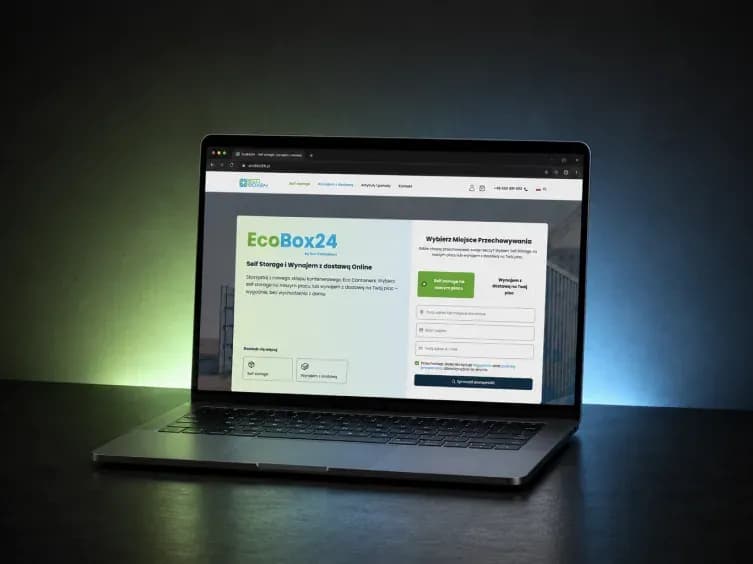
Renting storage in minutes instead of days – automated contracts and payments
Client: Balticon S.A.
Industry: Logistics / LogTech

Migrating from WordPress to Strapi headless CMS – a 60% faster website
Client: SRDK Studio
Industry: Construction / ConTech
„The site has been introduced, works well and fast. A big plus is that we position well in the browser. The Boring Owl team works professionally and is very committed to the project. They are also flexible and have great knowledge in their field.”
Michał Rugiełło — E-Commerce Director, Kwant Hurtownie Elektryczne
Review from Clutch
How we work
From audit to implementation — what we do and what stays with you
We start with a technical audit. We check indexing, URL structure, redirects, performance, structured data and whether the most important content is properly accessible to search engines. Based on that, we set priorities. First we fix the technical issues that limit visibility, then we develop the structure and content that answer users' real search queries.
On your side, we need access to Search Console and analytics, approval to make changes to the website, and someone who can sign off on content from a subject-matter perspective. The biggest brake is often not the budget, but the lack of someone who can check a text from an industry point of view.
How quickly results come depends on the domain's age and history, how competitive the keywords are and how many technical fixes are needed before content starts to work. The first changes in indexing show up quickly; ranking changes for commercial keywords are a matter of months.
Decisions
Four decisions that determine how effective your SEO budget is
Technical first, then content. If the search engine has trouble indexing the website, adding more articles won't solve the problem. We remove the technical barriers first.
How much content and how broad. A hundred thin texts targeting single keywords lose today to a dozen or so that actually answer the question. Choosing between breadth and depth is a real trade-off, and it depends on whether you're competing with industry portals or with companies like yours.
Migration and visibility. Switching domains or rebuilding the website is the moment of greatest risk. 1:1 URL mapping and redirects need to be planned before launch, not after traffic drops.
What not to do. Don't buy links — it's a risk you can't reverse quickly. Don't change URLs without a reason. Don't delete old content that brings in traffic just because it's old; check the data before you delete. And don't judge SEO by your ranking for a single keyword — what counts is traffic, and whether it's coming for the right things.
Scope
We start SEO in the code, not with a list of recommendations
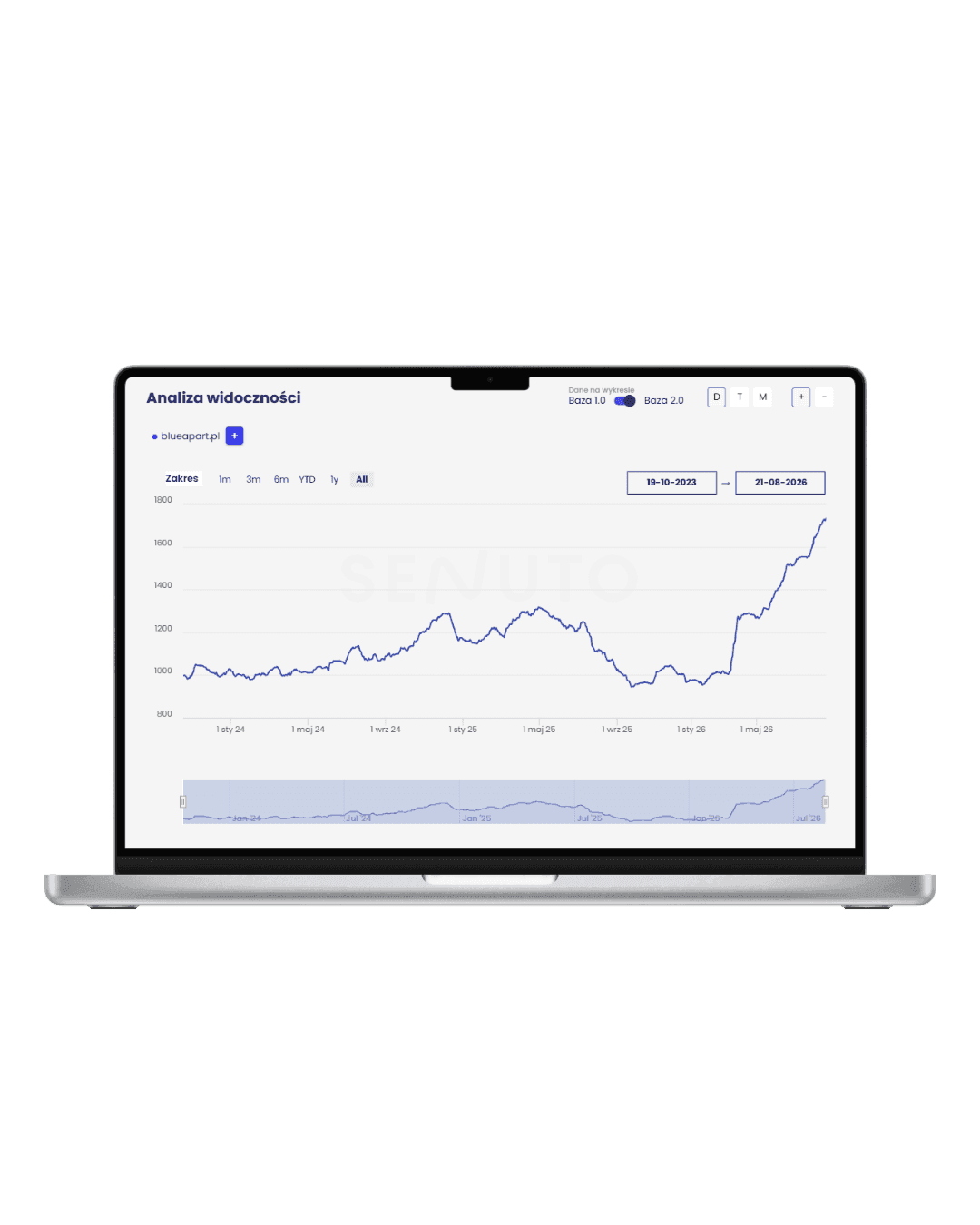
We start SEO with the layer we know best — the code: loading speed, structured data, sitemaps and redirects during migrations. We implement the recommendations ourselves, because we usually build the website too. For the apartment operator BlueApart, work on visibility delivered double-digit growth in organic traffic, and we wrapped up SRDK Studio's migration from WordPress to the Strapi headless CMS with a website that's 60% faster.
Technologies we work with
- Technical foundation
Technical SEO starts in the code: Next.js renders pages on the server, and Strapi keeps metadata, canonical URLs and structured data in one place.
Technical SEO
Core Web Vitals, structured data and indexing
We measure performance the way Google does: LCP, CLS and INP on mobile devices, not in a lab on a fast connection. On our own website, we brought LCP down from over 4 seconds to just over 2 — using the same techniques we implement for clients: a static first render, image optimization and cutting back on JavaScript.
We maintain structured data (Organization, FAQ, BreadcrumbList, Service) in the code and validate it automatically. We also tidy up sitemaps, redirects, canonical URLs, HTTP status codes and indexing rules, because the best content won't help if the crawler gets a 404 or a redirect chain.
Migrations without losing traffic
SEO migrations without losing control of your traffic
Most visibility is lost during migrations, so we run them by the numbers: a complete 301 redirect map checked row by row, verification of every target, traffic measurement before and after, and a contingency plan with a tested rollback. We've been through this process on our own website, with thousands of pages, and on client migrations, including for SRDK Studio.
After the migration, we monitor indexing, 404 errors, redirects and the visibility of the most important page groups in Search Console. This way, potential problems can be caught quickly instead of reacting only after a bigger drop in traffic.

Visibility in AI
Ranking in ChatGPT and brand visibility in AI answers
More and more often, the first answer a user sees isn't a list of links but text generated by a model: in Google's AI Overviews, in ChatGPT, in Perplexity. For informational queries, the summary block and the "People also ask" section take up space that used to belong to classic search results.
What this means for your website. Models quote passages that stand on their own: they answer the question in the first sentence, offer substance instead of build-up and still make sense when taken out of context. Structured data, a clear heading hierarchy and Q&A sections written as answers rather than as introductions to answers all help. What gets in the way is exactly what gets in the way of SEO: a wall of text without structure, content written for a keyword instead of a question, and a page the crawler can't fetch.
What we do: we tidy up the technical layer and structured data, rewrite key content so it can be quoted, build question sections based on real queries from our tools rather than guesswork, and check whether your brand appears in answers to questions in your category.
Real Estate / PropTech
For developers, real estate agencies, rental operators and PropTech companies, we build systems that bring order to sales, rentals and property data.
Real Estate / PropTech ↗
PRODUCTS
Tell us what you want to build — we'll take care of the rest

We build booking systems that take a booking, collect payment and handle cancellations without human involvement — for accommodation providers, equipment and space rental, and appointment-based services. We connect bookings with payments, availability calendars, a channel manager and service automation, so customers can check availability, book and pay without contacting staff.

We design product catalogs that help customers quickly find the right product, variant or parameter. From simple catalogs managed by the client's team to large databases with tens of thousands of records and ERP or PIM integration.

We design and build websites that help companies present their offer, win customers and grow their visibility in Google. We combine UX/UI, a fast front end and an easy-to-use CMS, choosing the technology based on how the site will be developed later on. We build both new company websites and redesigns of existing ones. We work with Next.js, Strapi and Webflow, among others.

We design and build online stores. We connect sales with ERP, WMS, payments and logistics so the store runs smoothly even with a large product catalog, multiple markets and a growing number of orders.
FAQ
Questions we hear before we start working together
GEO — generative engine optimization — is the optimization of content for answers generated by language models: Google AI Overviews, ChatGPT, Perplexity. SEO fights for position in a list of results; GEO fights to be cited in an answer. The foundation is shared: the site needs to be crawlable, have a clear structure and content that directly answers the question — the difference is that a model cites passages, so standalone, concrete paragraphs matter.
- Not in the same way as in classic Google results. In ChatGPT there's no single, fixed position assigned to a specific query. You can, however, increase the chance of a brand or page appearing as a source by keeping the site accessible, authoritative and publishing high-quality information.
- We check indexing, site structure, performance, redirects, metadata, structured data and the most important content. In the AI area we also analyse the site's accessibility to the relevant crawlers and brand visibility for relevant queries.
- Technical fixes can be verified relatively quickly, but growth in organic visibility usually takes time. The pace depends on the domain's health, competition, the scope of changes and how often new or updated content is published.
- Not always. Many issues can be resolved on the existing site. We recommend a rebuild only when the technology or architecture genuinely limits further optimization and fixing it is more cost-effective than continued workarounds.
- We can write it, your team can write it, or — most often — a mixed approach: we prepare the structure, questions and brief, an expert on your side fills in the subject-matter content, we edit and implement. One thing is essential in every scenario: someone who can confirm the content is accurate for your industry. Without that, the texts come out correct and empty.
- No. Nobody can guarantee that, because search engines decide on rankings, not agencies. We're responsible for what's on our side: the technical health of the site, content quality and consistency of the work.
- It depends on how many of your customers start with a question rather than a brand name. In advisory and B2B categories, generative answers are already capturing that first touch — even if it barely shows up in traffic stats. The good news is that most of the work for GEO is the same work as for SEO — usually only rewriting key pieces of content and setting up measurement requires a separate effort.

Let's build digital products for your company together
Other services

Web Development
We design and build custom web applications - from an MVP that lets you quickly validate an idea to large platforms and systems developed over years. We build both the front end and the backend, APIs, databases, admin panels and integrations with external systems. We work with Next.js, React, Node.js, NestJS, Python, PostgreSQL and MongoDB, among others. We create solutions tailored to a specific business process: SaaS applications, internal systems, sales platforms, websites, marketplaces and CMS systems.
Learn moreUX/UI Design
We design UX/UI for web and mobile applications and B2B systems - from analyzing user needs and early wireframes to the finished interface and a design system in Figma. We don't design screens in isolation from the product. We look at user journeys, analytics data and technical constraints to create a solution that's easy to use and can be built efficiently. After the product launches, we can come back to heatmaps, session recordings, analytics and user interviews, so that the next changes are driven by data, not assumptions.
Learn moreE-commerce
We design and build online stores and e-commerce platforms tailored to your sales model and business processes. We work with off-the-shelf solutions as well as headless architecture and custom sales systems. We build e-commerce for B2C and B2B sales, large product catalogs, multiple markets and marketplaces. We integrate stores with ERP, WMS, CRM, PIM, payments and logistics, and design product configurators and custom purchase flows. We also take care of performance, technical SEO and preparing the platform for seasonal traffic peaks.
Learn more