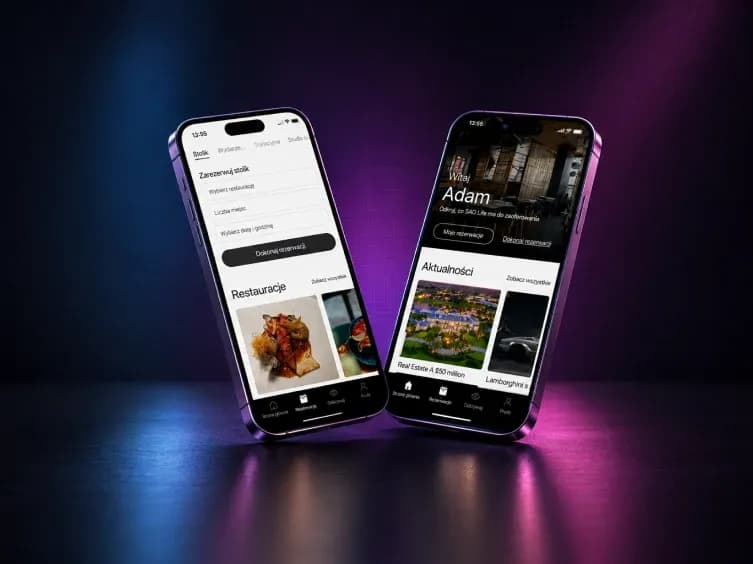
Moving from mobile to web without losing users or business logic
Client: SkinApe
Industry: Entertainment / GameTech
For game studios, streaming platforms and brands that build communities, we create social apps, loyalty systems and content platforms. We design them for scale, traffic spikes and user engagement - from the first version of the product to its further development.
Our clients in entertainment and gaming


We support game studios, streaming platforms, media companies and brands building their own communities. We create products that need to run reliably both day to day and during a launch, a live stream or a campaign that triggers a sudden surge of interest.
We design social apps, loyalty programs, content platforms and event-related solutions, among other things. We combine development with UX/UI, analytics and DevOps, so the product can grow along with its user base.
A launch, a live stream, a shout-out from a big creator — and traffic jumps tenfold within an hour. An architecture that doesn't plan for this picks the worst possible moment to fail: the one when the most people are watching. That's why in these projects we plan for scaling from the start: caching for content, queues for write operations, stateless services that can be multiplied. We handle this layer as part of architecture and DevOps — as part of the product, not back-office infrastructure.
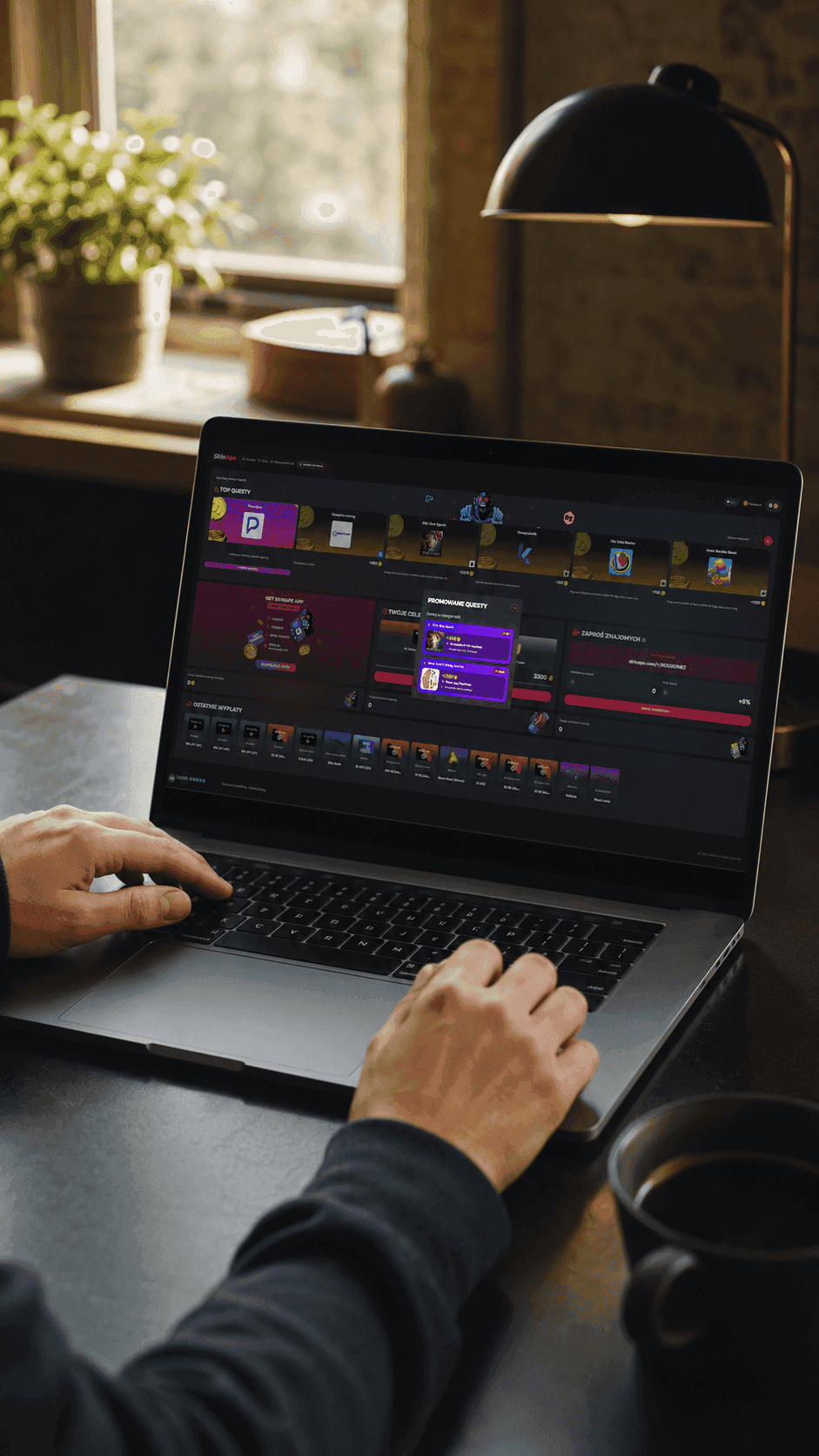
Engagement is the other side: profiles, leaderboards, collections, trading between users. Social mechanics work when they are measurable and fair — users have to see what they get and why. That's how we worked on a platform built around in-game items, moved from a mobile app to the web without losing users or product logic.
The revenue model has technical consequences you need to know before launch, not after. Subscriptions mean recurring payments, handling failed charges and trial periods. Microtransactions mean an internal wallet and a transaction history that has to add up to the cent. Premium content means serving content based on account status, and ads are a trade-off between revenue and loading speed.
A platform with user-generated content needs tools for reporting, hiding and blocking before the first serious incident happens. Adding them after the fact costs more and always happens under pressure — moderation designed in a crisis ends up either too restrictive or too full of holes. It's a few days of work at the start versus a few weeks later.Client: SkinApe
Industry: Entertainment / GameTech
„We were looking for a team that really knows the technologies it works with. Daily contact on Slack and weekly meetings meant that throughout the project we knew exactly what the team was working on. We also got good advice - not just delivery of what we ordered.”
Michał Słotwiński — Head of Customer Success, Semcore
Review from ClutchThe basics
GameTech and entertainment in the broad sense cover content platforms, systems for publishers, companion apps for games and community tools. Two things are characteristic: very uneven traffic and users who judge a product harshly and instantly. Uneven traffic means the architecture has to survive a launch or a live stream — a load more than ten times the average for several hours. That calls for different decisions than a system with a steady load, and it's the main cost driver.
Because audiences are so demanding, small interface lags and publicly visible bugs cost reputation faster than in other industries. Test versions with a limited group work better here than "all at once" launches.
How we work
We start by getting to know the product, its users and the business model. We establish when the biggest traffic spikes are likely, which features are key and whether the project needs payments, real-time communication or integrations with external systems. Based on that, we define the scope of the MVP or the next development stage, design the architecture and UX/UI, and then move on to development and testing.
On your side are the expected traffic profile, materials and decisions about the monetization model. On our side are the architecture, development, load testing and deployment.
The timeline depends on the scale of the peak and on whether some content has to be delivered in real time. Static content scales cheaply; live interaction is a separate and much harder task.
Decisions
Traffic scale. Not every feature has to perform the same under the heaviest load. Identifying the critical elements makes it easier to plan the architecture and infrastructure costs.
Static and dynamic data. The more content can be prepared in advance and cached effectively, the easier it is to handle heavy traffic without needlessly adding resources.
Whether you need live interaction. Chat, real-time leaderboards, multiplayer — that's a separate layer of the architecture, not a feature to bolt on. The decision belongs in the design stage.
What not to do. Don't plan a launch without a load test. Don't release to your whole audience at once if you can release to part of it. And don't assume autoscaling will take care of everything — it handles the application layer, not the database.
Scope
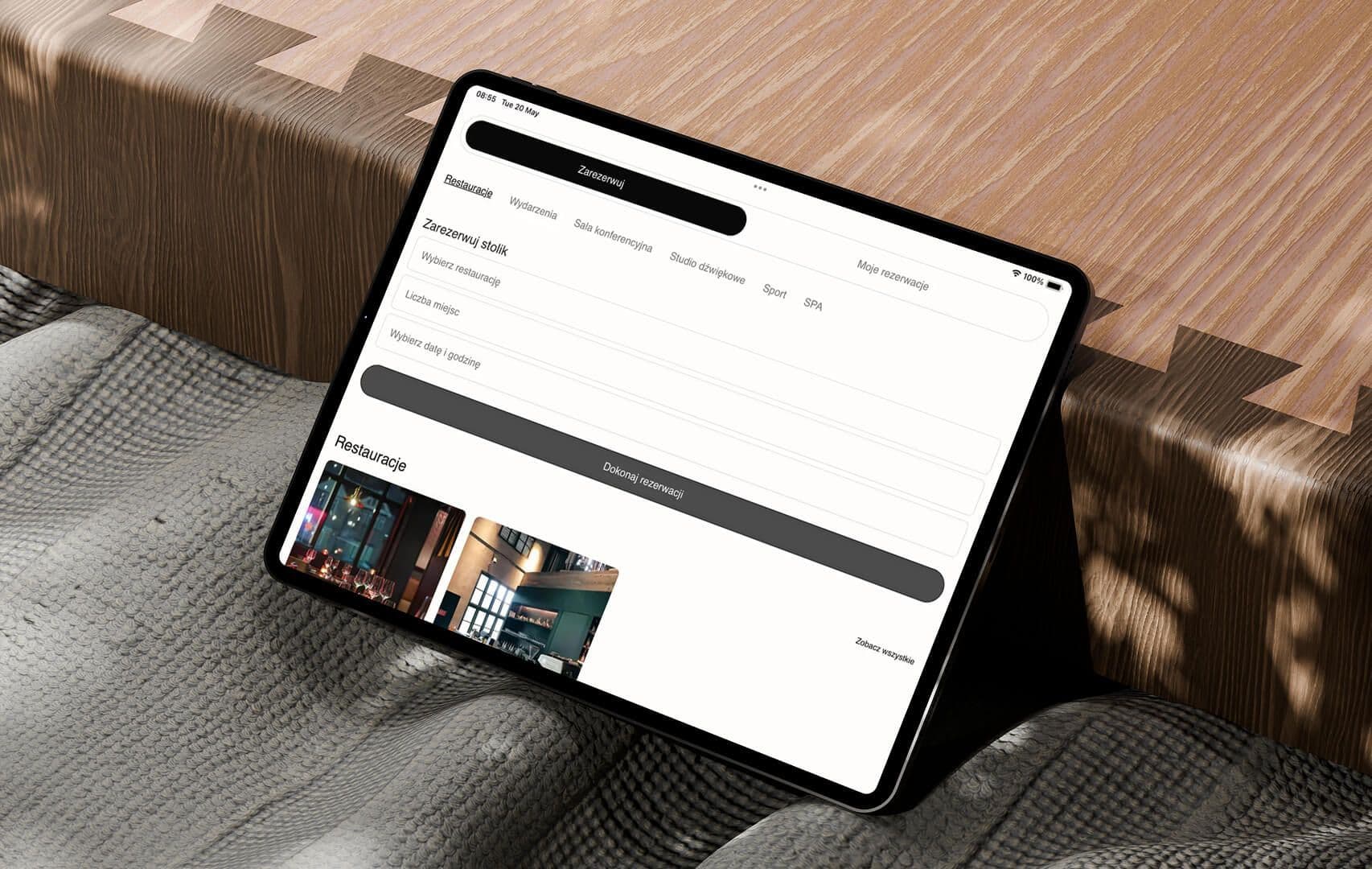
For the SAO House club, we built SAO Life, a loyalty app: membership instead of one-off purchases, bookings for tables, rooms and events in one place, subscription payments via Stripe and a panel where the club manages content without our involvement. The mobile app and the web version run on a shared backend, so members have one account everywhere. The app turns a one-off purchase into a long-term relationship with the club's community. Entertainment products live on engagement: we design them for repeat visits, events and a sense of belonging, not for a single visit.
What we build
We add a measurement layer to each of them, because without it, product decisions are made by gut feeling.
Engagement
The metric that tells the truth in entertainment is the return visit, not the download. The number of installs tells you how much the campaign cost; the share of users who come back the following week tells you whether the product makes sense. That's why the backend tracks from day one: what attracts users, what keeps them, which benefits get used and which exist only in the pitch deck.
We design the mechanics themselves with restraint. Status and real benefits work longer than aggressive gamification, and notifications sent in step with events work longer than daily ones. A product that nags loses a user once and for all.
FAQ

We design and develop digital solutions for financial services, insurance and lending companies and FinTech startups. We build online application forms, calculators, customer portals and custom systems, combining good UX with data security and a reliable architecture. We simplify processes that should feel simple to the user — even when complex rules, integrations and business requirements are running underneath.

For developers, real estate agencies, rental operators and PropTech companies, we build systems that bring order to sales, rentals and property data. We build custom CRMs, listing portals, booking systems, customer portals and analytics tools, among other things - integrated with the solutions your team already uses.

In construction and ConTech, we work with contractors, developers and design firms. We build construction project databases, job management systems and websites that bring order to B2B communication. Digitization arrives later here than elsewhere, so the starting point is often replacing paper and spreadsheets with one coherent system with a change history.

We build e-learning platforms and LMS systems for EdTech startups, universities, training companies and language schools. Here, success is measured by completed courses, not by the length of the feature list — so we start with the learner's journey: the first visit, visible progress and getting back to learning that was interrupted two weeks ago. Payments, group licenses and reports all serve that one goal.

We design websites and custom software for law firms, in-house legal departments and LegalTech companies. We build calculators, qualifying forms, document workflow systems and solutions that make case handling more efficient, among other things. We automate repetitive processes and leave legal judgment to the lawyer.

We work with parts manufacturers and distributors and automotive brands that sell online. We build stores and catalogs where customers get to the right part - by make, model and engine version, by OE number or by replacement. We make sure that expanding into new markets means configuring the existing platform, not building another store from scratch.