

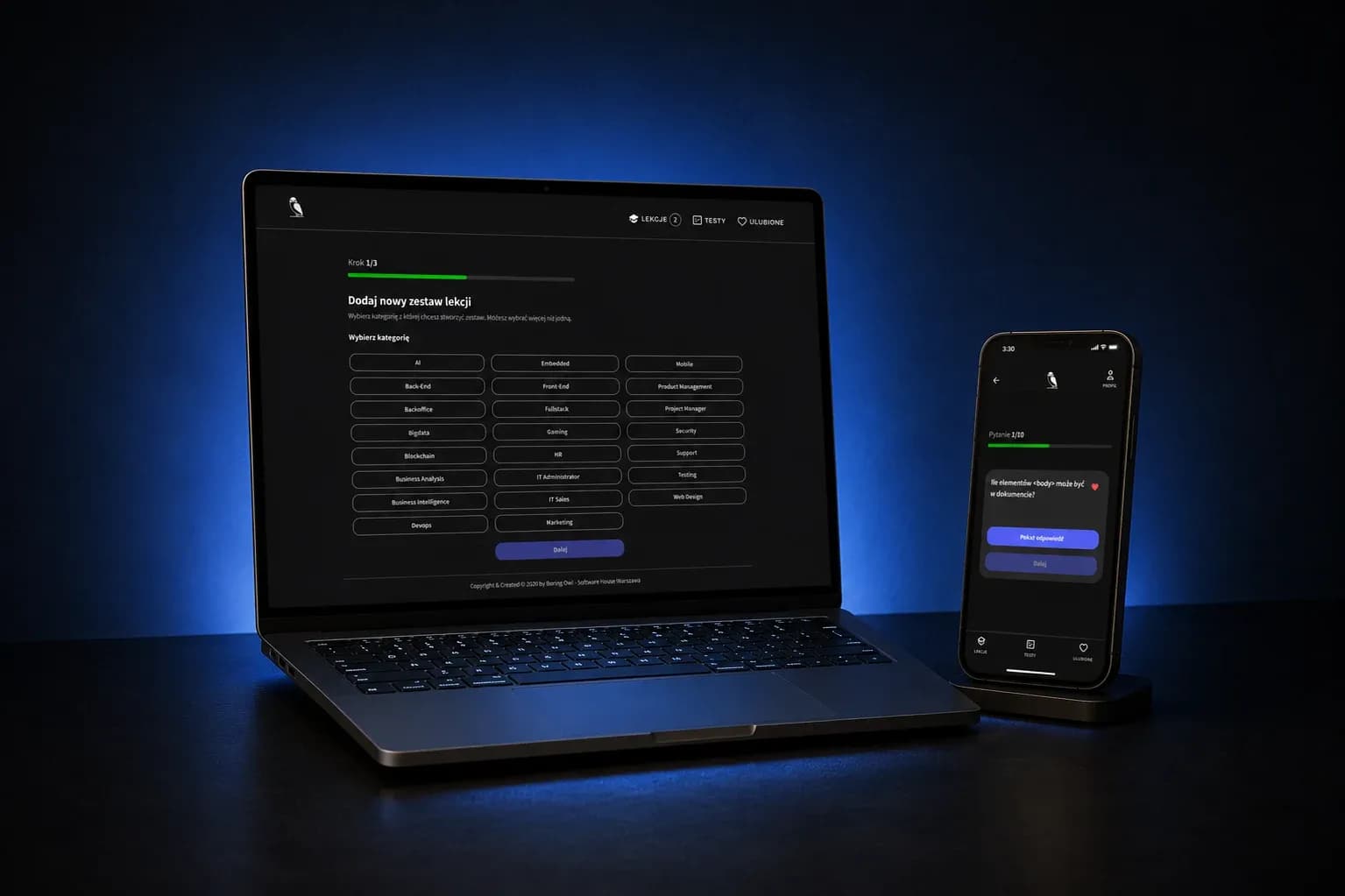
An educational platform that generates programming study materials with ChatGPT
Client: Klient (Aplikacja webowa do nauki programowania)
Industry: Education / EdTech
We build e-learning platforms and LMS systems for EdTech startups, universities, training companies and language schools. Here, success is measured by completed courses, not by the length of the feature list — so we start with the learner's journey: the first visit, visible progress and getting back to learning that was interrupted two weeks ago. Payments, group licenses and reports all serve that one goal.
Our clients in education

In EdTech, the number of features says little about the quality of a product. What matters is whether users start learning quickly, understand their progress and can easily get back to where they left off.
That's why, when designing learning platforms, we look at the whole user journey — from the first login, through lessons and assignments, to completing the course, earning a certificate or buying the next program.
The recurring core is a course catalog, content playback (video, text, assignments), progress tracking and permissions: who can see which course, when and on what terms. Then come payments — one-off, subscription or group licenses for companies and schools — and a panel for content creators where a course can be put together without a developer. Before any code is written, it's worth testing these assumptions with users as part of product discovery: in education, founders' intuitions are unusually often at odds with how people really learn.
Content in education changes more often than anywhere else — curricula get updated, lessons replaced, pricing tested. Separating content from code with a headless CMS lets the subject-matter team work without maintenance windows. In education, material can also be generated automatically — as in our programming learning platform, which generates practice materials.
The B2B model is also becoming more common: companies and schools buy group access, and the platform has to handle team accounts, course assignments and completion reports for HR. That's a different model from individual sales — it introduces an administrator role on the client side and per-license billing, which are worth planning into the architecture early on.
Client: Klient (Aplikacja webowa do nauki programowania)
Industry: Education / EdTech
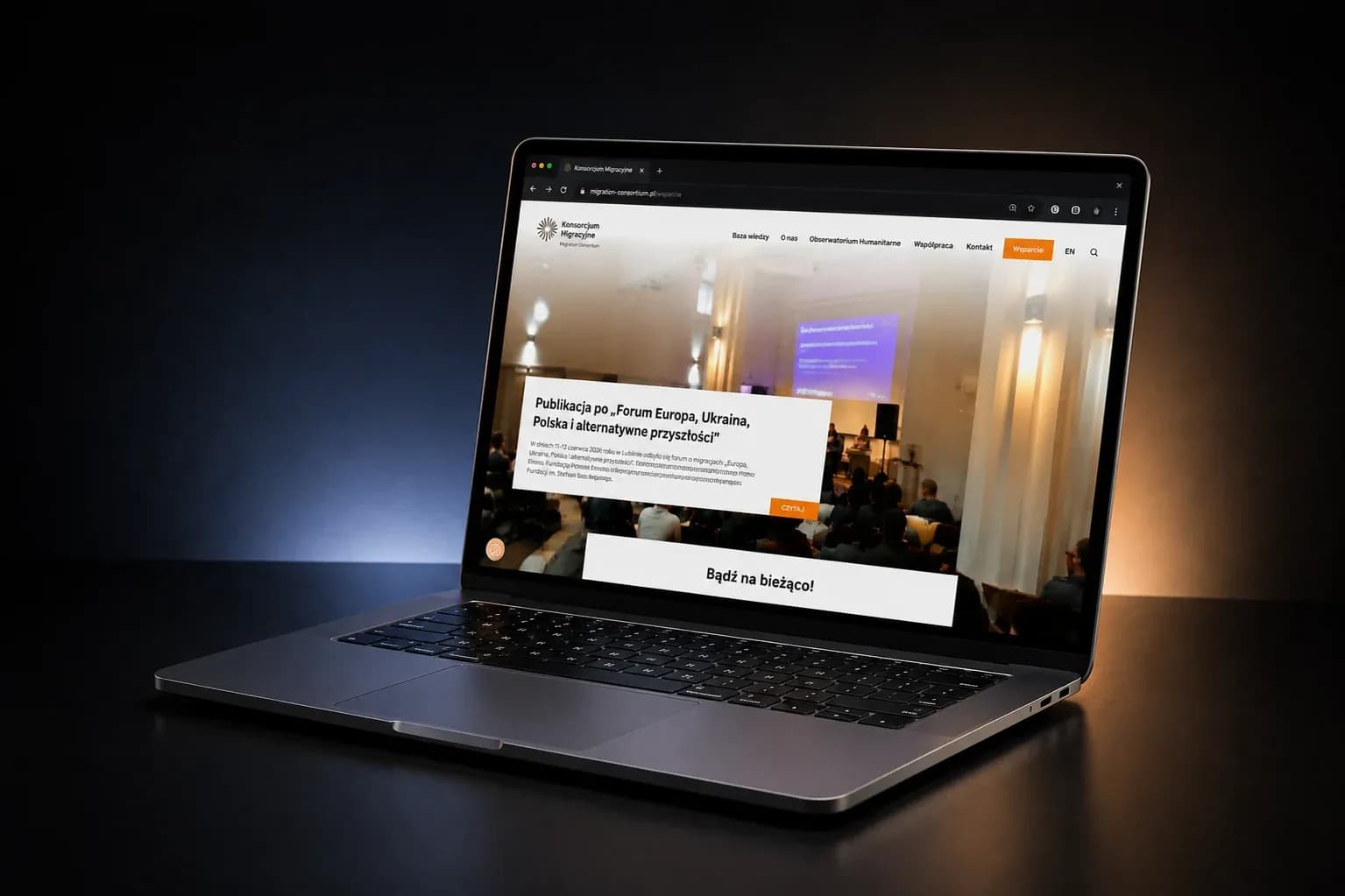
Client: Konsorcjum Migracyjne
Industry: Education / EdTech
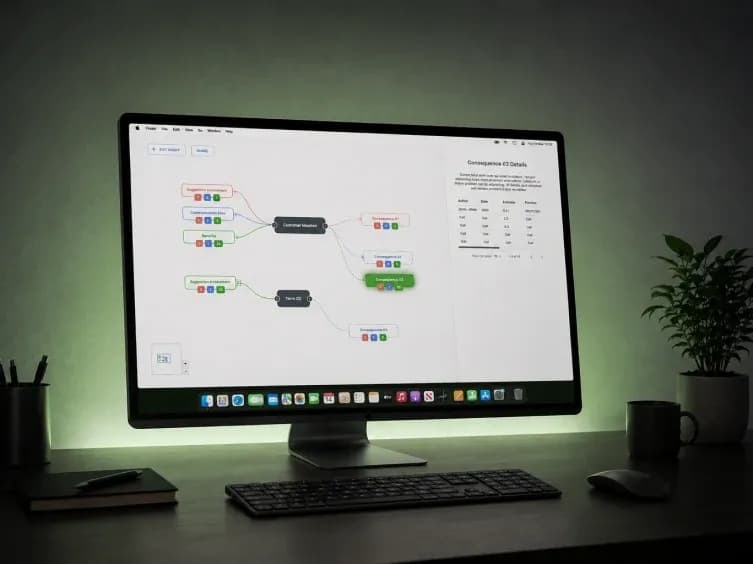
Client: Klient (Mapowanie badań naukowych)
Industry: Education / EdTech
„The beta was delivered on time and turned out better than we expected — on the strength of it, we secured funding for further development. Besides a good understanding of our goals, we also got concrete suggestions on how to improve the app's usability.”
Przemysław Tomczyk — Firm owner & Assistant Professor, Kozminski University
Review from ClutchThe basics
A learning platform isn't just a place to store videos and files. An LMS tracks user progress, can test knowledge and manages who has access to specific courses or materials. If you don't need these features, a full platform may be unnecessary. Sometimes a well-designed library of materials is a simpler and cheaper solution.
Mandatory corporate training is a separate area, where what counts isn't the learner's experience but proof of completion: who, when and with what score. It's a completely different product from a course sold to individual customers, even if they look similar from the outside.
How we work
First, we learn how the product is meant to work: who will use the platform, how they'll get access to materials and what should happen between signing up for a course and completing it. Then we define the access model — selling individual courses, a subscription, licenses for companies or access assigned by an administrator. Based on that, we design the architecture and the scope of the first version of the product. We build the platform's core elements: content, progress, knowledge checks, payments, reporting and integrations. Only later do we develop additional features that come from how the system is actually used.
On your side are the materials, the sales or assignment model and the decision about what counts as completion. On our side are architecture, development, integrations and deployment.
The timeline depends on the number of material types (video, tests, assignments graded by a person) and the access model. A video with a multiple-choice test is a simple case; manually graded assignments need a whole review workflow.
Decisions
What completion means. Watching the material, passing a test, submitting an assignment. Each answer means a different system and different reports — and for mandatory training, this definition is the actual product.
Whether you need assignments graded by a person. They improve the quality of learning, but they require building a review workflow and trainers' time. It's a decision about the operating model, not just about a feature.
Who sees progress. The participant, their manager, HR — each level of visibility means a different set of permissions and a different conversation about privacy.
What not to do. Don't build a platform if an organized library of recordings will do. Don't put off reporting — for mandatory training, reporting is the product. And don't start with a mobile app if learning happens at a desk.

Scope
AI can support both learners and the teams creating courses. For one of our clients, we built a platform that uses ChatGPT to generate programming study materials.
In EdTech solutions, artificial intelligence can help create exercise variants, generate hints, personalize materials or analyze users' answers, among other things.
What we build
We build course platforms, LMS systems, learning paths, quizzes and assignments, certificates, dashboards for administrators and content creators, and paid-access systems, among other things. We can tailor the platform both to selling courses to individual users and to a B2B model with licenses for companies, schools or other organizations.
Engagement
A large number of sign-ups doesn't yet mean an effective learning platform. That's why it's worth also analyzing course completions, drop-off points, returning users and results at each stage of learning.
Based on this data, you can develop the product where users actually run into problems — instead of adding more features without checking whether they're needed.FAQ

We design and develop digital solutions for financial services, insurance and lending companies and FinTech startups. We build online application forms, calculators, customer portals and custom systems, combining good UX with data security and a reliable architecture. We simplify processes that should feel simple to the user — even when complex rules, integrations and business requirements are running underneath.

For developers, real estate agencies, rental operators and PropTech companies, we build systems that bring order to sales, rentals and property data. We build custom CRMs, listing portals, booking systems, customer portals and analytics tools, among other things - integrated with the solutions your team already uses.

In construction and ConTech, we work with contractors, developers and design firms. We build construction project databases, job management systems and websites that bring order to B2B communication. Digitization arrives later here than elsewhere, so the starting point is often replacing paper and spreadsheets with one coherent system with a change history.

We design websites and custom software for law firms, in-house legal departments and LegalTech companies. We build calculators, qualifying forms, document workflow systems and solutions that make case handling more efficient, among other things. We automate repetitive processes and leave legal judgment to the lawyer.

We work with parts manufacturers and distributors and automotive brands that sell online. We build stores and catalogs where customers get to the right part - by make, model and engine version, by OE number or by replacement. We make sure that expanding into new markets means configuring the existing platform, not building another store from scratch.

For game studios, streaming platforms and brands that build communities, we create social apps, loyalty systems and content platforms. We design them for scale, traffic spikes and user engagement - from the first version of the product to its further development.