



















Product Discovery
Before we start designing and coding, we work out together what's really worth building. In product discovery workshops, we map processes, test business assumptions, define the MVP scope and recommend how to build it — no-code, a custom solution or a hybrid approach. After discovery, you get a concrete plan for the next steps: MVP scope, architecture, a cost estimate and the key risks. You can carry it out with us or hand it over to another vendor.
Companies that trusted us
The basics
Why do product discovery before development?
Product discovery helps you check what problem you're solving, who you're building the product for and what should go into its first version. The outcome isn't a finished app, but decisions that shape the work ahead: MVP scope, priorities, risks, architecture and a preliminary estimate. It's most valuable for new ideas, an unclear scope, or when the people involved in the project understand its goal differently. If the requirements are already validated, documented and agreed, an extensive discovery phase may not be needed.
It's above all about reducing risk. Changing the scope at the workshop or prototype stage costs much less than rebuilding a finished product.See the product discovery projects we ran for clients
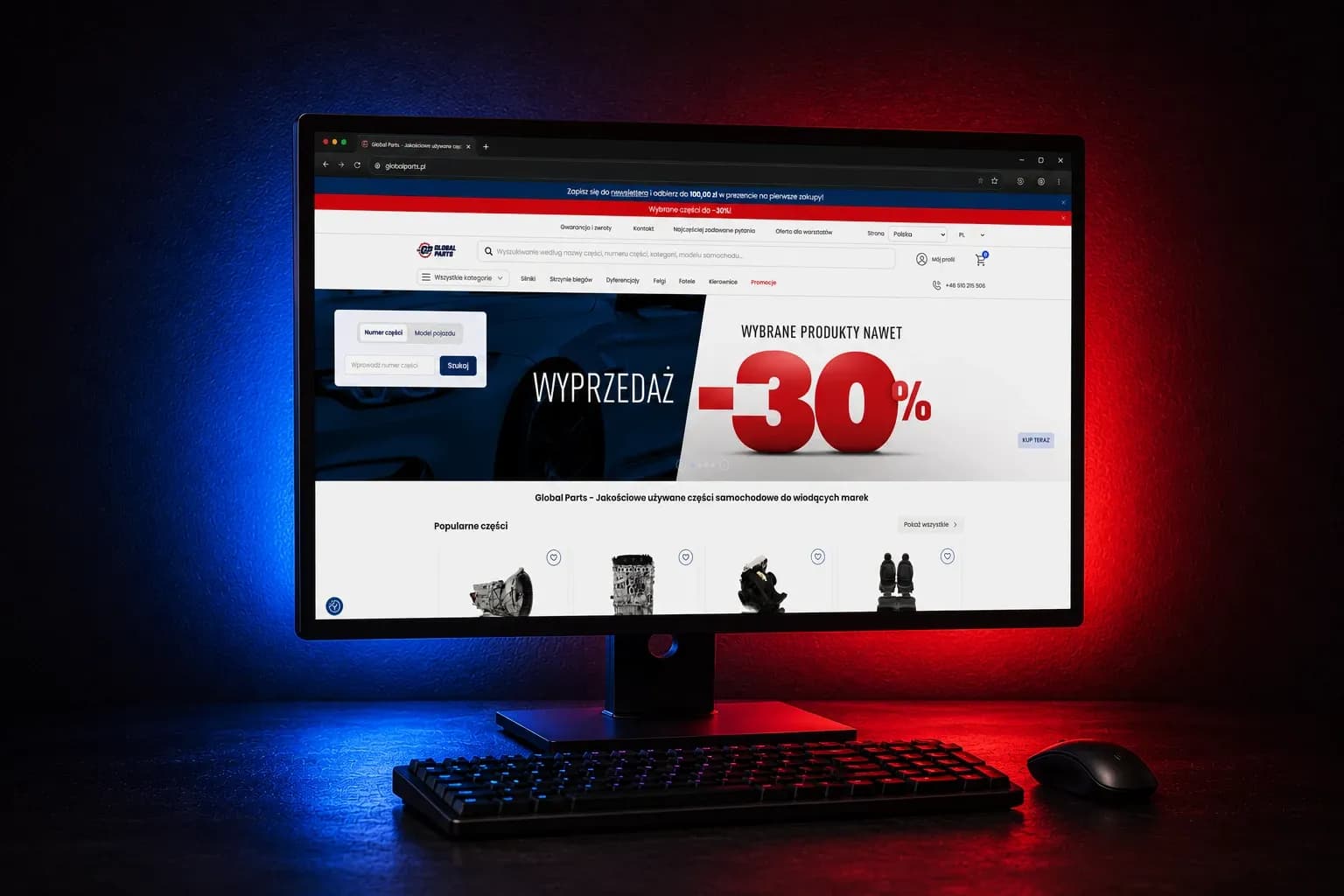
Its own store in 9 markets instead of depending on marketplaces
Client: Global Parts
Industry: Automotive / Mobility
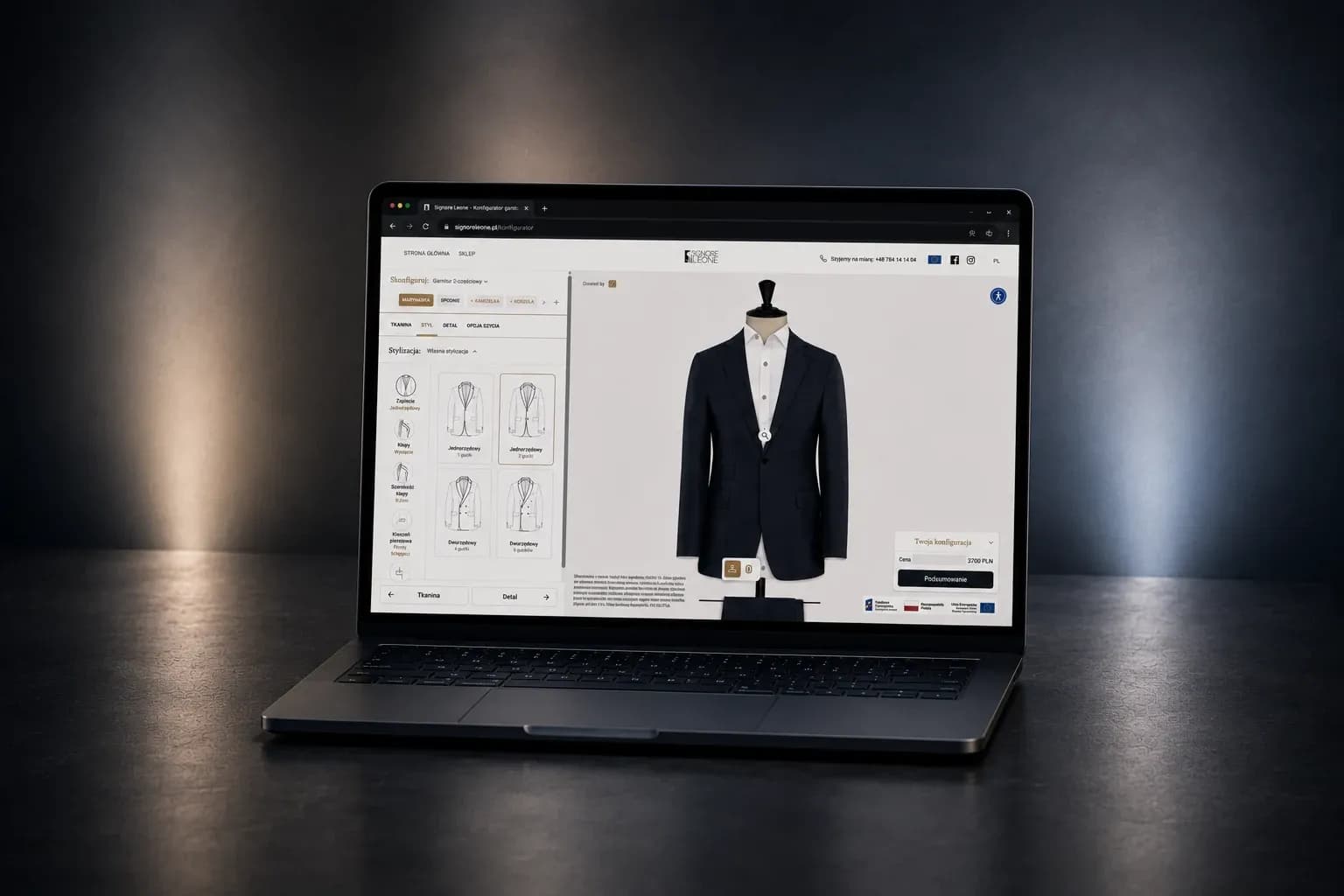
An online suit configurator – customers arrive at the showroom knowing what they want
Client: Signor Leone
Industry: Fashion / FashionTech
„Successful completion of the mockups for our website and online store. We are very satisfied with the quality and detail of these mockups. Their efficiency in execution and delivery was remarkable.”
Krzysztof Kornas — CEO, High Culture sp. z o.o.
Review from Clutch
How we work
What the workshops look like and what comes out of them
We work in a few working sessions with people who understand the problem from the business and operational side. Step by step: who the user is and what they want to achieve, how the process works today and where it gets stuck, what the constraints are — legal, technical, budgetary — and finally, what has to go into the first version so that anything can be tested at all. The result is a document you can take to any vendor: a scope description, sketches of key user flows, a technology recommendation with reasoning, a list of risks and an estimate. We don't tie it to ourselves — if after discovery you decide to build with someone else, the document still has value.
On your side, we need the involvement of people who actually know the process — not just a management representative — and access to data, if it exists. On our side are running the workshops, writing everything up and the recommendation.
It's a short stage compared with the build; how long it takes depends mainly on the availability of people on your side and on how much needs to be decided.
Decisions
Decisions worth making in the workshop, not during the build
What goes into the first version. This is the most important decision of the whole project. The first version should answer one question — does it work — not include everything anyone has thought of. The list of things deliberately postponed is just as important as the list of things to build.
How you'll know it worked. Set a measure before you start. Without it, evaluating the product after launch will come down to impressions and to whoever speaks loudest.
Build or buy. Discovery should honestly consider whether an off-the-shelf tool already solves the problem. If it does, that's the cheapest possible outcome of the workshop — even if it means we don't work together further.
What not to do. Don't invite only decision-makers to the workshop — the people who carry out the process every day know the most. Don't treat the document as a contract that has to be followed to the letter; it's meant to be a basis for decisions, not a straitjacket.
Scope
We only recommend what we can build
The workshops cover mapping the process as it really is. Plus a business case, prioritizing MVP features and the no-code / custom / hybrid decision, with a stack recommendation that we then implement ourselves. That means the recommendation has to hold up during the build, not just in a presentation. On the research side: user interviews, personas, journey mapping and story mapping — to the extent that makes sense for the project's scale, not for the length of the report.
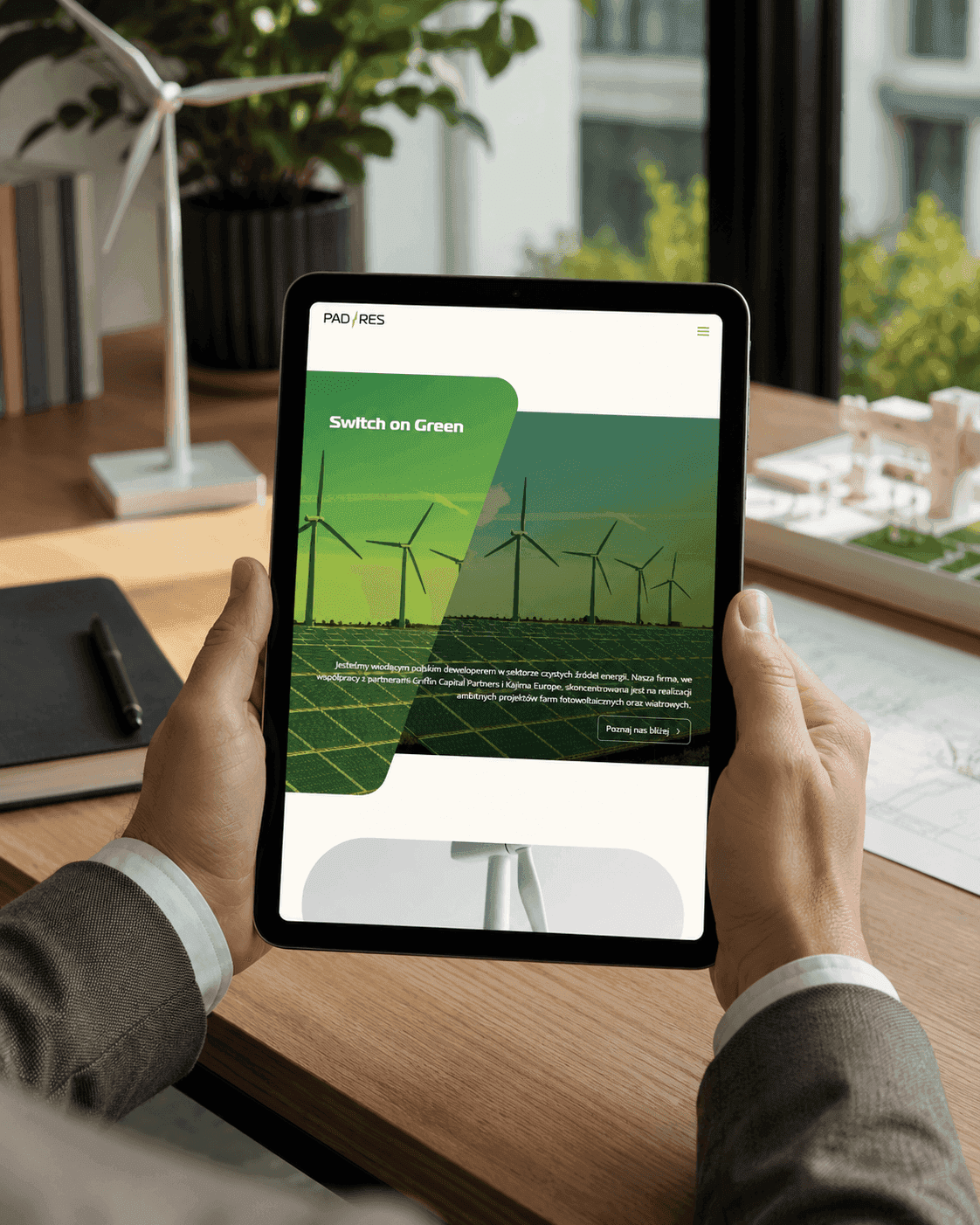
That's how we worked with PadRes: from workshops to a finished website and branding for a renewable energy farm developer.
Technologies we work with
- Design workshop
We run mockups, prototypes and workshops in Figma — from a lo-fi sketch to a clickable prototype that users can test before a single line of code is written.
The outcome
A document you can take to any vendor
When discovery is complete, you get material that can serve as the basis for an estimate and the start of development — with us or with another vendor.
Depending on the project scope, the documentation includes:
- the agreed MVP scope,
- key user flows and processes,
- the recommended architecture and technologies,
- required integrations,
- a work estimate,
- risks, constraints and assumptions,
- elements deliberately postponed to later stages.
We can also run product discovery before taking over or further developing an existing product. In that case, we analyze the current solution, processes and constraints before any decision about further investment.

Who it's for
Ideas that don't have code yet benefit the most
Discovery pays off most before development starts — when changing direction costs a conversation, not refactoring. The second typical moment is a product that's stuck: user numbers aren't growing, the team keeps shipping features, and nobody can say why the whole thing isn't working. The workshop puts on the table the assumptions nobody has checked for months.
The format is compact: from a few days to two or three weeks, with a clearly agreed outcome. No open ends and no hourly consulting.
The most valuable result of discovery is often what we don't build: features that seemed essential but nobody needs, or assumptions a simple test disproved within a week. We test hypotheses in the cheapest possible way — with a prototype, a survey, a conversation with users — before they turn into months of development.
Booking & Hotels / TravelTech
We design and develop custom software for hotels, apartments and TravelTech companies.
Booking & Hotels / TravelTech ↗
FAQ
Questions we hear before the workshops
- Product discovery is a stage that happens before designing and building a digital product. It helps validate user needs and business assumptions, define the MVP scope and make the most important technology decisions before development begins.
- You get a structured MVP scope, key user flows, a technology recommendation, a list of risks and a work estimate. We adjust the level of documentation to the specific project.
- Usually between a few days and two to three weeks. The time depends on the product's complexity, the number of stakeholders and how many assumptions need to be tested.
- Ideally a mix of decision-makers and people who know the process being analysed from day-to-day work. This lets us account for both the business goals and the operational realities.
- No. Discovery is a standalone stage, and the materials produced can be used when working with any other development team.
- Yes. Discovery can also help when a product is already live but needs rebuilding, further development or a clearer roadmap and priorities.
- No. One possible outcome is a recommendation to use an existing tool, a no-code solution or a more limited product scope. The goal of discovery is to find the right solution — not to justify development at all costs.

Let's build digital products for your company together
Other services

Web Development
We design and build custom web applications - from an MVP that lets you quickly validate an idea to large platforms and systems developed over years. We build both the front end and the backend, APIs, databases, admin panels and integrations with external systems. We work with Next.js, React, Node.js, NestJS, Python, PostgreSQL and MongoDB, among others. We create solutions tailored to a specific business process: SaaS applications, internal systems, sales platforms, websites, marketplaces and CMS systems.
Learn moreUX/UI Design
We design UX/UI for web and mobile applications and B2B systems - from analyzing user needs and early wireframes to the finished interface and a design system in Figma. We don't design screens in isolation from the product. We look at user journeys, analytics data and technical constraints to create a solution that's easy to use and can be built efficiently. After the product launches, we can come back to heatmaps, session recordings, analytics and user interviews, so that the next changes are driven by data, not assumptions.
Learn moreE-commerce
We design and build online stores and e-commerce platforms tailored to your sales model and business processes. We work with off-the-shelf solutions as well as headless architecture and custom sales systems. We build e-commerce for B2C and B2B sales, large product catalogs, multiple markets and marketplaces. We integrate stores with ERP, WMS, CRM, PIM, payments and logistics, and design product configurators and custom purchase flows. We also take care of performance, technical SEO and preparing the platform for seasonal traffic peaks.
Learn more