


Booking & Hotels / TravelTech
We design and develop custom software for hotels, apartments and TravelTech companies. We build online booking systems, integrations with PMS and channel managers, and solutions that automate guest service. We also help build your own sales channel to increase the share of direct bookings.
Our clients in travel and hospitality
Booking without a middleman: what a hotel system has to handle
In this industry, we work with hotel and apartment operators, chains, aparthotels and hospitality software vendors. The product revolves around one thing: guests should be able to book a stay without picking up the phone, and operators shouldn't have to track availability by hand.
Most often, this involves the booking engine, sales channel integrations, automated guest communication and billing. A separate and often underrated topic is search visibility — in this industry, organic traffic is often the main direct sales channel.
The heart of the system: availability and price in one place
The technical core of every implementation is an availability calendar synced with OTA channels. The same apartment is sold on several portals at once, so a double booking isn't a risk but a matter of time — unless the channel manager and the booking engine work from a single inventory. Then there are rate plans: seasonality, length of stay, non-refundable offers — rules that have to calculate themselves, because setting prices by hand three seasons ahead ends in mistakes.
Payments are a separate matter. Deposit and balance, a security deposit released after check-out, cancellations with different refund thresholds — the booking path has to handle all of this without looking like a tax form. Every extra minute in the checkout means abandoned bookings.
Where direct traffic comes from
You can only win back the intermediary's commission if guests find the property's website. That's why, alongside the booking engine, we work on visibility: a site structure built around local search phrases, fast loading and content about the area. Our project for a Baltic coast apartment operator shows how this works in practice — a website with property search and booking, built for organic traffic.
The third pillar is guest communication that runs on its own: a confirmation right after booking, check-in instructions the day before arrival, local information during the stay and a request for a review after departure. Each of these messages sent by hand is work for the front desk; set up once in the system, they run themselves and improve the property's ratings, because guests get the right information at the right time.
Case studies in travel and hospitality
„We started with detailed meetings — the team wanted to know everything about the project before they sat down to design. Thanks to regular meetings, we always knew what stage we were at. Everything was delivered on time.”
Anonymous — Executive, Castellani
Review from ClutchThe basics
What really eats up time in a hotel, and what a new website won't fix
An accommodation business usually runs several systems side by side: the PMS handles day-to-day property operations, the booking engine handles bookings on your own website, and the channel manager syncs availability and rates with external sales channels.
Problems start when these pieces don't exchange data automatically. Bookings have to be retyped, availability checked in several places, and staff spend time on tasks that could be automated. The same goes for guest service. Confirmations, arrival information, online check-in and upselling extra services can all run automatically and take pressure off the front desk.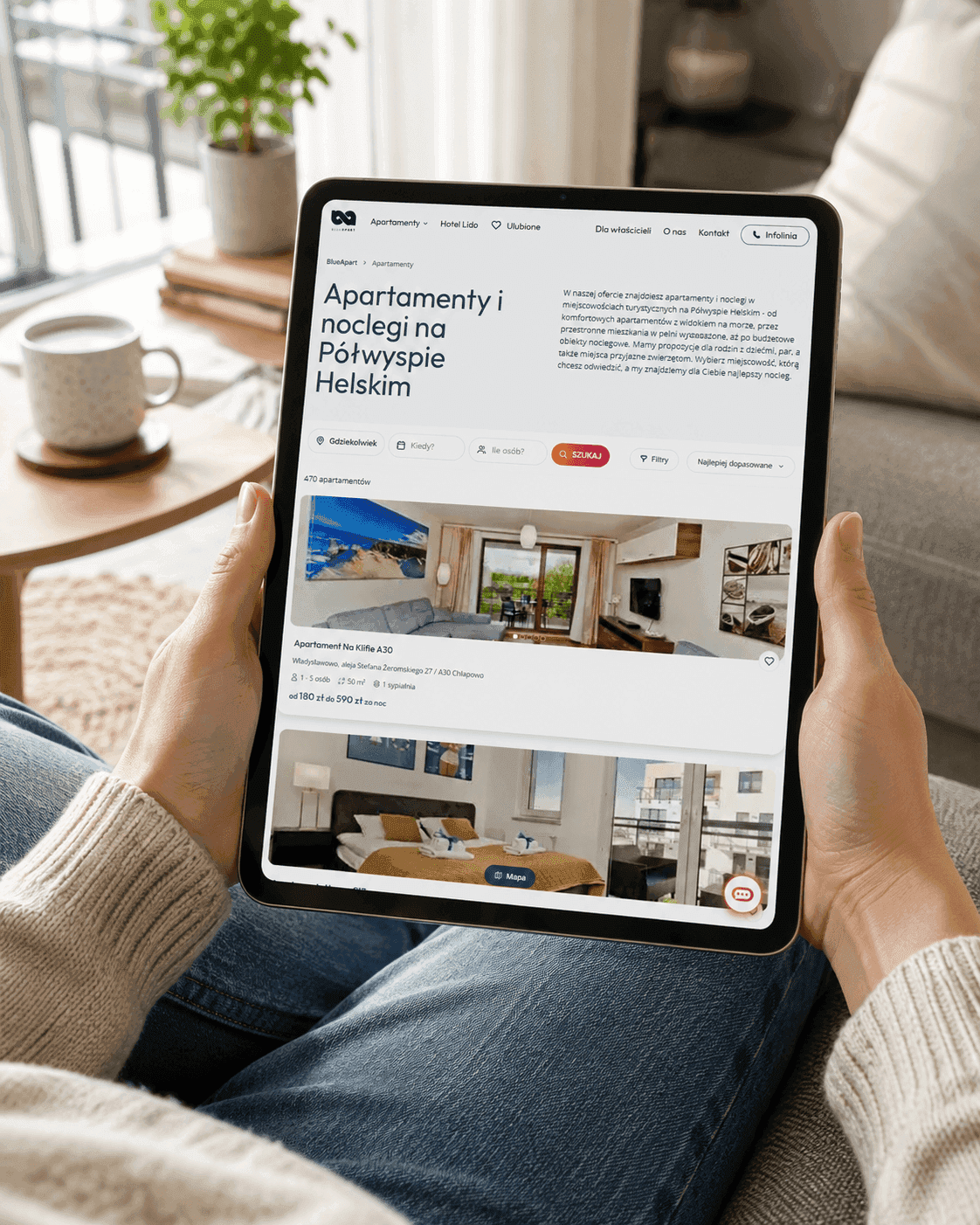
How we work
How we approach implementations for accommodation businesses
We start by getting to know the real booking and guest service process. We look at which systems the team uses, where data is retyped by hand and which tasks cause the most problems. Then we agree on the scope of integrations and the order of work. Usually we first sort out the flow of availability and booking data, and only then develop further elements — the booking engine, communication automation, payments or additional dashboards.
On your side are the accounts in booking channels, the price list and cancellation policy, and someone from the front desk who knows how a day really runs. On our side are integrations, implementation and testing of the full booking cycle.
The timeline depends on the number of channels and room types, and on whether your current PMS exposes data via an API — older systems are often closed, and that usually sets the project's boundaries.
Decisions
Decisions that determine how many direct bookings you get
How many room types and rates. Every additional type multiplies the work on prices and availability across all channels. Simplifying the offer is often more effective than automating its complexity.
Who sets prices and how often. Revenue management only makes sense if someone actually watches occupancy and responds. AI-based dynamic pricing tools can suggest tomorrow's rate, but they won't take the decision off your hands: someone has to set the ranges, the exceptions and the point at which a recommendation goes in the bin. If there's no such person, it's better to implement simple seasonal rules than a system nobody runs.
Online check-in — for everyone or for some guests. Rolling it out for everyone means solving the edge cases (groups, children, documents). Starting with direct bookings lets you test it on a smaller scale.
What not to do. Don't launch direct booking without channel sync. Don't keep a second schedule in a notebook. And don't copy the portal's cancellation policy if you don't intend to enforce it.
Scope
Bookings and guest service in one ecosystem
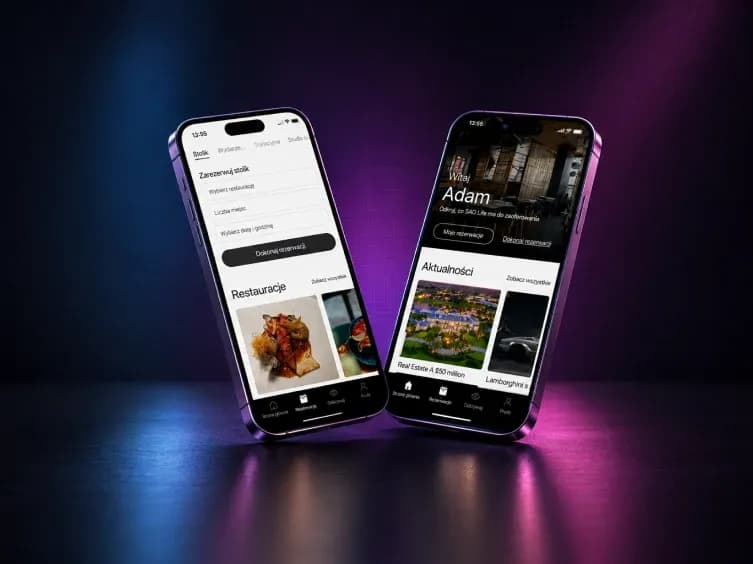
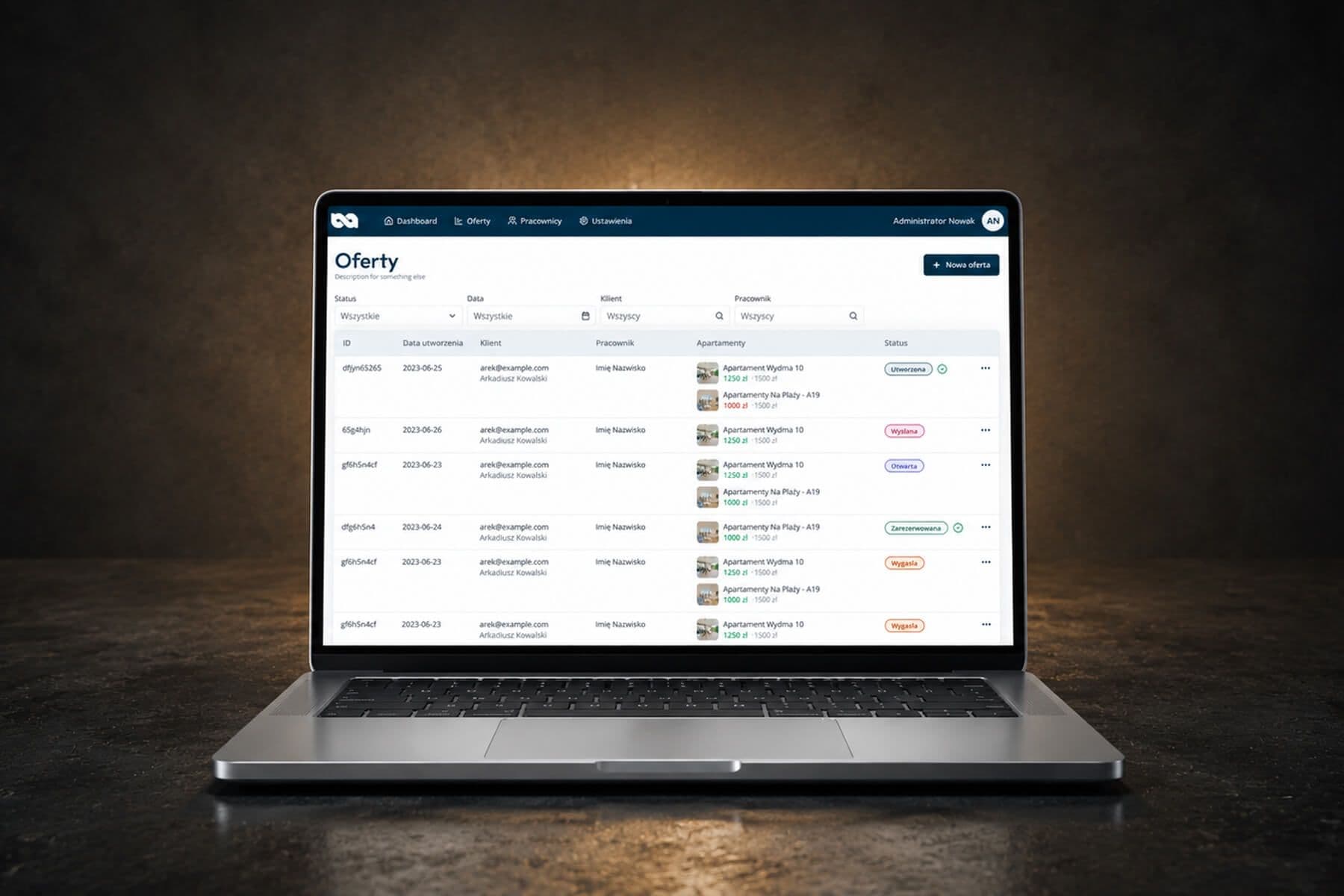
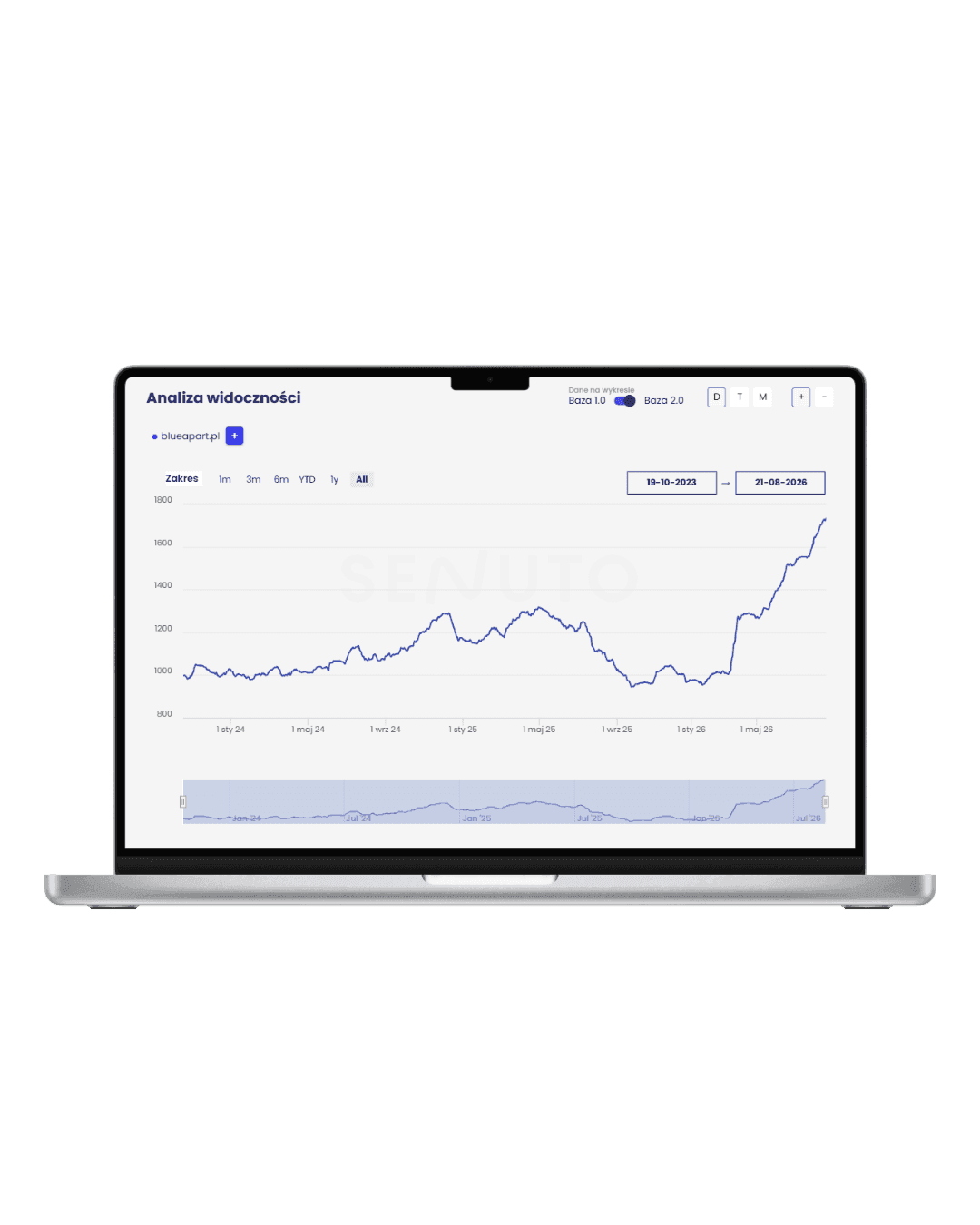
For BlueApart, we built a booking system connected to an apartment search, online payments and marketing automation. In later stages, the ecosystem was extended with an AI chatbot, a mobile app, a panel for the sales team and a quote panel. The project automated the process from searching for an apartment to payment, and the SEO work delivered double-digit growth in organic visibility.
What we build
What we can build for a hotel or TravelTech company
- an online booking system / booking engine,
- PMS and channel manager integration,
- an availability calendar and rate management,
- online payments, deposits and cancellations,
- automated guest communication,
- online check-in and a guest app,
- dashboards for the front desk, sales or property operators,
- integrations with marketing automation and analytics,
- a fast website or platform built for SEO and direct bookings.
Your own channel
Less portal commission, more direct bookings
Portal commission is the biggest fixed cost in this industry — and the only one you can partly win back. It's worth calculating it once on an annual basis and comparing it with the cost of your own booking engine — that's usually the only justification for this investment that holds up in numbers.
Your own channel doesn't replace the portals; it shifts part of the traffic to where the margin stays with you. It's built with three things at once: a short booking path with instant confirmation, visibility for local search phrases and a reason for guests to book with you rather than on a portal — price, an extra or flexibility. A booking form on its own won't convince anyone who has just seen the same room with a refund guarantee.FAQ
Questions we hear from the hospitality industry
- Yes. We design solutions tailored to a specific business model — from a booking engine and property search to full booking platforms, staff panels and guest applications.
- Yes, if the system provides a suitable API or other integration method. We check the technical capabilities at the start of the project, as they determine the architecture and scope of the implementation.
- A PMS supports day-to-day property operations, a booking engine enables reservations directly on the website, and a channel manager synchronises availability and rates across sales channels. In a well-designed environment, the systems exchange data automatically.
- The foundation is a single, consistent source of availability data and correct synchronisation across sales channels. When designing integrations, we also account for how individual systems behave and any possible delays in data exchange.
- Yes. A booking engine alone isn't enough, so we can combine system development with UX, SEO, analytics and marketing automation. The goal is to shorten the path from finding a property to completing a booking.
- Yes. An app can handle bookings, stay history, saved properties, notifications, guest communication and selected check-in elements, among other things. We match the scope to the processes that are actually worth moving into an app.
- Mainly the number of integrations, user types, properties and sales channels, and the technical capabilities of existing systems. That's why we analyse the process and existing infrastructure before estimating.
- In process, not technology. A hotel tracks occupancy by room and has a front desk to handle exceptions on the spot. An aparthotel and short-term rental operate with apartments that often belong to different owners — owner settlements, longer stays and contactless service as standard all come into play. That translates into different system roles and different reports, so at the start we establish which model you operate. A product trying to serve both at once without that decision ends up uncomfortable for both.

Let's build digital products for your company together
Other industries
SEE ALL5 CASE STUDIES
Finance / FinTech
We design and develop digital solutions for financial services, insurance and lending companies and FinTech startups. We build online application forms, calculators, customer portals and custom systems, combining good UX with data security and a reliable architecture. We simplify processes that should feel simple to the user — even when complex rules, integrations and business requirements are running underneath.

8 CASE STUDIES
Real Estate / PropTech
For developers, real estate agencies, rental operators and PropTech companies, we build systems that bring order to sales, rentals and property data. We build custom CRMs, listing portals, booking systems, customer portals and analytics tools, among other things - integrated with the solutions your team already uses.
5 CASE STUDIES
Construction / ConTech
In construction and ConTech, we work with contractors, developers and design firms. We build construction project databases, job management systems and websites that bring order to B2B communication. Digitization arrives later here than elsewhere, so the starting point is often replacing paper and spreadsheets with one coherent system with a change history.

3 CASE STUDIES
Education / EdTech
We build e-learning platforms and LMS systems for EdTech startups, universities, training companies and language schools. Here, success is measured by completed courses, not by the length of the feature list — so we start with the learner's journey: the first visit, visible progress and getting back to learning that was interrupted two weeks ago. Payments, group licenses and reports all serve that one goal.

3 CASE STUDIES
Law / LegalTech
We design websites and custom software for law firms, in-house legal departments and LegalTech companies. We build calculators, qualifying forms, document workflow systems and solutions that make case handling more efficient, among other things. We automate repetitive processes and leave legal judgment to the lawyer.

2 CASE STUDIES
Automotive / Mobility
We work with parts manufacturers and distributors and automotive brands that sell online. We build stores and catalogs where customers get to the right part - by make, model and engine version, by OE number or by replacement. We make sure that expanding into new markets means configuring the existing platform, not building another store from scratch.