
Renewable Energy / CleanTech
We design custom software, web applications and websites for renewable energy and CleanTech companies. We help streamline quoting, installation management, monitoring, servicing and communication around energy projects — from process analysis to a fully deployed solution.
Our clients in renewable energy
How renewable energy installations sell online
In renewable energy, buying decisions are rarely made on the spot. Customers compare options, analyze costs, check potential savings and look for information about the entire investment process. That's why a good website should not only present the offer but also help users make a decision.
Renewable energy customers do the math before they call
Solar panels, a heat pump or an energy storage system are purchases planned over months. Customers compare quotes, read about subsidies and try to estimate the payback. A website that helps them with this — with a savings calculator, a clear description of the installation process and answers to questions about the paperwork — collects inquiries from people who have already made up their minds. We design this layer as part of our UX/UI design work: the path from the first visit to leaving contact details should be measurable and short.
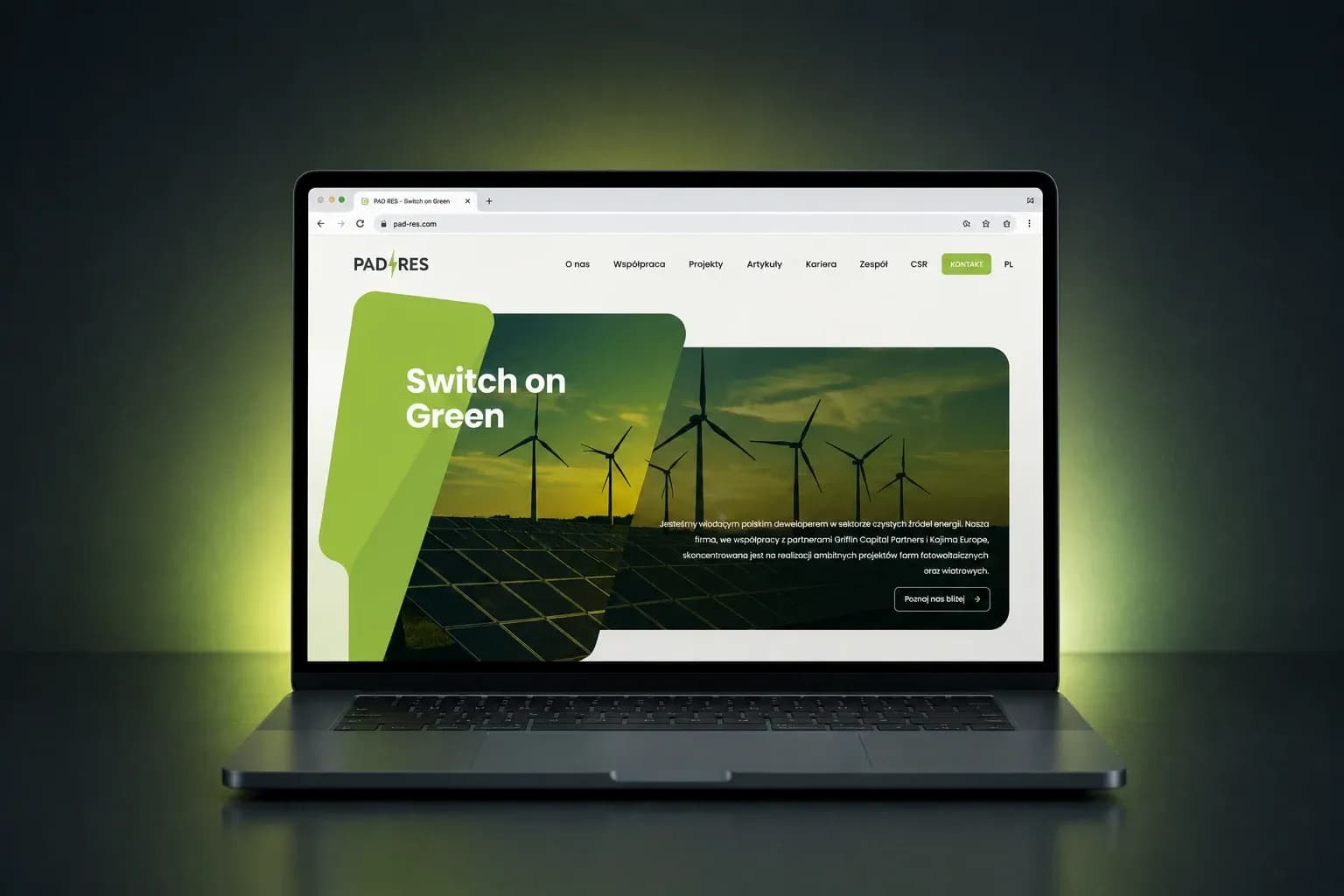
Energy project developers have a different audience: partners, landowners, investors. Here the website works like a dossier — project portfolio, development stages, team — and it has to stand up to scrutiny from a counterparty checking credibility before a major transaction. That's what our work for a renewable energy project developer looked like.
What next, as the offer grows
As a company grows, a simple price list or a PDF catalog quickly stops being enough. Products, technical specifications and installation variants can be moved into a structured catalog, a configurator or a quoting system. A well-designed data structure makes it easier to extend the solution later with new features — such as e-commerce, a customer portal or integrations with other systems.
Case studies in renewable energy
„They know the technologies they work with very well and can give good advice on them. We're happy with how they ran our project.”
Michał Słotwiński — Head of Customer Success, Semcore
Review from ClutchThe basics
Where software really helps a renewable energy company
CleanTech covers solar PV installations, heat pumps, energy storage and all the work around them: sales, design, installation, monitoring and servicing. Most of the work in this industry is not about technology but about coordination — quotes, documentation, crew scheduling, grid operator applications. The most common bottleneck is quoting. Every installation is different, and pricing requires data on the roof, energy consumption and available funding. In practice, this is done in spreadsheets, and the salesperson waits until the designer has a spare moment. Sorting out this one process usually delivers more than any other change. The second area is post-installation monitoring: a fault detected by the system rather than reported by a customer on the phone turns servicing from reactive into planned — and that changes the economics.
Custom renewable energy software can also include customer portals, CRM systems, document generation, installation crew management and integrations with the company's existing tools.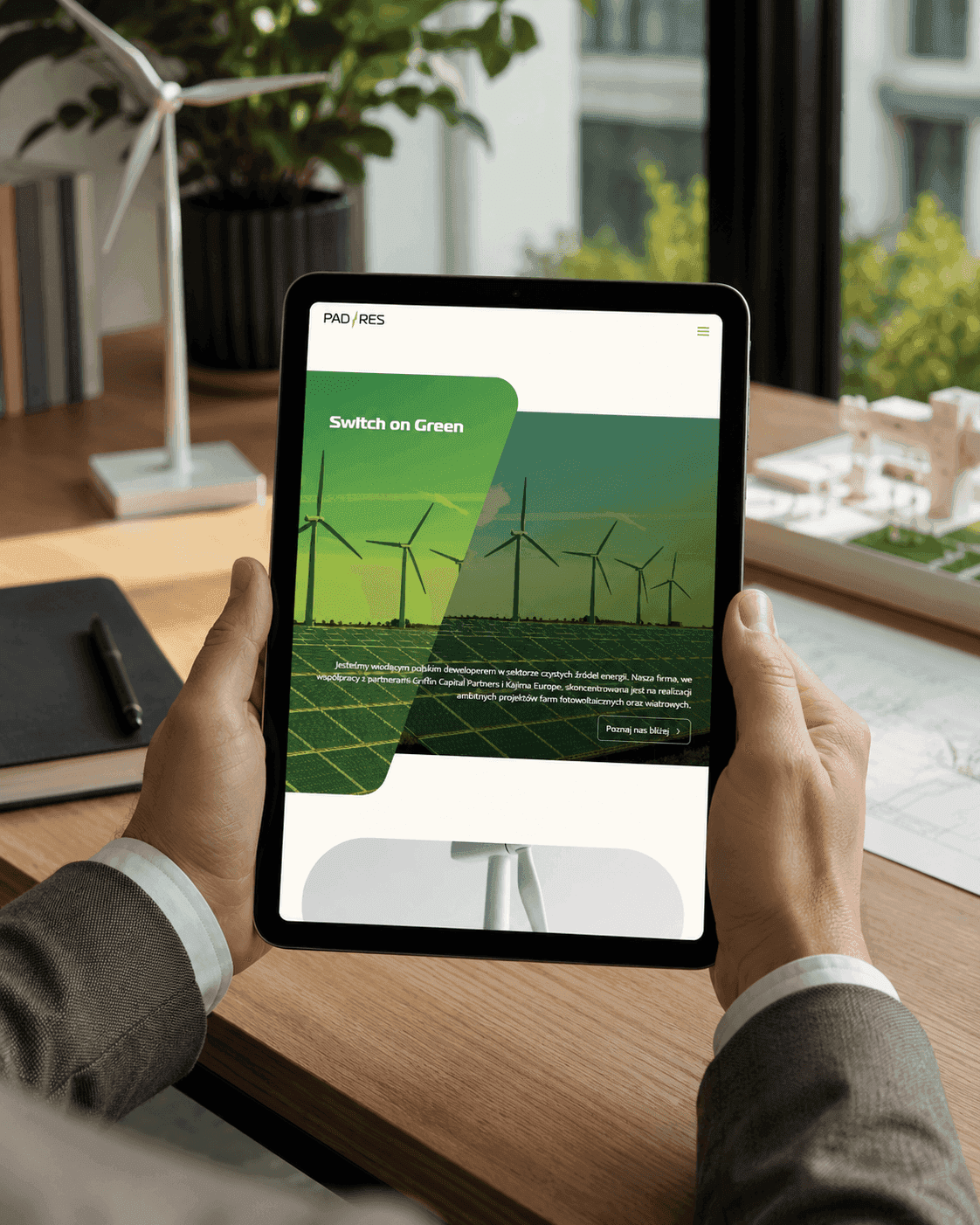
How we work
How we approach renewable energy projects
We start by getting to know the real process — together with the people who work with it every day. We look at where data is retyped by hand, where delays occur and which tasks can be safely automated. Then we define the scope of the first release. For installation companies, this might be a quoting system, a calculator or a streamlined sales process. In later stages, the solution can be extended to cover installation management, documentation, monitoring or servicing.
On your side are the pricing rules, product data and someone who knows how a job really runs. On our side are analysis, development, integrations and deployment.
The timeline depends on the number of installation variants and on whether the manufacturer's monitoring system exposes data through an API — without that, remote diagnostics are impossible, whatever we build.
Decisions
Decisions worth making before implementation
Which quotes the system calculates and which the designer does. Standard installations can be priced automatically; non-standard ones need human judgment. The boundary has to be clear, because an automated quote for an installation that can't be built costs more than having no automation at all.
Whether monitoring is yours or the manufacturer's. Your own layer gives you a single view of installations from different manufacturers; relying on manufacturers' dashboards means as many systems as you have suppliers. As the number of installations grows, that becomes a real cost.
Who reports a fault. The customer by phone, or the system automatically. The second option requires monitoring data, but it turns servicing from reactive into planned.
What not to do. Don't automate pricing for non-standard installations. Don't build monitoring before checking whether the devices share data at all. And don't start with a customer app — start with quoting, because that's where sales get stuck.
Scope
From discovery to communicating an energy project
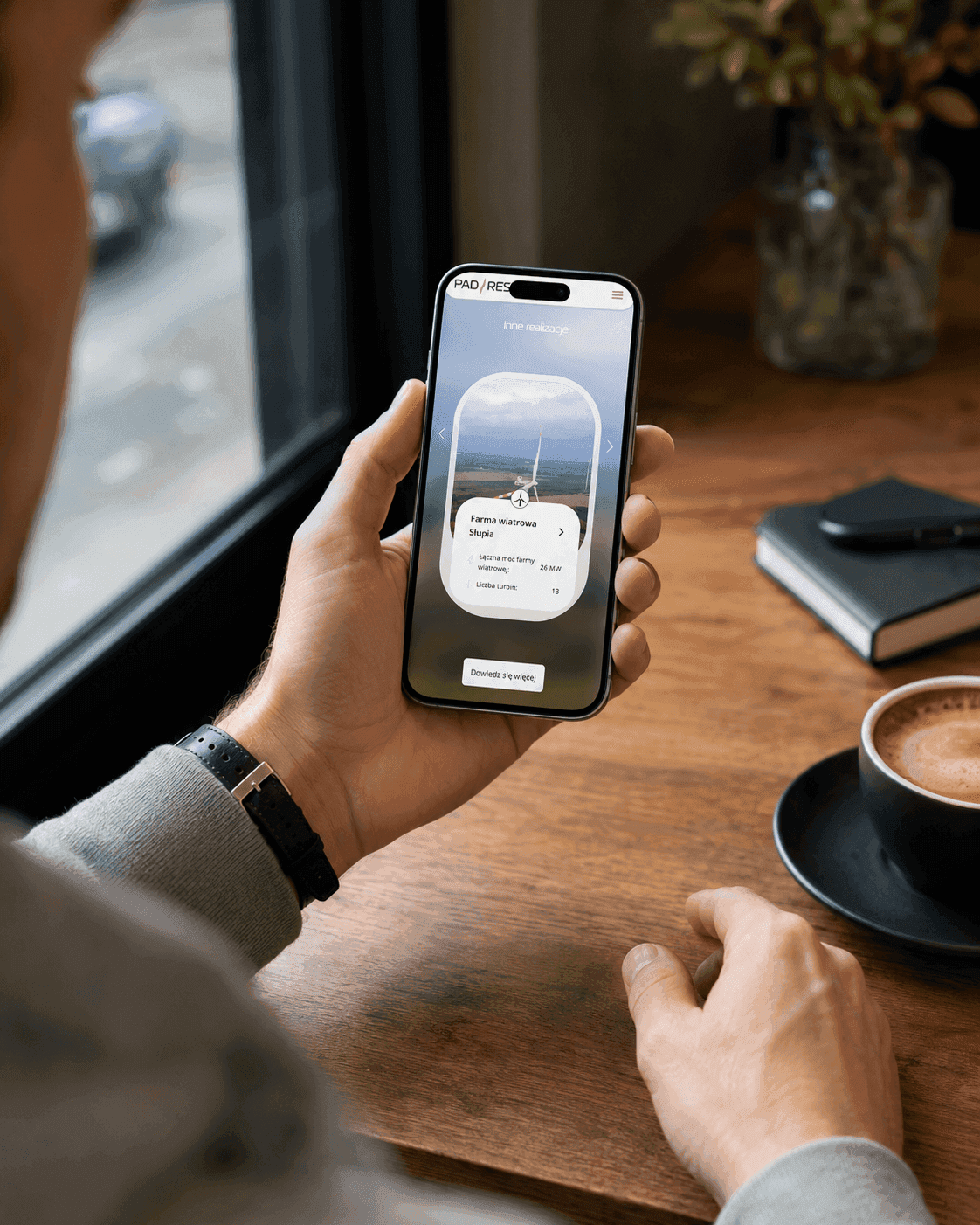
For PadRes, a renewable energy developer, we delivered the full process, covering workshops, branding, UX/UI and building the website.
In projects like this, we start by getting to know the company, its investments and its audiences. Only then do we design the communication and a website that presents its projects in a clear, credible way.What we build
Project websites, stakeholder communication, project data
We design websites that present companies, investments and portfolios of energy projects. They can include project maps, project data, schedules, news and materials for investors, partners and local communities, among other things. We present technical and business information in a way that people outside the industry can understand too.
Credibility
A credible brand in the energy sector
For large energy projects, the website is one of the things that builds trust in the company. It should consistently present the team's experience, the scale of operations, the projects under way and how the company communicates with everyone affected by a project.That's why we treat branding, UX/UI and development as parts of one process rather than separate activities.
FAQ
Questions we hear from the renewables industry
- Depending on the process, it can be a quoting calculator, a custom CRM, a client portal, an installation and service management system, monitoring, a document generator or an application integrating data from multiple sources. We establish the scope based on the company's actual needs.
- Yes, if the manufacturers provide a suitable integration method — an API, for example. Before development begins, we verify data availability, scope and any limitations of individual integrations.
- Yes. Standard variants can be priced based on defined business rules, product data and installation parameters. Unusual cases can be automatically routed for additional review by a designer or sales person.
- A custom system is particularly useful when a company manages many installations, uses devices from different manufacturers, or needs a single place to analyse data, alerts and service history. It's worth checking the integration capabilities of the devices in use first, though.
- Yes. We design and implement sites for installers, developers and other companies in the renewables and CleanTech sector. We combine UX/UI, development and SEO so the site can both build brand credibility and support lead generation.
- Yes. We often start with the one process that most limits sales or team productivity, then expand the system with additional modules and integrations. This allows the first version to go live faster and the product to be developed based on real usage.
- A company site or developer service is usually a few to several weeks, counting from the workshop. A quoting system or monitoring panel is a product project measured in months. Three things determine the range: the number of installation variants the system needs to handle, the number of integrations, and the state of your product data. That last point is often larger than the implementation itself, so we scope it separately.

Let's build digital products for your company together
Other industries
SEE ALL5 CASE STUDIES
Finance / FinTech
We design and develop digital solutions for financial services, insurance and lending companies and FinTech startups. We build online application forms, calculators, customer portals and custom systems, combining good UX with data security and a reliable architecture. We simplify processes that should feel simple to the user — even when complex rules, integrations and business requirements are running underneath.

8 CASE STUDIES
Real Estate / PropTech
For developers, real estate agencies, rental operators and PropTech companies, we build systems that bring order to sales, rentals and property data. We build custom CRMs, listing portals, booking systems, customer portals and analytics tools, among other things - integrated with the solutions your team already uses.
5 CASE STUDIES
Construction / ConTech
In construction and ConTech, we work with contractors, developers and design firms. We build construction project databases, job management systems and websites that bring order to B2B communication. Digitization arrives later here than elsewhere, so the starting point is often replacing paper and spreadsheets with one coherent system with a change history.

3 CASE STUDIES
Education / EdTech
We build e-learning platforms and LMS systems for EdTech startups, universities, training companies and language schools. Here, success is measured by completed courses, not by the length of the feature list — so we start with the learner's journey: the first visit, visible progress and getting back to learning that was interrupted two weeks ago. Payments, group licenses and reports all serve that one goal.

3 CASE STUDIES
Law / LegalTech
We design websites and custom software for law firms, in-house legal departments and LegalTech companies. We build calculators, qualifying forms, document workflow systems and solutions that make case handling more efficient, among other things. We automate repetitive processes and leave legal judgment to the lawyer.

2 CASE STUDIES
Automotive / Mobility
We work with parts manufacturers and distributors and automotive brands that sell online. We build stores and catalogs where customers get to the right part - by make, model and engine version, by OE number or by replacement. We make sure that expanding into new markets means configuring the existing platform, not building another store from scratch.