
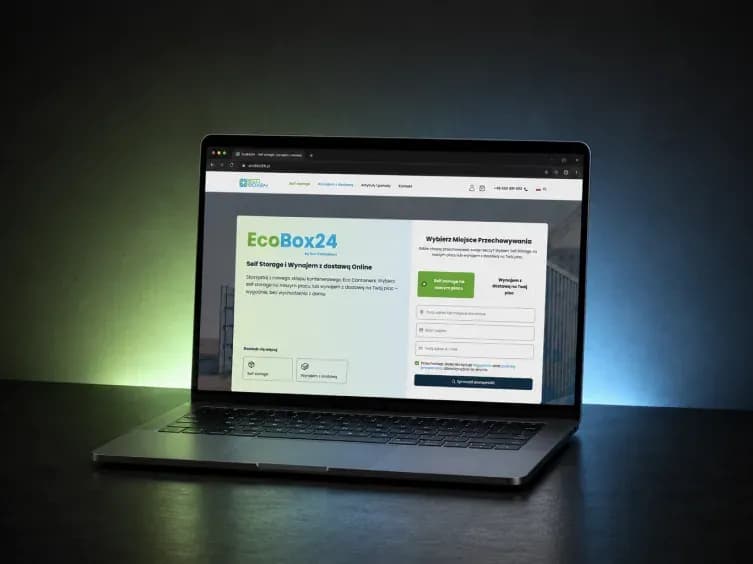
Renting storage in minutes instead of days – automated contracts and payments
Client: Balticon S.A.
Industry: Logistics / LogTech
We design and build online stores. We connect sales with ERP, WMS, payments and logistics so the store runs smoothly even with a large product catalog, multiple markets and a growing number of orders.
Companies that trusted us

























The basics
An online store isn't just a product catalog, a cart and a payment. It's also stock levels, prices, shipping, invoices, returns and order handling. That's why we choose the technology above all based on how your business works.
There are three routes on the market. Subscription platforms (Shopify) — the fastest start and a fixed fee, with limitations wherever your process differs from the standard. Open-source platforms (WooCommerce, Magento) — full control and your own hosting, in exchange for handling maintenance and updates yourself. A store built from scratch — makes sense when the way you sell is your competitive advantage and no off-the-shelf platform can support it.
Most stores don't need a system built from scratch. A custom online store makes the most sense for non-standard pricing, B2B sales, product configurators, large catalogs or advanced integrations.
Client: Balticon S.A.
Industry: Logistics / LogTech
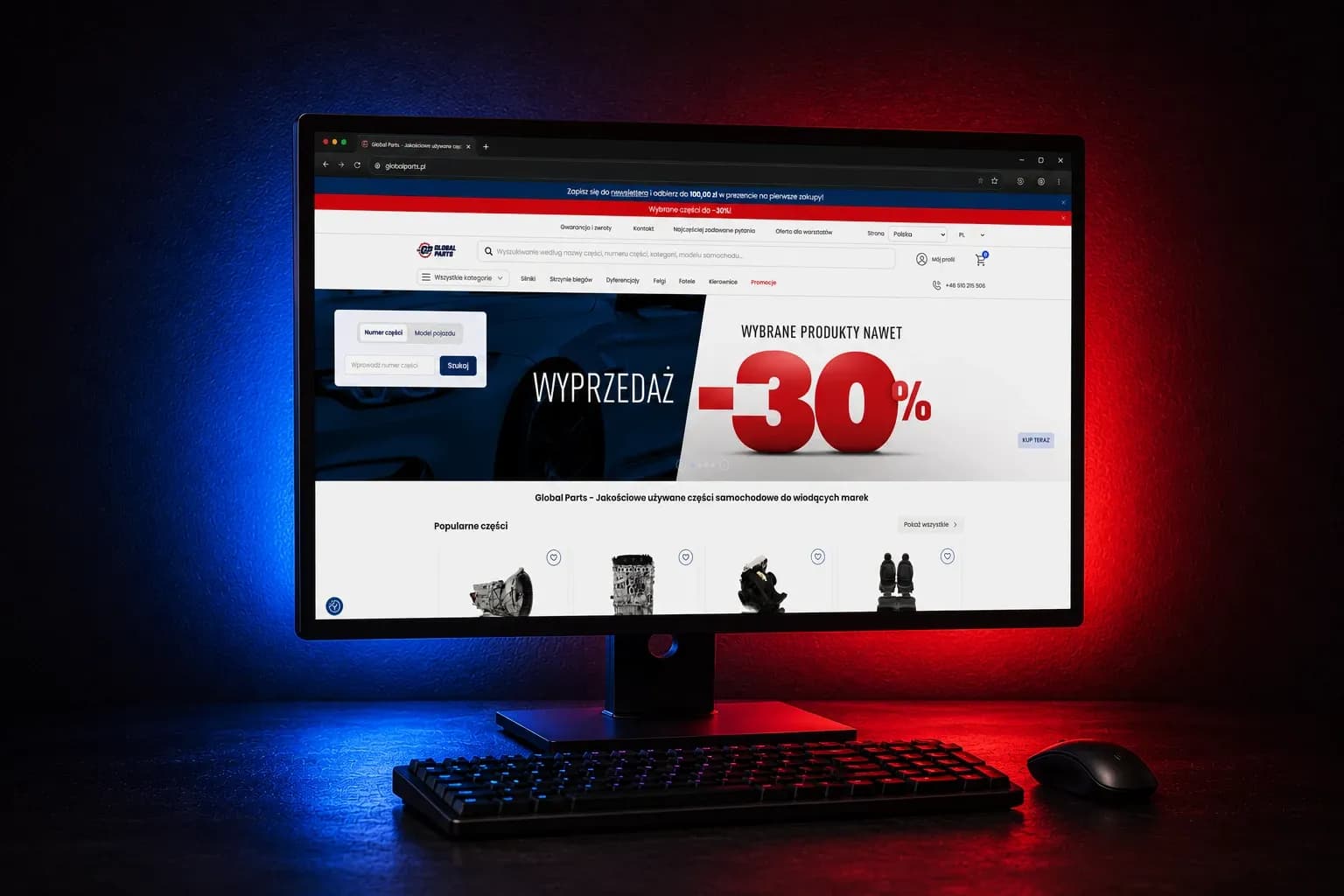
Client: Global Parts
Industry: Automotive / Mobility
„Everything was delivered on time, and the team kept us updated on progress throughout. At every stage of the project, they were ready to answer our questions and offer valuable suggestions.”
Tomasz Szpin — Director, GlobalParts-UK Limited
Review from Clutch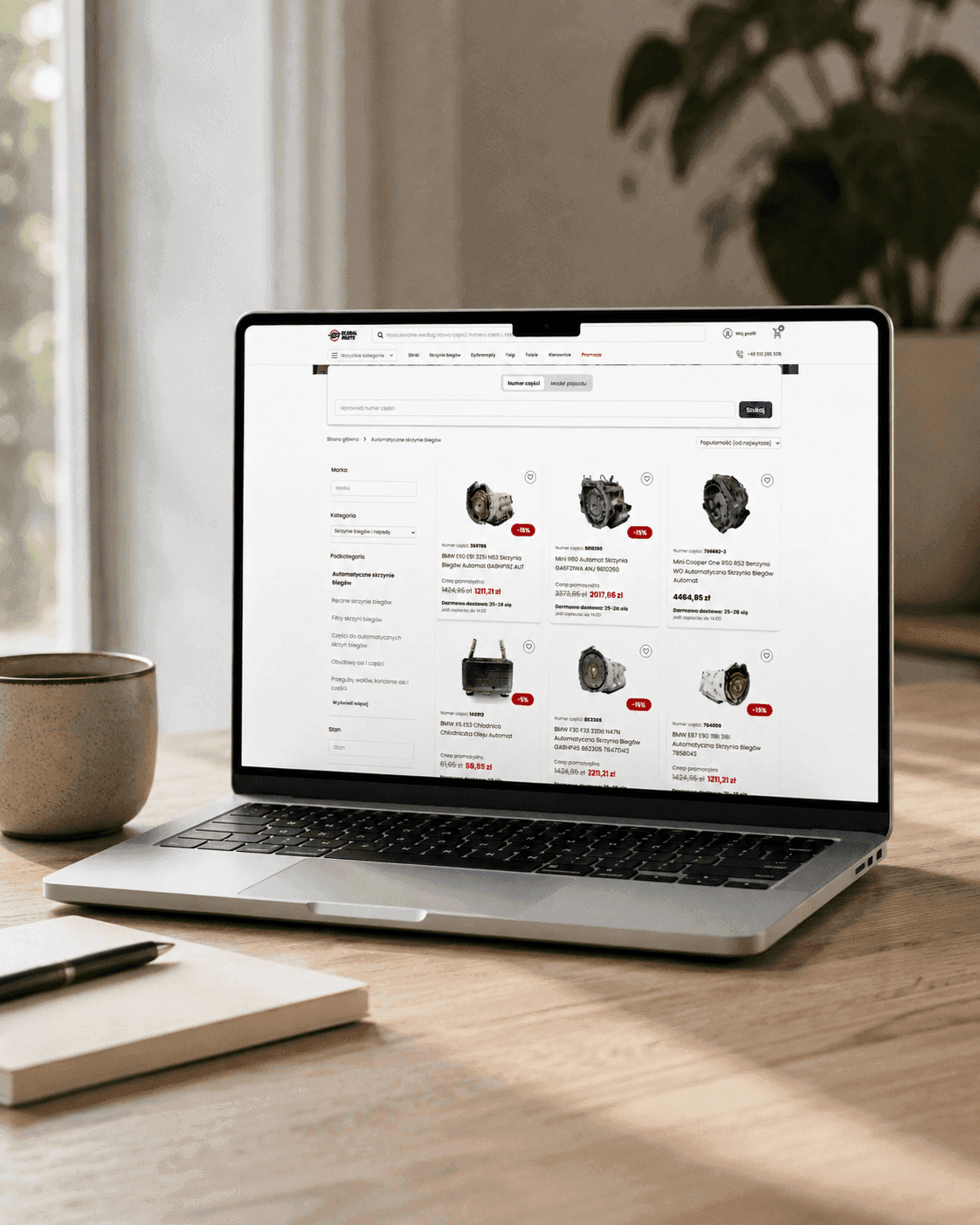
How we work
The first stage isn't the visual design but the data: how many products, which variants, where prices and stock levels come from, and what happens after an order is placed. That's what determines what can be done on an off-the-shelf platform and what needs a custom solution. Then we design the purchase path and build the store, connecting payments, shipping and the system you use for accounting or warehousing. Before launch, we run a complete test order — with payment, invoice and return — because mistakes in this part cost the most, and you only see them when everything is put together.
On your side are the product data and photos, contracts with the payment provider and the carrier, and the decision on your returns policy. On our side are implementation, integrations and handover.
Decisions
Where the truth about a product comes from. If prices and stock levels are kept in the ERP or a warehouse system, the store should pull them from there, not keep its own copy to update by hand. Settling this at the start saves work in two places at once — and discrepancies that the customer will be the first to notice.
Product and variant structure. Sizes, colors, lengths and other parameters quickly multiply the number of combinations. A well-planned catalog structure makes the store easier to manage and easier for customers to shop.
Order handling. It's worth checking from the start which tasks can be automated — especially as order volumes grow or sales spike seasonally.
Integrations. ERP, WMS, accounting, payments, couriers and marketplaces should form one coherent process. Planning them only after the store has launched usually means extra work and cost.
Scope
We build both classic online stores and more complex sales platforms.
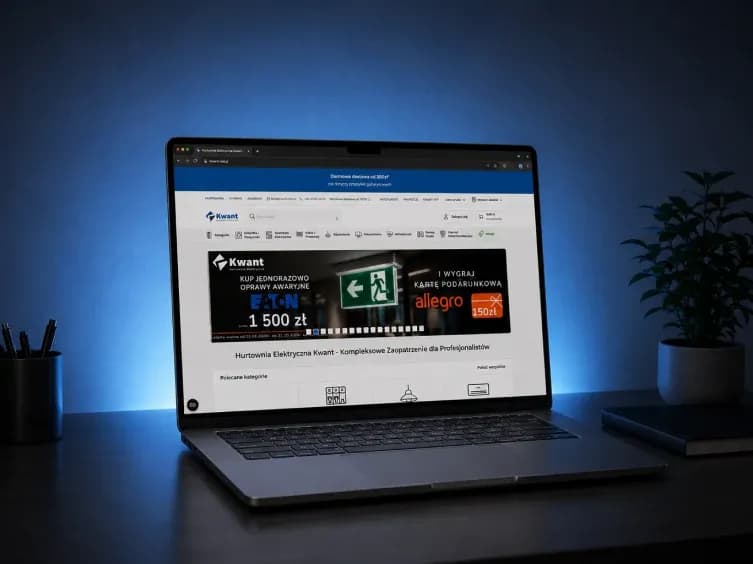
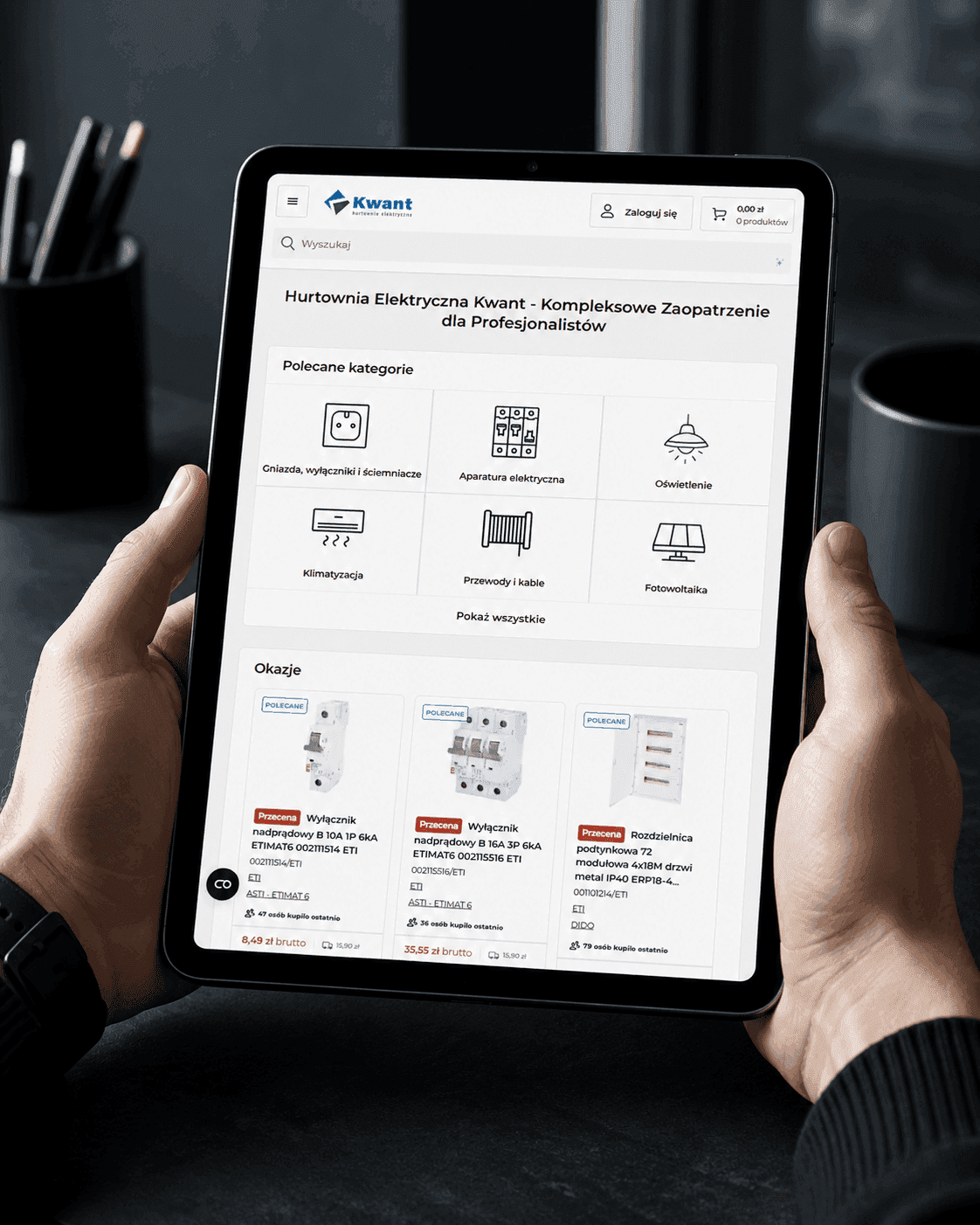
For Kwant, we built an e-commerce platform that handles tens of thousands of products with filtering by technical parameters. Global Parts runs its own sales in nine markets, reducing its dependence on marketplaces. At Balticon, we connected the ordering process with automated contracts and payments.
In every case, the technology is matched to the sales process — not the other way around.
Integrations
We connect the online store with the systems your company uses, so that prices, stock levels, orders and shipments flow automatically between them. We integrate ERP, WMS, accounting systems, online payments and logistics operators, among others. This reduces manual data entry and the risk of errors when fulfilling orders.
Ahead of peak sales periods, we can also run performance tests to check how the store behaves under heavier traffic.Conversion
We design the purchase path so customers can quickly find the right product and get from landing on the site to placing an order. We analyze conversion, cart abandonment and how the store performs on mobile devices, among other things. Based on that, we can improve product pages, checkout, search, filtering and other elements that affect sales.
We also take care of the store's technical SEO and category structure, so the platform is ready to build search visibility from the moment it launches.We design and build custom web applications - from an MVP that lets you quickly validate an idea to large platforms and systems developed over years. We build both the front end and the backend, APIs, databases, admin panels and integrations with external systems. We work with Next.js, React, Node.js, NestJS, Python, PostgreSQL and MongoDB, among others. We create solutions tailored to a specific business process: SaaS applications, internal systems, sales platforms, websites, marketplaces and CMS systems.
Learn moreWe help increase website visibility in Google and in AI-generated answers. We combine technical SEO, content optimization and work on the site structure. We start with an audit and turn the most important recommendations into concrete changes in the code.
Learn moreWe design and build online stores and e-commerce platforms tailored to your sales model and business processes. We work with off-the-shelf solutions as well as headless architecture and custom sales systems. We build e-commerce for B2C and B2B sales, large product catalogs, multiple markets and marketplaces. We integrate stores with ERP, WMS, CRM, PIM, payments and logistics, and design product configurators and custom purchase flows. We also take care of performance, technical SEO and preparing the platform for seasonal traffic peaks.
Learn moreWe design UX/UI for web and mobile applications and B2B systems - from analyzing user needs and early wireframes to the finished interface and a design system in Figma. We don't design screens in isolation from the product. We look at user journeys, analytics data and technical constraints to create a solution that's easy to use and can be built efficiently. After the product launches, we can come back to heatmaps, session recordings, analytics and user interviews, so that the next changes are driven by data, not assumptions.
Learn moreNeed an extra developer, a UX/UI designer or a whole development team? In the staff augmentation model (IT body leasing), we join your team and work within its processes. As a dedicated team, we can also take over organizing the work and delivering the project. We work with React, Next.js, Node.js and Python. You can scale the team up or down as the project's needs change.
Learn moreFAQ