
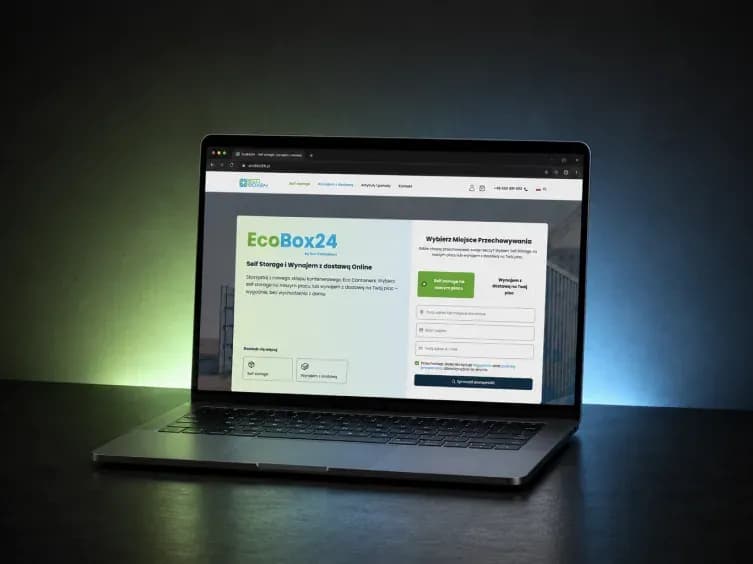
Renting storage in minutes instead of days – automated contracts and payments
Client: Balticon S.A.
Industry: Logistics / LogTech
We build custom software for logistics, transport and freight forwarding companies and warehouse operators. We automate document workflows, payments and repetitive processes, build operational dashboards and integrate new solutions with the systems the company already uses.
Our clients in logistics

By logistics, we mean companies that manage the flow of goods: warehouse operators, courier and transport companies, distributors, manufacturers with their own logistics, and 3PL and 4PL platforms. The problems usually come down to three things — visibility of what's happening to the goods, documentation and billing.
Documentation is especially costly here. In many companies, transport orders, consignment notes, handover reports and contracts still circulate on paper or as scans, and every such workflow means delays and room for error.
In many companies, transport orders, consignment notes, delivery receipts and contracts still circulate as printouts or scans. Every such workflow means a delay, room for error and — in a dispute — a document nobody can find quickly. The fastest return usually comes from moving the whole path into one app: order, proof of delivery and billing, with an e-signature instead of a printout carried around in the cab. Drivers don't have to go back to the depot for a signature, and the forwarding team sees the status the moment it happens, not the next day.
Logistics systems don't exist in a vacuum: the WMS talks to the ERP, telematics to route planning, the customer portal to invoicing. A project that doesn't start with an integration map ends with data being retyped by hand between systems — exactly what the company wanted to get away from. That's why we start implementations with the data flow architecture, and treat process automation as part of digital transformation, not an add-on to the interface.
The third recurring thread is visibility for the end customer: the status of a shipment or order available without calling the office. A customer portal that shows progress, documents and invoices in one place takes most repetitive questions off the service team — and gives the company an edge in tenders where the buyer asks about reporting tools.
Client: Balticon S.A.
Industry: Logistics / LogTech
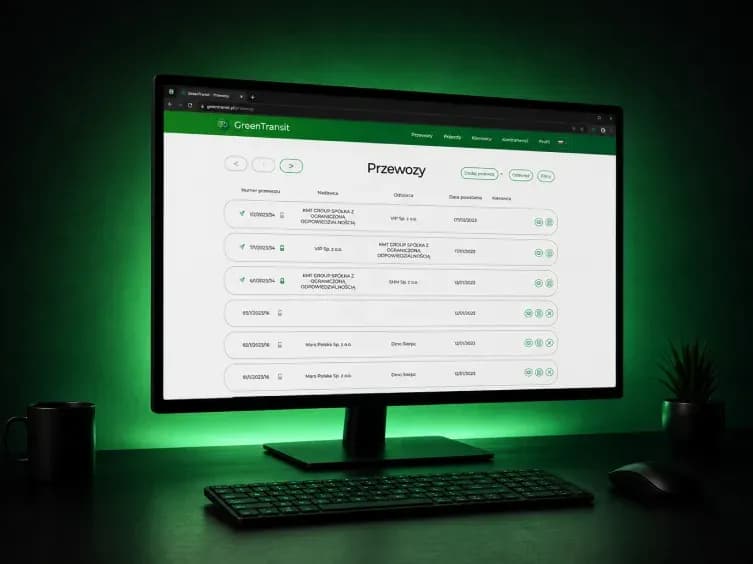
Client: Green Transit
Industry: Logistics / LogTech
„The system's scope kept changing practically the entire time it was being built, and yet together with Boring Owl we got it to a version ready for sale. To us, they're not just a software house but also a partner and advisor.”
Hubert Zaborowski — Co-Owner, SHM Sp. z o.o.
Review from ClutchThe basics
LogTech is software that supports the flow of goods: warehousing, transport, shipping documents, shipment tracking. In this industry, digitization rarely concerns just one company — data has to move between the sender, the carrier, the warehouse and the recipient, and each of them has its own system or none at all. The biggest potential for automation usually lies where staff retype the same data over and over, documents pass between several people, or customers have to contact the service team to check the status of an order.
That doesn't always mean implementing a new WMS or TMS. Sometimes an app that complements your current systems has a bigger impact — for example, a customer portal, a digital document workflow, carrier integration or automating a specific process.
How we work
We start by getting to know the process as it actually works. We talk to the people who work with it every day and look at where manual operations, downtime and errors occur. Then we choose the processes where digitization can have the biggest impact, and design the data flow and the integrations needed.
On your side are data on locations and product range, access to partners' systems and the warehouse staff who know how a shift runs. On our side are analysis, development, integrations and a rollout that runs in parallel with existing work.
The timeline depends on the number of partners to integrate and the data exchange formats. Standard files go quickly; a carrier's own years-old format needs separate work for each such case.
Decisions
Which process really needs automating? It's not worth digitizing everything at once. It's best to start with the process that creates the most manual work, delays or errors.
Should documents be electronic? An electronic consignment note saves real time, but it requires the other party to accept it too. It's worth checking this with key partners before deciding, not after rollout.
Who can see shipment status? Giving customers tracking cuts down on phone calls, but it exposes delays nobody saw before. It's a decision about transparency, not technology — and it's better made deliberately.
What not to do. Don't roll out at the peak of the season. Don't leave the warehouse without a fallback mode in case the network goes down. And don't expect the system to sort out your storage locations — they have to be mapped first, and that's physical work, not programming.
Scope
In logistics, solutions that automate large numbers of repetitive operations work especially well.
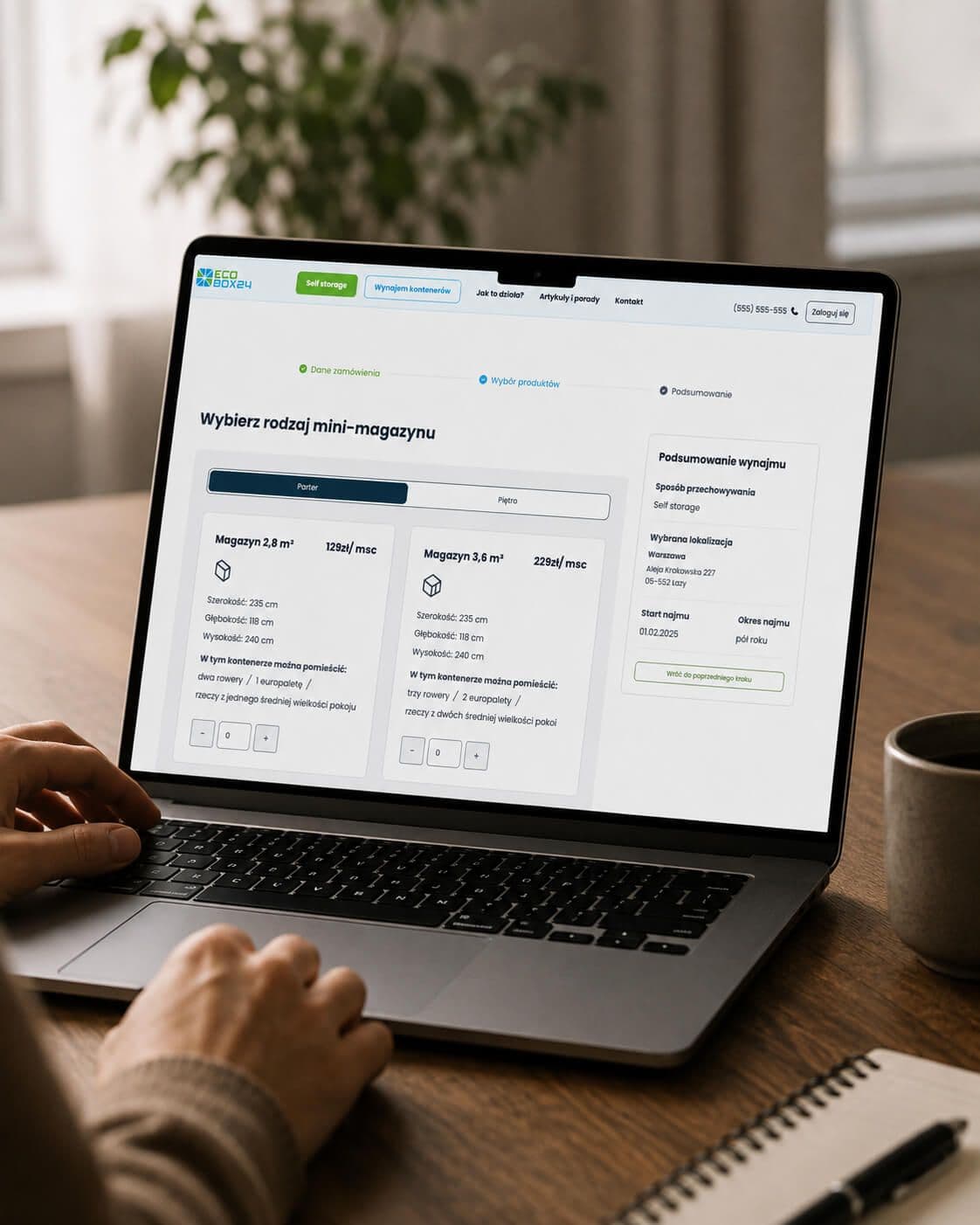
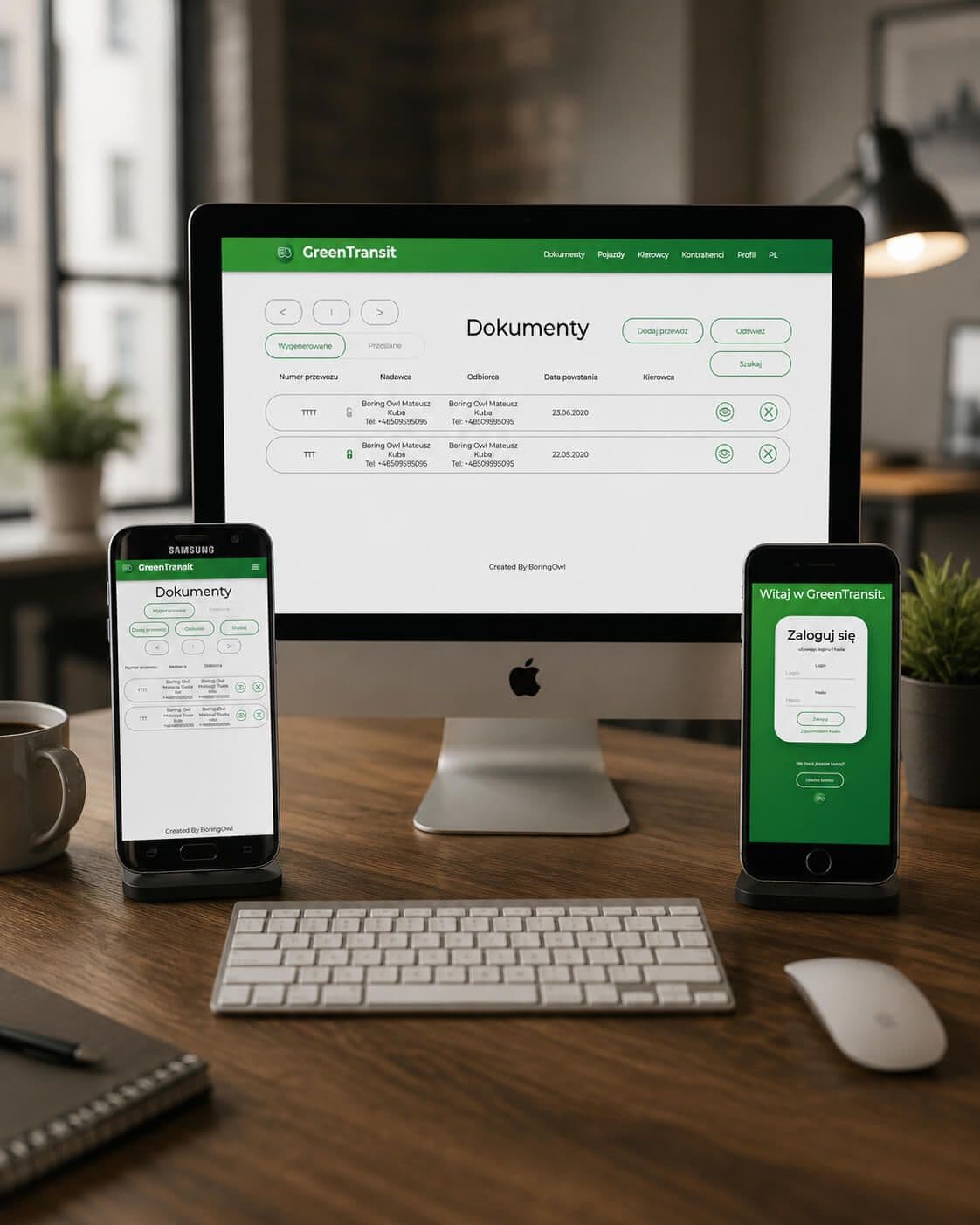
For Balticon, we built a system that handles contracts and payments for renting warehouse space. For Green Transit, we digitized the transport document workflow and enabled real-time tracking of process statuses.
What we build
The return is simple to calculate: hours of manual work and retyping errors replaced by a data flow.
Specifics
Logistics doesn't stop when the office closes. That's why, when designing systems, we plan for business continuity, error handling and situations where an external service or device temporarily stops responding. We plan the rollout to minimize the risk of downtime and allow a safe transition from the existing process to the new solution.
FAQ

We design and develop digital solutions for financial services, insurance and lending companies and FinTech startups. We build online application forms, calculators, customer portals and custom systems, combining good UX with data security and a reliable architecture. We simplify processes that should feel simple to the user — even when complex rules, integrations and business requirements are running underneath.

For developers, real estate agencies, rental operators and PropTech companies, we build systems that bring order to sales, rentals and property data. We build custom CRMs, listing portals, booking systems, customer portals and analytics tools, among other things - integrated with the solutions your team already uses.

In construction and ConTech, we work with contractors, developers and design firms. We build construction project databases, job management systems and websites that bring order to B2B communication. Digitization arrives later here than elsewhere, so the starting point is often replacing paper and spreadsheets with one coherent system with a change history.

We build e-learning platforms and LMS systems for EdTech startups, universities, training companies and language schools. Here, success is measured by completed courses, not by the length of the feature list — so we start with the learner's journey: the first visit, visible progress and getting back to learning that was interrupted two weeks ago. Payments, group licenses and reports all serve that one goal.

We design websites and custom software for law firms, in-house legal departments and LegalTech companies. We build calculators, qualifying forms, document workflow systems and solutions that make case handling more efficient, among other things. We automate repetitive processes and leave legal judgment to the lawyer.

We work with parts manufacturers and distributors and automotive brands that sell online. We build stores and catalogs where customers get to the right part - by make, model and engine version, by OE number or by replacement. We make sure that expanding into new markets means configuring the existing platform, not building another store from scratch.