

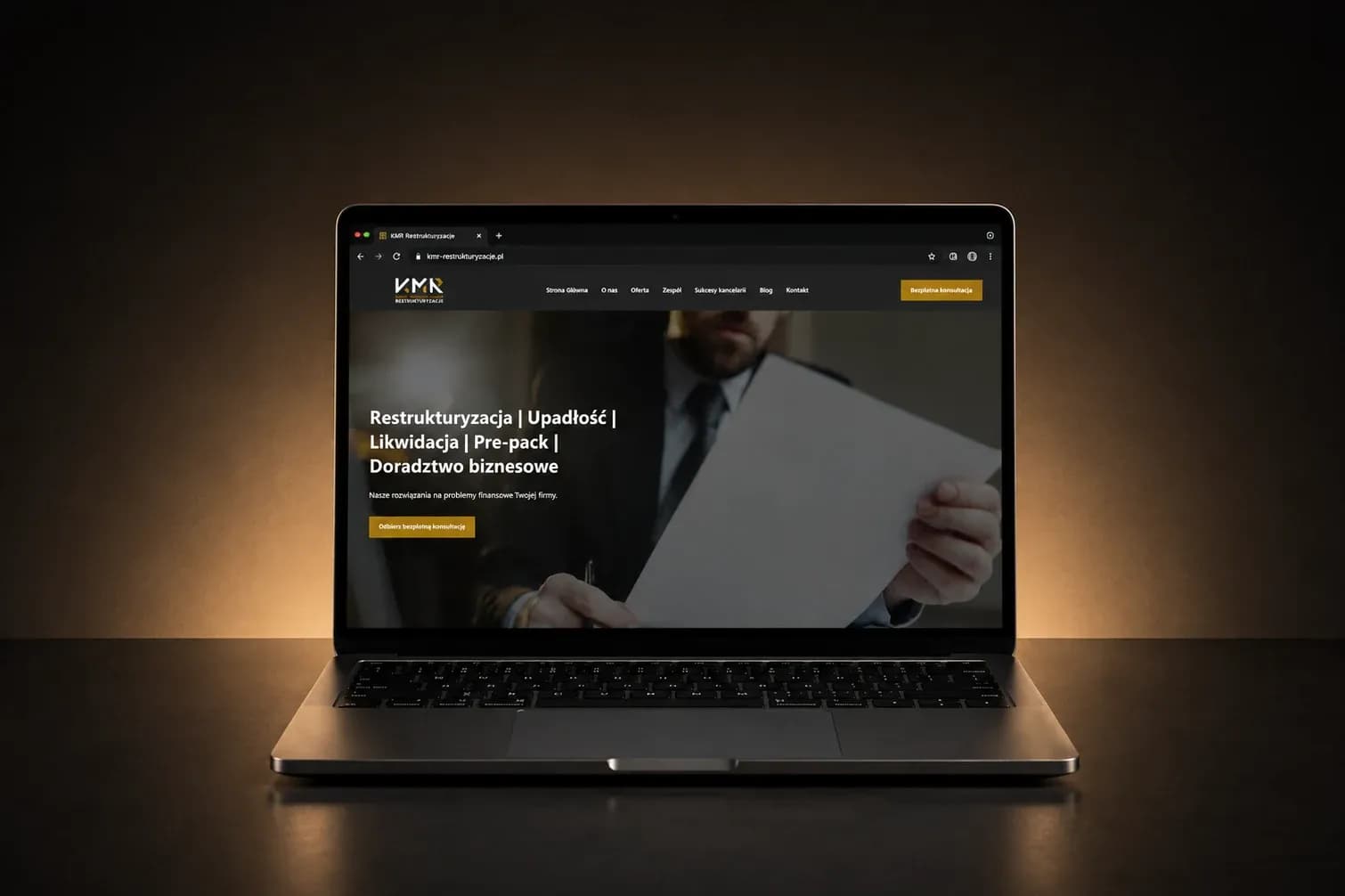
A website that builds trust in the firm from the very first contact
Client: KMR Restrukturyzacje
Industry: Law / LegalTech
We design websites and custom software for law firms, in-house legal departments and LegalTech companies. We build calculators, qualifying forms, document workflow systems and solutions that make case handling more efficient, among other things. We automate repetitive processes and leave legal judgment to the lawyer.
Our clients in legal



A law firm's client is often looking for help in a difficult situation and wants to be sure quickly that they've found the right specialist. That's why a law firm's website shouldn't just look good — above all, it should clearly present the firm's areas of practice, the team's experience and the next steps toward getting in touch. Online tools can also bring order to the first stage of client intake. A form, a calculator or a short qualification process makes it possible to gather the key information before the client speaks to a lawyer.
In restructuring or compensation matters, clients first want to know whether they "have a case" at all. A form that asks a few specific questions and responds with a preliminary assessment does two things at once: it gives the client an answer straight away, and it gives the firm inquiries with complete information instead of "please get in touch" emails. We built this kind of mechanism for a restructuring law firm — a calculator that guides business owners through a preliminary assessment of their situation.
The firm's website itself builds trust through details: specific practice areas instead of a "full range of services", lawyer profiles, case descriptions within the limits of professional confidentiality. Add to that an editorial back end — publications and commentary through which the firm shows its expertise. We build the search visibility of this content through SEO, because in law, inquiries come from very specific problem-based searches.
Automation works best for repetitive tasks: collecting data, handling forms, passing on documents, notifications and organizing case information. Processes that require legal interpretation and judgment stay with the lawyer. The role of technology is to make their work more efficient, not to replace specialist knowledge.
Client: KMR Restrukturyzacje
Industry: Law / LegalTech
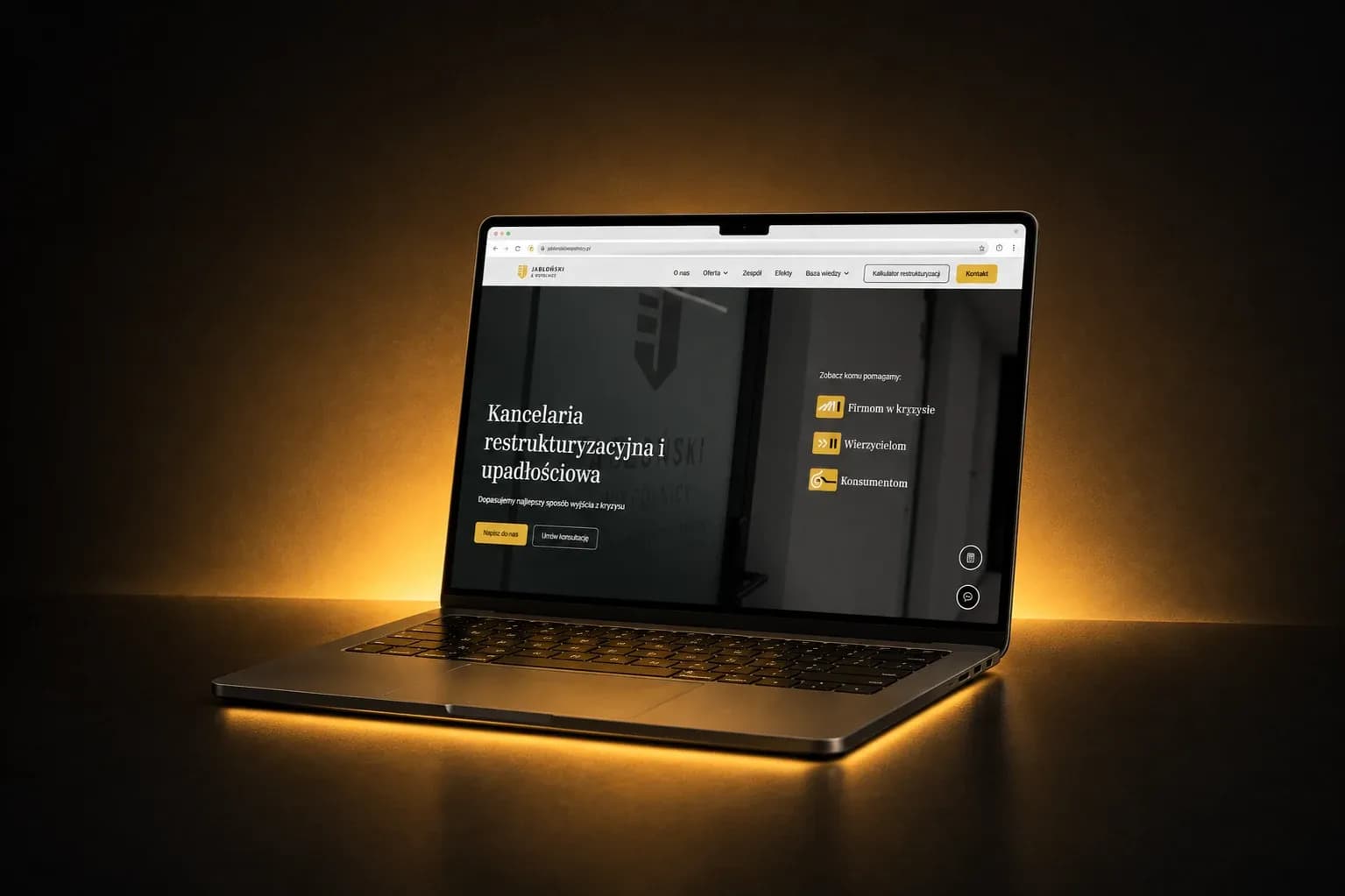
Client: Jabłoński & Wspólnicy
Industry: Law / LegalTech
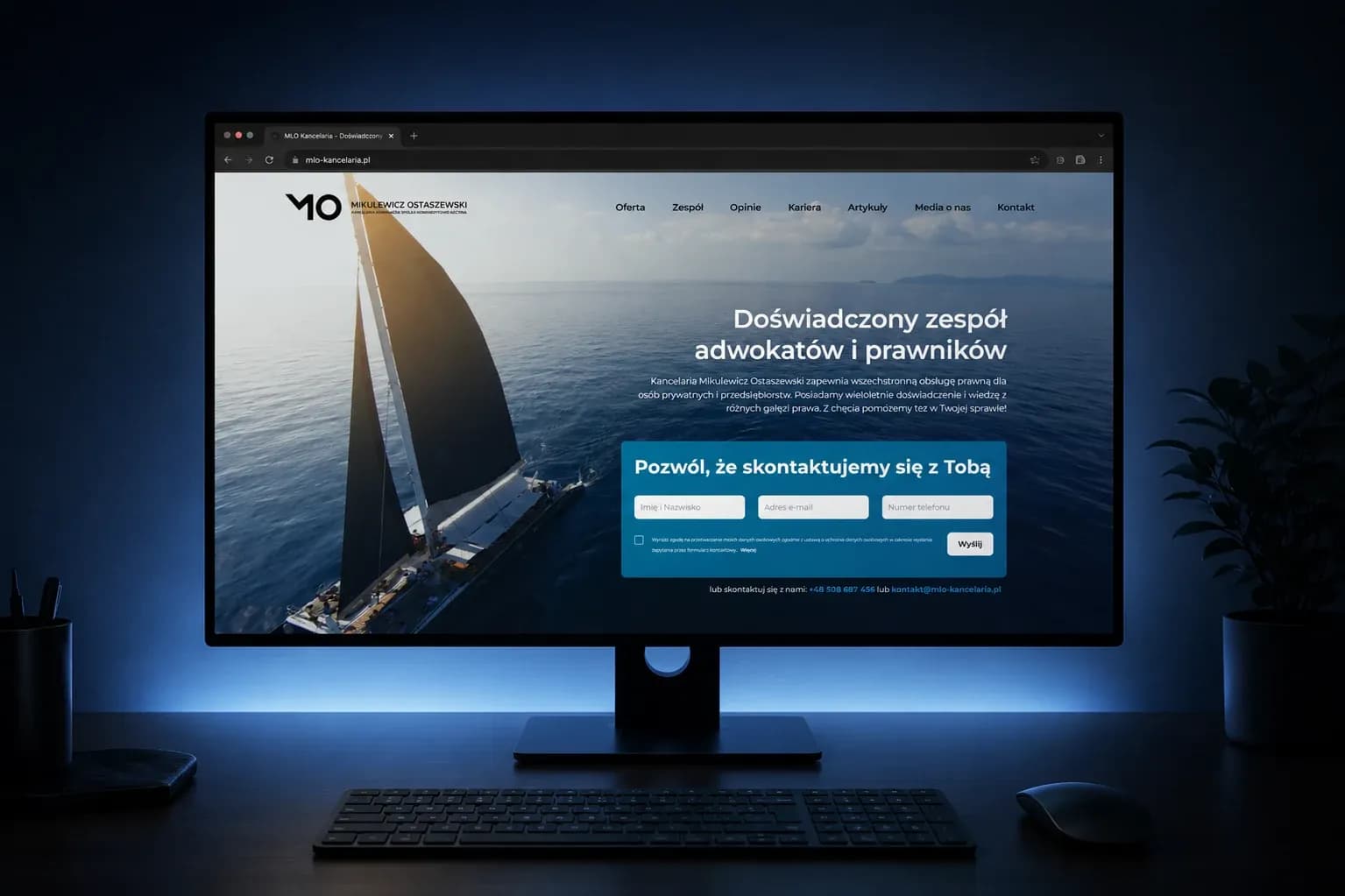
Client: Mikulewicz Ostaszewski
Industry: Law / LegalTech
„We knew what we wanted, but we couldn't put it into words. The workshops and research into similar websites did that for us — the rest of the project simply followed from that conversation.”
Krzysztof Kornas — CEO, High Culture sp. z o.o.
Review from ClutchThe basics
LegalTech software can support case management, documents, deadlines, forms, time tracking and the flow of information within the team, among other things. Automation makes the most sense for repetitive tasks based on clearly defined rules. Data entered once can flow to the right places in the system, documents can follow a set workflow, and the team can work on a single, up-to-date version of the information.
We match the scope of automation to the way a particular firm works - not the other way around.

How we work
We start by getting to know the real process: how a new inquiry comes in, where data is recorded, how documents move and at which stages the team works manually. Based on that, we decide which elements are worth improving first. That might be a qualifying form, a case register, a document workflow, a dedicated dashboard or integration with tools you already use.
We design the solution, deploy it and test it on real work scenarios. If the system supports drafting documents, we define the scope of automation and the points that require a lawyer's approval at the design stage.
On your side are document templates, rules for access to case files and decisions about what requires approval. On our side are the system, the templates and the rollout.
The timeline depends on the number of templates and the number of variants in each — it's the variants, not the documents themselves, that determine the workload.
Decisions
What the system generates and what the lawyer writes. The boundary has to be unambiguous and written down. A document that has been generated but still needs review should be clearly marked as a draft to be checked, not as final.
Who has access to case files. In a law firm, this isn't a matter of convenience — separating access can be a requirement towards the client. A shared team account makes it impossible to show who handled a case.
How deadlines are tracked. One register with notifications and a second person copied in. A deadline in one person's calendar isn't a system, it's a hope.
What not to do. Don't automate documents that require legal judgment. Don't move case files into the system without agreed permissions. And don't build templates from documents nobody has reviewed in years — this is a chance to update them.
Scope
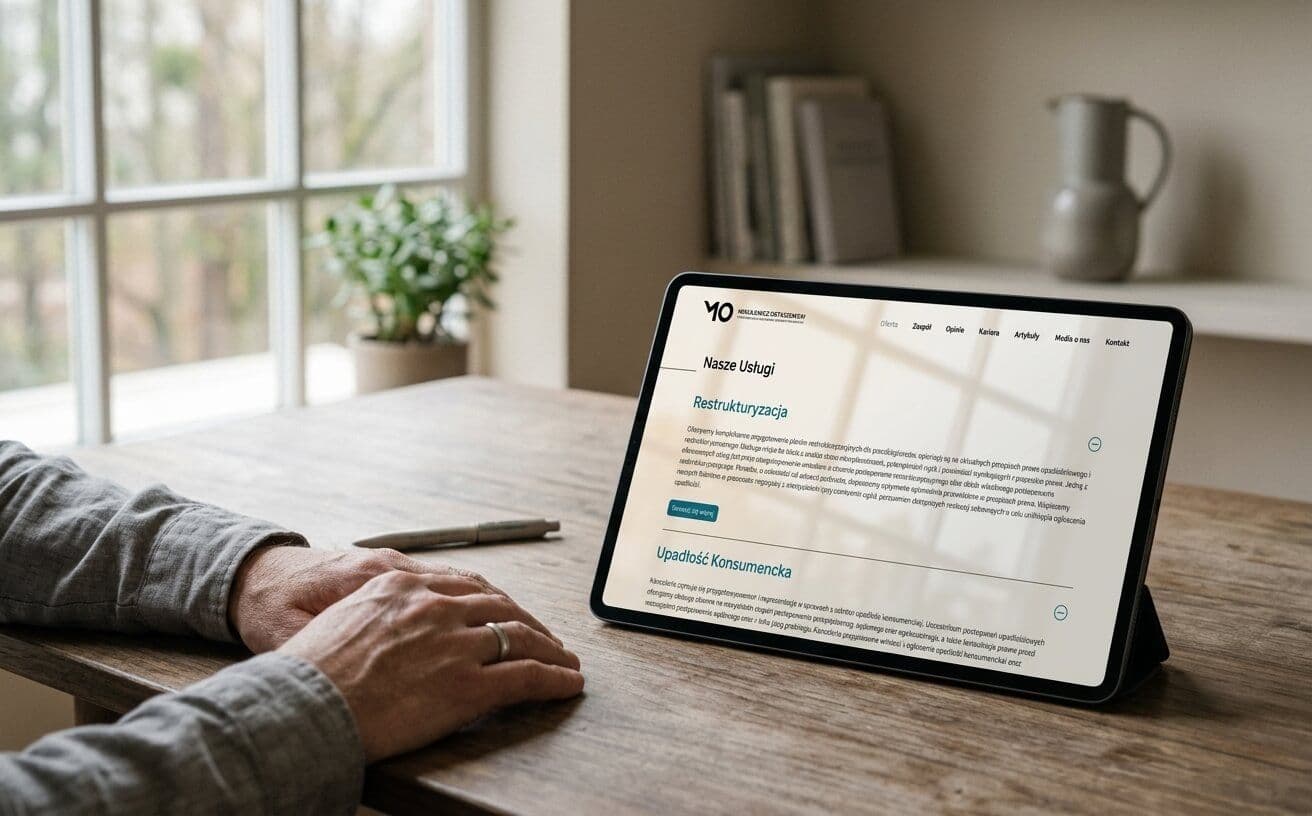
Three law firms, three different problems. KMR Restrukturyzacje needed an image that matched the firm's standing - the website had to win over a business owner in crisis before they picked up the phone. Jabłoński & Wspólnicy - automating the first contact. The calculator and forms take over the preliminary qualification, so what reaches the lawyer is a case, not a vague concern. Mikulewicz Ostaszewski - a content architecture that search engines understand. A separate page and FAQ section for each service category, plus a calculator that shows the benefit using the client's own numbers.
What we build
A calculator can help users understand their situation better. A form can collect the information needed before a consultation. And a well-designed knowledge base can answer clients' questions before they even contact the firm.
We combine these elements into one coherent process - from the moment a user lands on the website to sending an inquiry or booking a consultation.Client acquisition
FAQ

We design and develop digital solutions for financial services, insurance and lending companies and FinTech startups. We build online application forms, calculators, customer portals and custom systems, combining good UX with data security and a reliable architecture. We simplify processes that should feel simple to the user — even when complex rules, integrations and business requirements are running underneath.

For developers, real estate agencies, rental operators and PropTech companies, we build systems that bring order to sales, rentals and property data. We build custom CRMs, listing portals, booking systems, customer portals and analytics tools, among other things - integrated with the solutions your team already uses.

In construction and ConTech, we work with contractors, developers and design firms. We build construction project databases, job management systems and websites that bring order to B2B communication. Digitization arrives later here than elsewhere, so the starting point is often replacing paper and spreadsheets with one coherent system with a change history.

We build e-learning platforms and LMS systems for EdTech startups, universities, training companies and language schools. Here, success is measured by completed courses, not by the length of the feature list — so we start with the learner's journey: the first visit, visible progress and getting back to learning that was interrupted two weeks ago. Payments, group licenses and reports all serve that one goal.

We work with parts manufacturers and distributors and automotive brands that sell online. We build stores and catalogs where customers get to the right part - by make, model and engine version, by OE number or by replacement. We make sure that expanding into new markets means configuring the existing platform, not building another store from scratch.

For game studios, streaming platforms and brands that build communities, we create social apps, loyalty systems and content platforms. We design them for scale, traffic spikes and user engagement - from the first version of the product to its further development.