
An online suit configurator – customers arrive at the showroom knowing what they want
Client: Signor Leone
Industry: Fashion / FashionTech
We design online product configurators that guide customers through choosing variants, make sure options are compatible and can calculate the price automatically. Depending on the product, we build 2D or 3D configurators, or solutions based on parameters and specifications. A configurator works especially well where the number of available variants makes selling through a standard product page difficult.
Companies that trusted us


























The basics
A configurator lets customers build a product from the available options and see the result before they order. It makes sense where there are so many variants that they can't be shown as separate products — made-to-measure furniture, machinery, windows, shelving systems, personalized products. The value comes from two places at once. Customers stop asking whether something is available in a given size. Sales reps stop pricing variants by hand that follow from the price list anyway. If neither of these takes up your time, a configurator will be a nice extra that changes little.
A 3D version makes the biggest impression and is the most expensive. It can be essential where appearance drives the purchase; for technical products, a reliable 2D preview with a clear specification is often enough — customers decide based on dimensions and price anyway.
Client: Signor Leone
Industry: Fashion / FashionTech
„The system they built for us is well on its way to paying for itself — overall, we're happy. They're a smaller company, so they can focus on us and adapt flexibly to our needs.”
Michał Molicki — Co-Owner, Grow Creator
Review from Clutch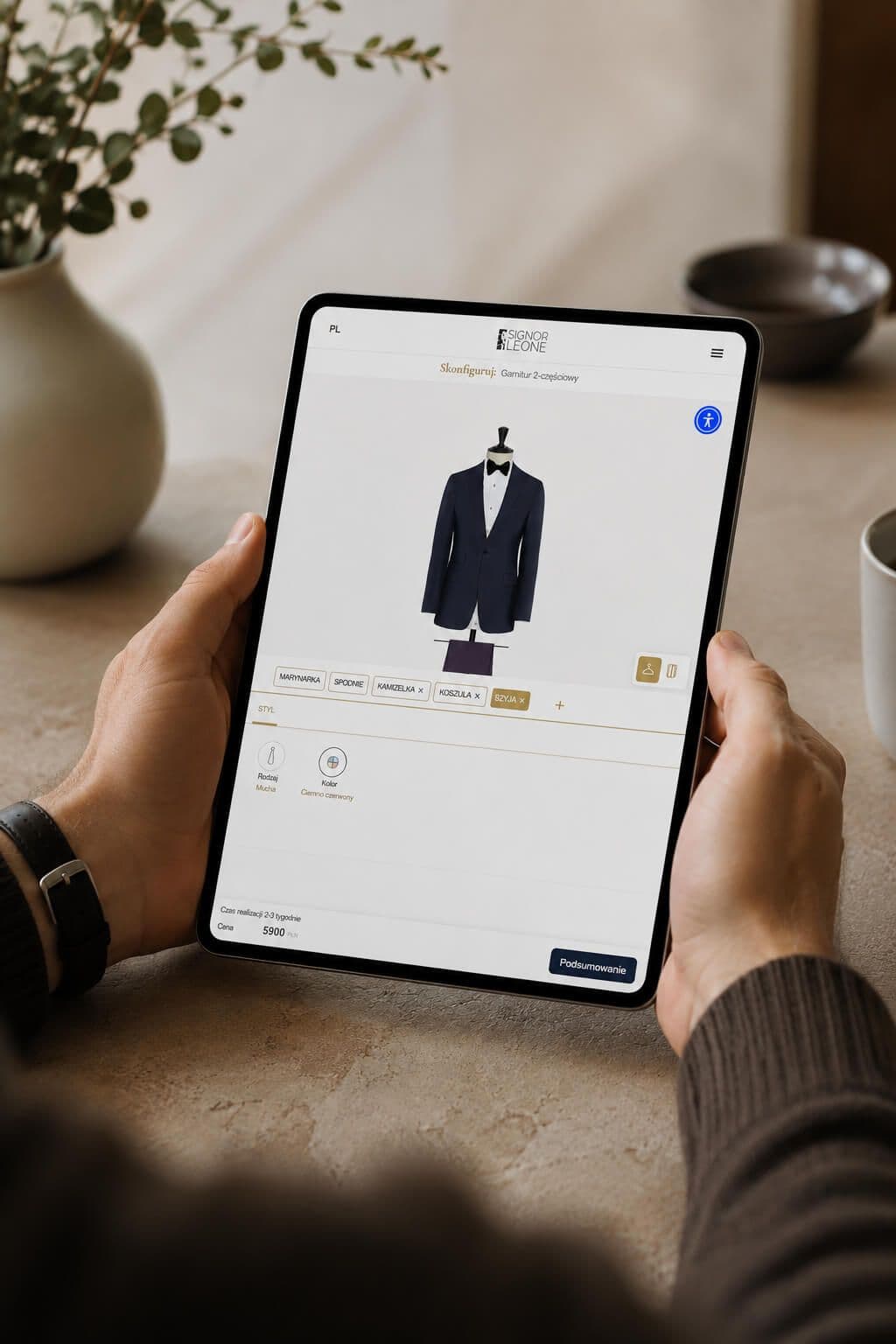
How we work
The starting point isn't the graphics but the rules: which options exclude each other, which require others, how the price is calculated, what isn't available in which variant. This set of rules usually lives in the sales team's heads, and writing it down is the hardest stage of the project. Then we build the rules engine, the preview and the pricing, and connect them to the store or the quoting process. Finally — testing with real configurations, including ones that shouldn't be possible; a configurator that lets customers build a product that can't be made costs more than having no configurator.
On your side are the rules, the price list and visual materials for the options. On our side are the engine, the interface, pricing and integration.
The timeline depends on the number of dependent rules, not the number of options. A hundred independent options are simpler than twenty, each of which changes what else is available.
Decisions
2D or 3D. 3D requires models of every variant and efficient in-browser rendering — the cost jumps, and on a weaker phone the result can look worse than a good 2D image. It's worth starting with 2D and checking whether customers ask for more.
Whether the configurator ends with a price. Showing the price at the end requires the price list to cover every combination — including rare ones. If it doesn't, it's more honest to end with a request for quote than to show a number the sales rep will later correct.
How many steps. Every extra step means losing some customers. It's worth starting with the options that actually change the decision and putting the rest under "advanced options".
What not to do. Don't build a configurator before the rules are written down — this isn't a step you can skip. Don't let customers build a product that can't be manufactured. And don't start with 3D if nobody has asked for it.
Scope
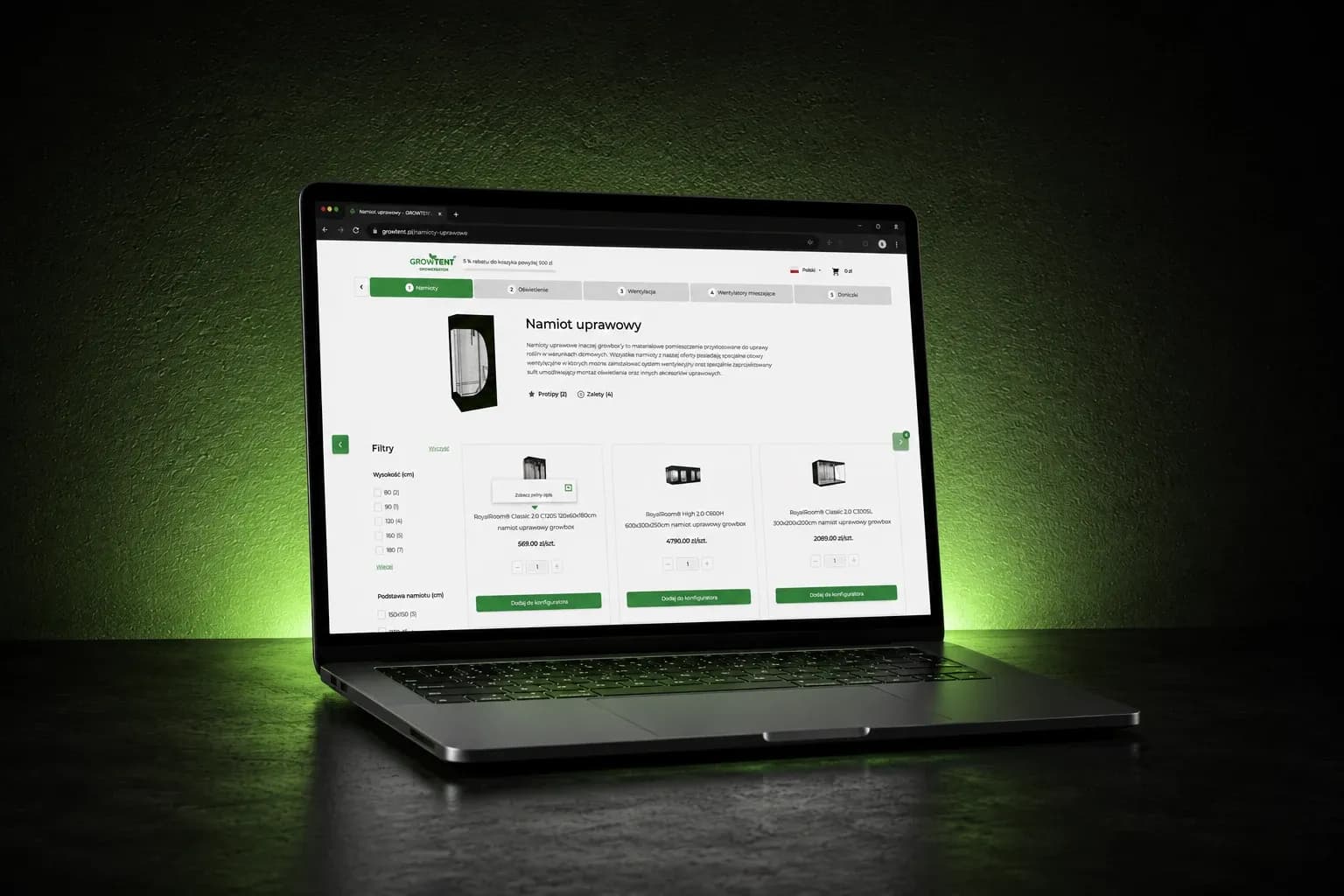
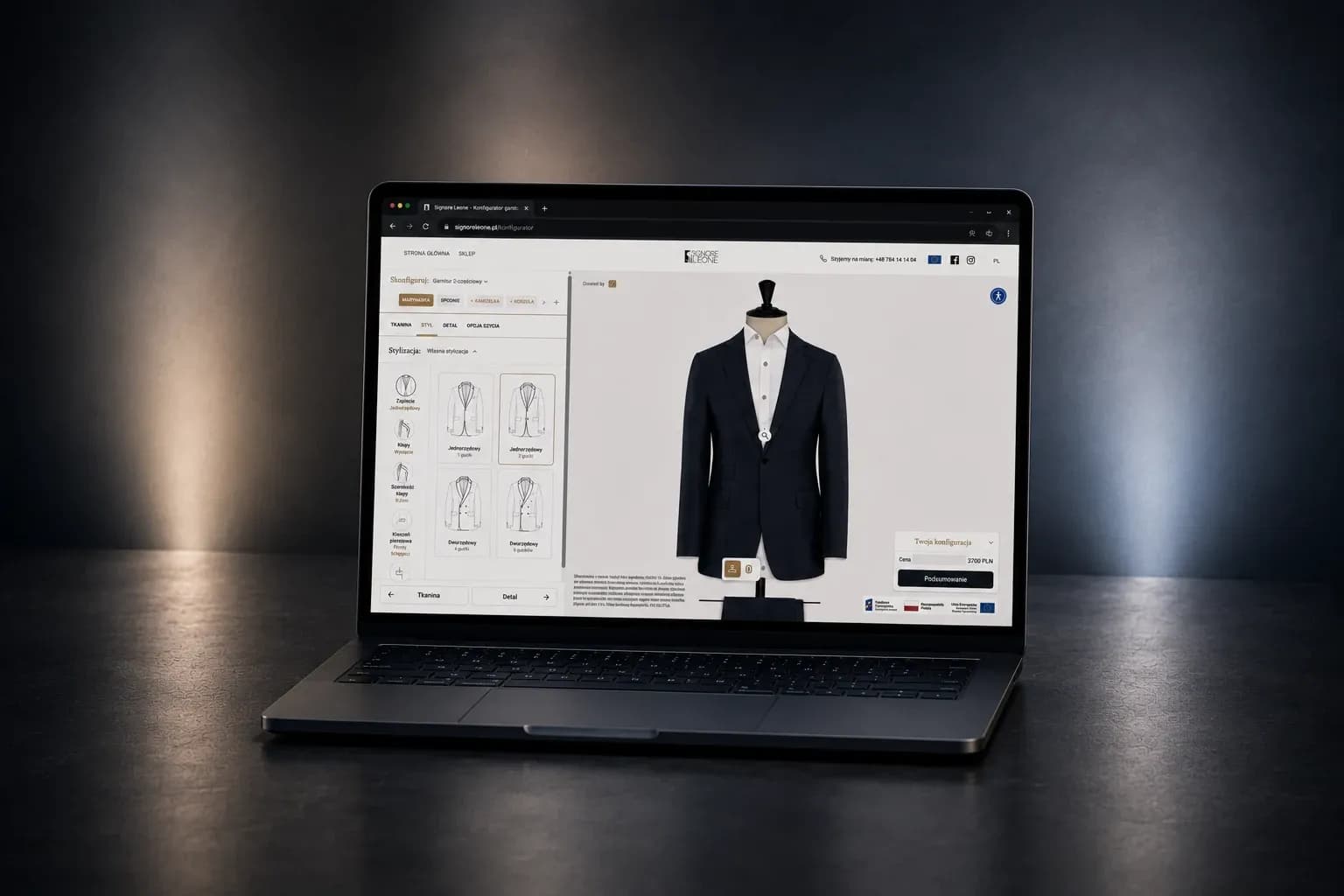
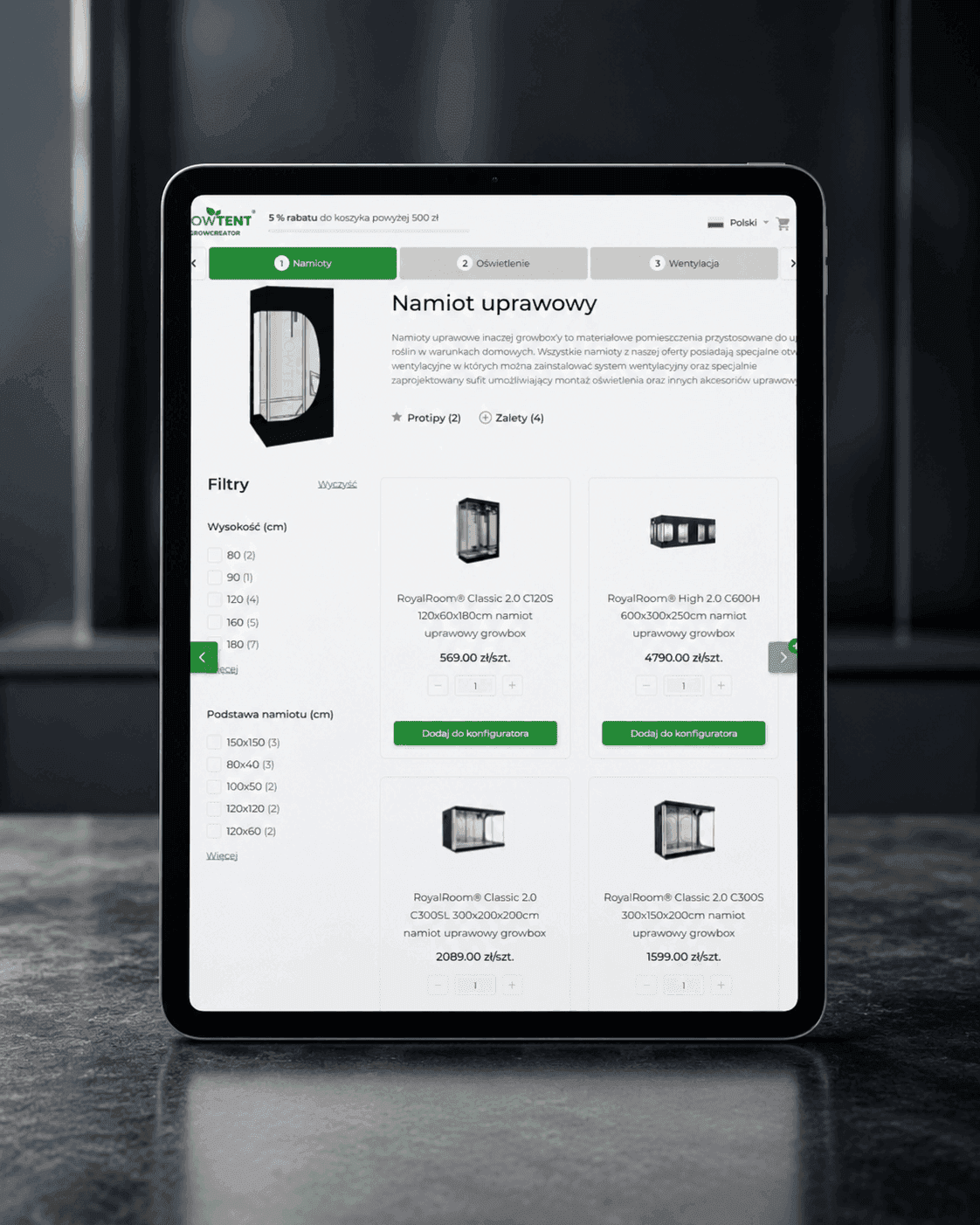
Signor Leone sells made-to-measure suits: the configurator guides customers through fabrics, cuts and details, so they arrive at the showroom with their minds already made up — the conversation is about measurements, not choices. GrowTent sells growing equipment assembled from components: the configurator picks a compatible kit and fills the cart in the existing store on its own.
We write down the rules together with sales reps and product specialists. They are the heart of the project, not the interface.
We run the same configurator in two modes. The public one serves customers who buy on their own. The internal one — with purchase prices, customer discounts and variants outside the public offer — supports sales reps in meetings and ends with a quote generated on the spot. In practice, it's a lightweight CPQ: configuration, pricing and quote in a single flow.
Rules
At the heart of a product configurator is a rules engine that makes sure users can choose only valid, compatible combinations. The system can respond automatically to a choice of size, material, color or component, adjusting the available options and hiding those that can't be combined.
If the pricing model allows it, the configurator can update the product price in real time after every change. The finished configuration can then go straight to the online store, the cart, a sales rep or other systems the company uses. Customers get clear information about the variant they've chosen, and the company cuts down on errors and manual quotes.
Business impact
A product configurator helps customers understand the offer faster and put together a variant that fits their needs on their own. Instead of going through a long list of products or contacting a sales rep about every option, users go through a structured process of choosing parameters and see the effect of their decisions right away. The sales rep receives a specific configuration, specification or request for quote, instead of starting the conversation by explaining every available option. This shortens the sales process and lets the team focus on advice where it's really needed.
A well-designed configurator also helps reduce the number of incomplete or incorrect orders. It can give the company data on which variants customers choose most often, which options attract the most interest and at which step users abandon the configuration.
We design and build custom web applications - from an MVP that lets you quickly validate an idea to large platforms and systems developed over years. We build both the front end and the backend, APIs, databases, admin panels and integrations with external systems. We work with Next.js, React, Node.js, NestJS, Python, PostgreSQL and MongoDB, among others. We create solutions tailored to a specific business process: SaaS applications, internal systems, sales platforms, websites, marketplaces and CMS systems.
Learn moreWe design and build online stores and e-commerce platforms tailored to your sales model and business processes. We work with off-the-shelf solutions as well as headless architecture and custom sales systems. We build e-commerce for B2C and B2B sales, large product catalogs, multiple markets and marketplaces. We integrate stores with ERP, WMS, CRM, PIM, payments and logistics, and design product configurators and custom purchase flows. We also take care of performance, technical SEO and preparing the platform for seasonal traffic peaks.
Learn moreWe design UX/UI for web and mobile applications and B2B systems - from analyzing user needs and early wireframes to the finished interface and a design system in Figma. We don't design screens in isolation from the product. We look at user journeys, analytics data and technical constraints to create a solution that's easy to use and can be built efficiently. After the product launches, we can come back to heatmaps, session recordings, analytics and user interviews, so that the next changes are driven by data, not assumptions.
Learn moreFAQ