


























Mobile Development
We design and build mobile apps for iOS and Android — from the first concept and UX/UI to development, backend and release on the App Store and Google Play. We work with native technologies — Swift and Kotlin — and cross-platform ones such as React Native and Flutter. We choose the technology based on the product, its features, the budget and plans for growth.
Companies that trusted us
The basics
A mobile app, a web app, or both
A mobile app makes sense when you need something a browser can't offer: notifications sent by the system, working without internet, access to the camera and sensors, in-app store payments or an icon on the phone's home screen. If none of these apply to your product, a well-built web application is often cheaper to build and maintain, and users don't have to install anything.
An important thing to decide before you start is how the app will be built. A native app, written separately for iOS and Android, gives the best performance and the earliest access to new system features, but it means two codebases. A cross-platform solution, such as React Native, lets you run one team and one codebase for both systems, at the cost of reaching for native code where necessary.
See the mobile development projects we delivered for clients
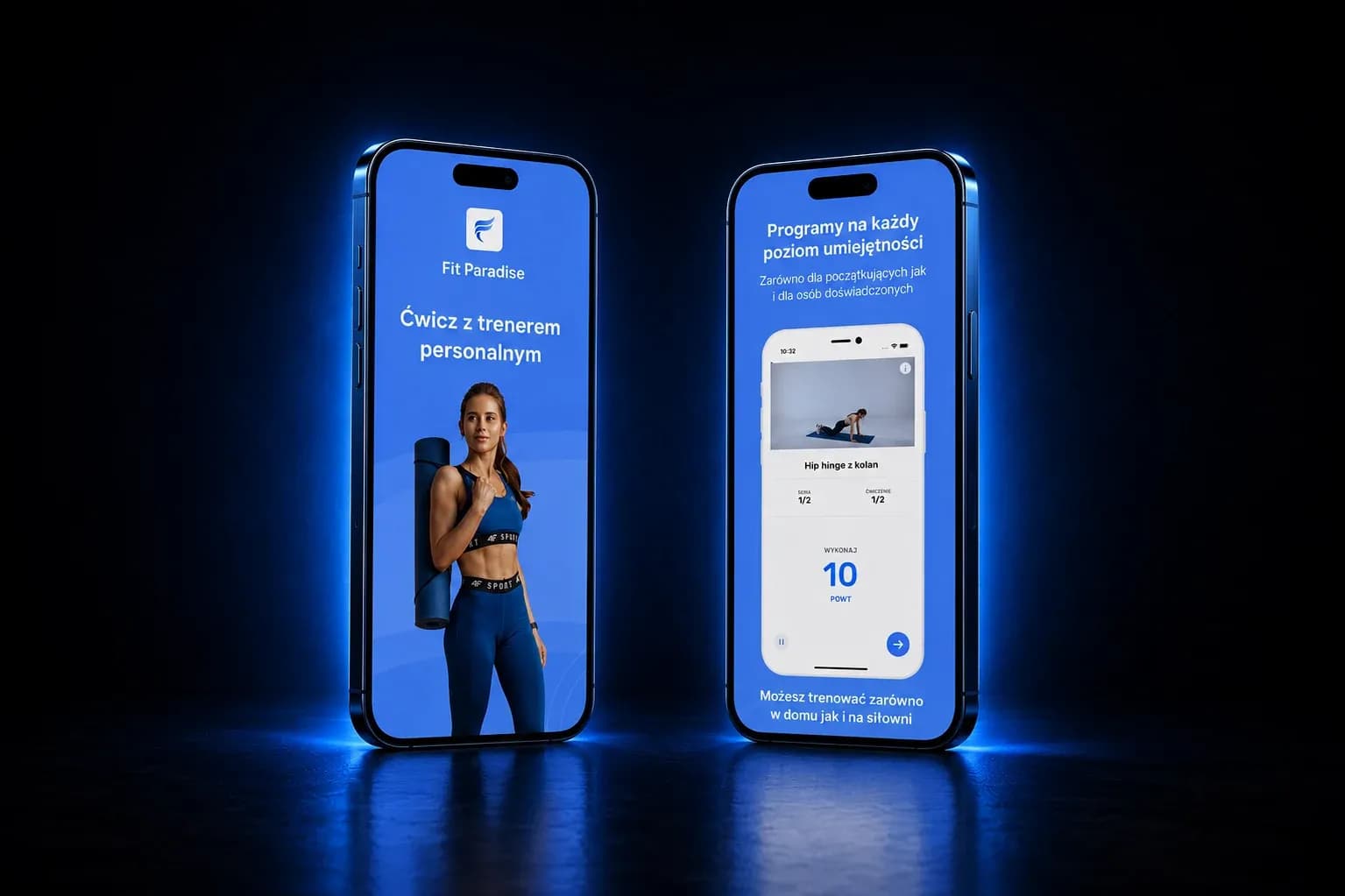
A training app for iOS and Android that adapts to the user's progress
Client: Fit Paradise
Industry: Fitness / FitTech
„New releases of our application shipped. A lot of commitment.”
Jakub Kaczmarek — Co-Founder, iSing Sp. z o.o.
Review from Clutch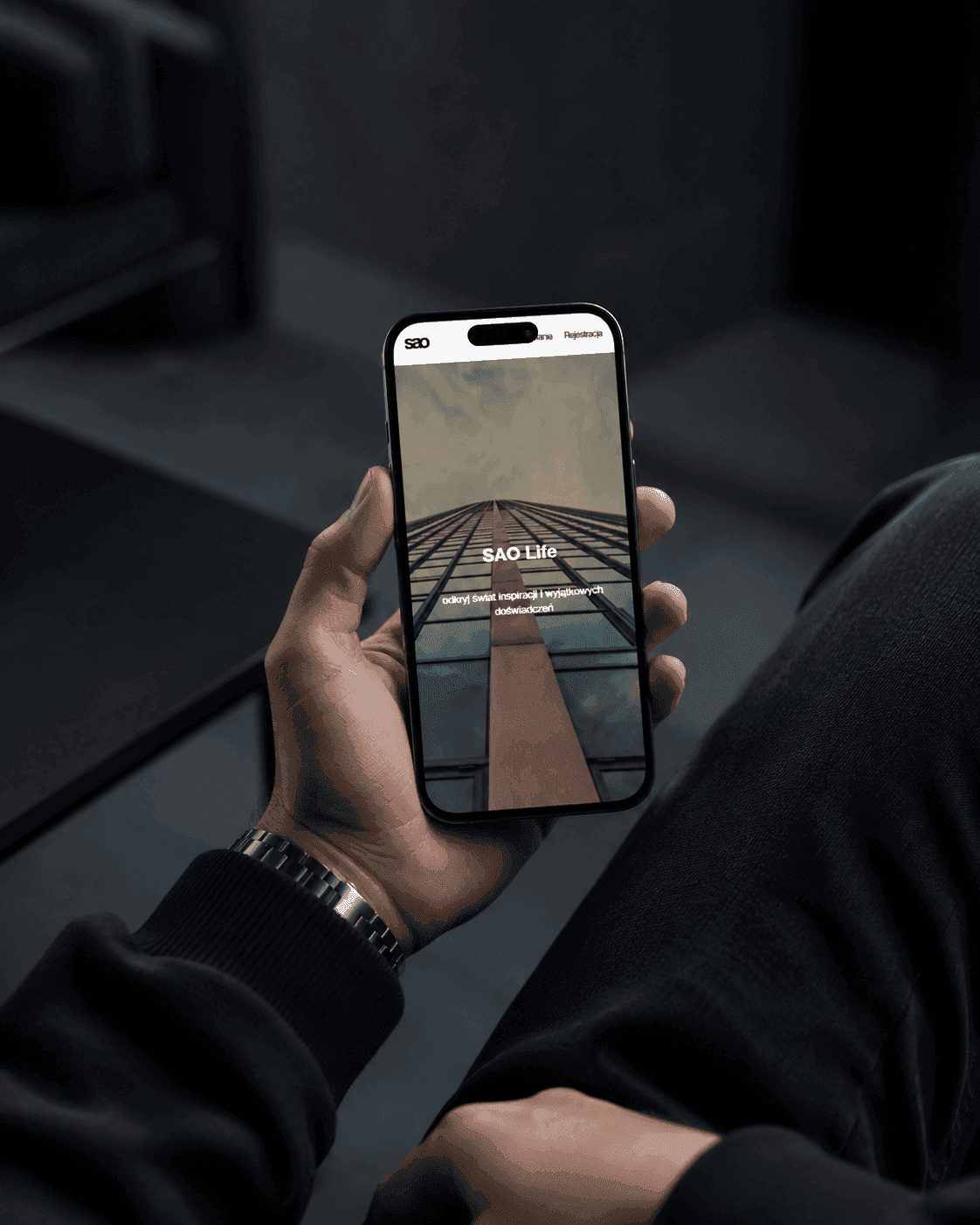
How we work
How a mobile app is built - from design to app store release
We start by getting to know the product, its users and its key features. We agree on the scope of the first version, design the UX/UI and choose the technology. Then we develop the app in short stages and regularly share test builds. Publishing is a separate stage and it's worth planning it with some slack. The developer accounts in both stores must belong to you, not to the vendor; setting them up and getting them verified can take a while. Then there are the store listing materials, the privacy policy, data collection declarations and the review itself, which may end with a request for changes.
On your side, we need developer accounts on the App Store and Google Play, a decision on the scope of data collected from users and someone to approve the content. On our side are the app, the backend, the admin panel, publishing and updates.
The timeline is most affected by the number of integrations, the need to work offline and whether the app has to handle in-app purchases.
Decisions
Decisions you'll face at the start of a mobile project
Native or cross-platform. For a product that relies heavily on device capabilities or needs maximum smoothness — native. For a product where most of the work is forms, lists and communication with a server — a cross-platform solution lets you run one team instead of two. It's a decision about maintenance costs for years to come, not about the technology for launch.
Both systems at once, or one to start with. Releasing on one platform first lets you validate the product more cheaply. Which one depends on where your users are.
How much data to collect. Every permission the app asks for reduces the number of people who get through the first launch and increases the formal requirements. Ask for what you actually use, at the moment it's needed, not at startup.
What not to do. Don't register the developer account with the vendor's details — getting the app back can then be difficult. Don't plan a launch without a buffer for the review. And don't copy the website layout to the phone one to one; it's a different context of use, not just a smaller screen.

Scope
Mobile apps from the technology decision to the app stores
We write mobile apps natively in Swift and Kotlin, or cross-platform in React Native and Flutter — the choice comes from the product, not from what's convenient for us. A demanding interface and work with the phone's subsystems favor native code; one product on two platforms at once favors cross-platform; and when time to launch matters most, we suggest a no-code option and tell you honestly when it will stop being enough.
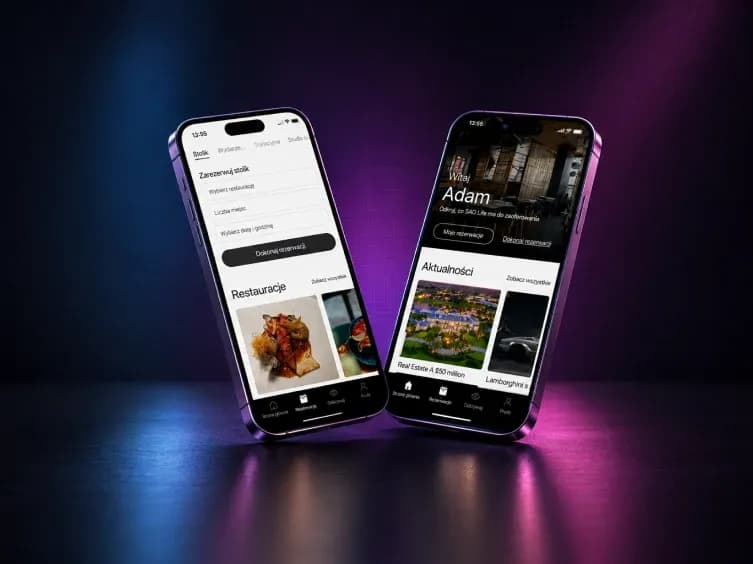
For Fit Paradise, we built a training app for iOS and Android that adapts the plan to the user's progress. For the SAO House club — the SAO Life loyalty app, which turns a one-off purchase into a long-term relationship; in both projects, Firebase supports the backend.
Technologies we work with
- Cross-platform
We write apps for Android and iOS from a single codebase in React Native or Flutter — the choice depends on the team that will maintain them and how much native functionality the product needs.
- Native and backend
Where full access to the platform matters, we write natively in Swift and Kotlin; Firebase handles notifications, analytics and sign-in.
How we work
Backend, analytics and publishing — not just the phone screen
For us, a mobile app is a whole system: a backend with an API, push notifications, behavior analytics and an admin panel where the client can see what's happening in the product. We handle App Store and Google Play publishing together with the client — from developer accounts and compliance with reviewers' guidelines to store descriptions.
After launch, we measure real usage instead of guessing: which features are alive, where users drop off, what's worth simplifying. We plan the next releases on that data — that's how the Fit Paradise training app got new iterations of its workout plans in step with how its users actually trained.

From web to mobile
One team for your web and mobile product
Most of our mobile apps live alongside a web product and share its backend — which is why we run both front ends with one team instead of splitting them between vendors. A shared API means that a feature added on the web immediately has a backend in the app; shared analytics means decisions are made on the full picture, not a fragment.
We also know the way in both directions: we moved SkinApe from a mobile app to a web app when the business model required it — without losing users or business logic. Technology should follow the product, not the other way around.
Booking & Hotels / TravelTech
We design and develop custom software for hotels, apartments and TravelTech companies.
Booking & Hotels / TravelTech ↗
PRODUCTS
Tell us what you want to build — we'll take care of the rest
We design and build mobile apps for companies and startups — from concept and UX/UI to development, backend, app store release and ongoing development. We work natively in Swift and Kotlin, and cross-platform in React Native and Flutter. We choose the technology based on the product, its features, the budget and plans for growth.
FAQ
Questions we hear before a mobile project
- The cost depends on the number of screens, integrations with your systems and whether the app needs to work offline — that last one has the biggest impact, because syncing after a reconnection is a separate task, not an add-on. A single codebase supporting both iOS and Android is usually significantly cheaper than two native apps. Factor in the ongoing maintenance cost too: mobile systems force updates several times a year regardless of product changes.
- A simple app with a single use case can reach the app store in a few weeks. A product with its own backend, admin panel and integrations is usually a project measured in months. Add a buffer to every deadline for the App Store and Google Play review process, as that stage doesn't depend on the development team.
- Yes. We can take responsibility for analysis, UX/UI, app development, backend, API, integrations, testing and preparing for publication on the App Store and Google Play.
- You do. We set up developer accounts on the App Store and Google Play under your company, and hand over the repository along with documentation. The app and its users stay on your side regardless of who maintains it.
- Yes. We start with a review of the code, dependencies and the state of the store accounts, after which we say what can be developed further and what needs to be rewritten — before we change anything.
- Mobile apps require regular updates regardless of feature development, because operating systems and store requirements change. On top of that comes error monitoring and analytics, which inform the next releases. That's an ongoing maintenance cost worth including in the annual budget.
- Yes. We help prepare the app and the materials required by Apple and Google, and handle the submission process. Developer accounts remain the client's property.

Let's build digital products for your company together
Other services

Web Development
We design and build custom web applications - from an MVP that lets you quickly validate an idea to large platforms and systems developed over years. We build both the front end and the backend, APIs, databases, admin panels and integrations with external systems. We work with Next.js, React, Node.js, NestJS, Python, PostgreSQL and MongoDB, among others. We create solutions tailored to a specific business process: SaaS applications, internal systems, sales platforms, websites, marketplaces and CMS systems.
Learn moreUX/UI Design
We design UX/UI for web and mobile applications and B2B systems - from analyzing user needs and early wireframes to the finished interface and a design system in Figma. We don't design screens in isolation from the product. We look at user journeys, analytics data and technical constraints to create a solution that's easy to use and can be built efficiently. After the product launches, we can come back to heatmaps, session recordings, analytics and user interviews, so that the next changes are driven by data, not assumptions.
Learn moreE-commerce
We design and build online stores and e-commerce platforms tailored to your sales model and business processes. We work with off-the-shelf solutions as well as headless architecture and custom sales systems. We build e-commerce for B2C and B2B sales, large product catalogs, multiple markets and marketplaces. We integrate stores with ERP, WMS, CRM, PIM, payments and logistics, and design product configurators and custom purchase flows. We also take care of performance, technical SEO and preparing the platform for seasonal traffic peaks.
Learn more