




















Website
We design and build websites that help companies present their offer, win customers and grow their visibility in Google. We combine UX/UI, a fast front end and an easy-to-use CMS, choosing the technology based on how the site will be developed later on. We build both new company websites and redesigns of existing ones. We work with Next.js, Strapi and Webflow, among others.
Companies that trusted us
The basics
When a company needs a new website, and when improving the current one is enough
A company website is usually the first place people check to decide whether it's worth getting in touch with you. They make that call within seconds — based on whether they can quickly find the answer to their question, not on how much work went into the animations.
A new website makes sense when your current site no longer reflects how the company works — it's hard to develop, content changes need a developer, the site is slow or it doesn't lead users to get in touch or buy. But you don't always need to start from scratch. If the problem lies in individual elements, such as performance, forms, content or UX, improving the existing site is often the better option.
So before we propose a technology and scope of work, we check what the business really needs.See the websites we built for clients

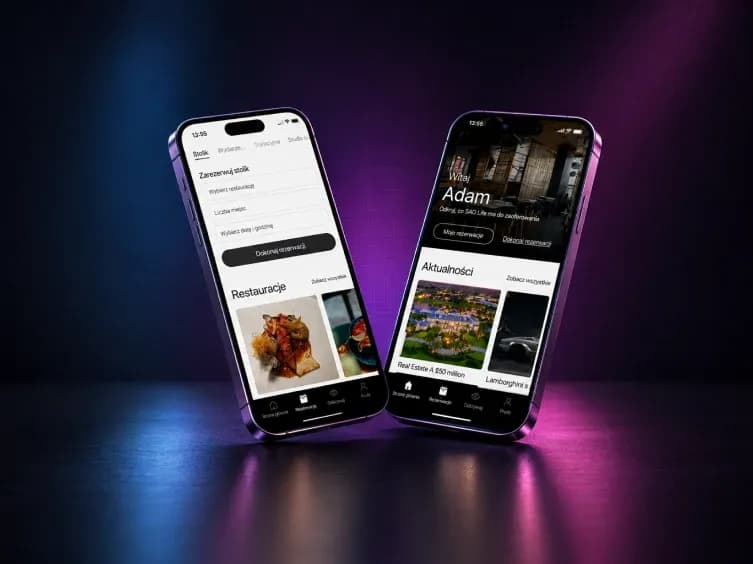
Moving from mobile to web without losing users or business logic
Client: SkinApe
Industry: Entertainment / GameTech
„The website is fast and ranks well in search. An important factor for us was the Boring Owl team's extensive SEO knowledge — the front end was built in line with SEO best practices.”
Michał Rugiełło — E-Commerce Director, Kwant Hurtownie Elektryczne sp. z o.o.
Review from Clutch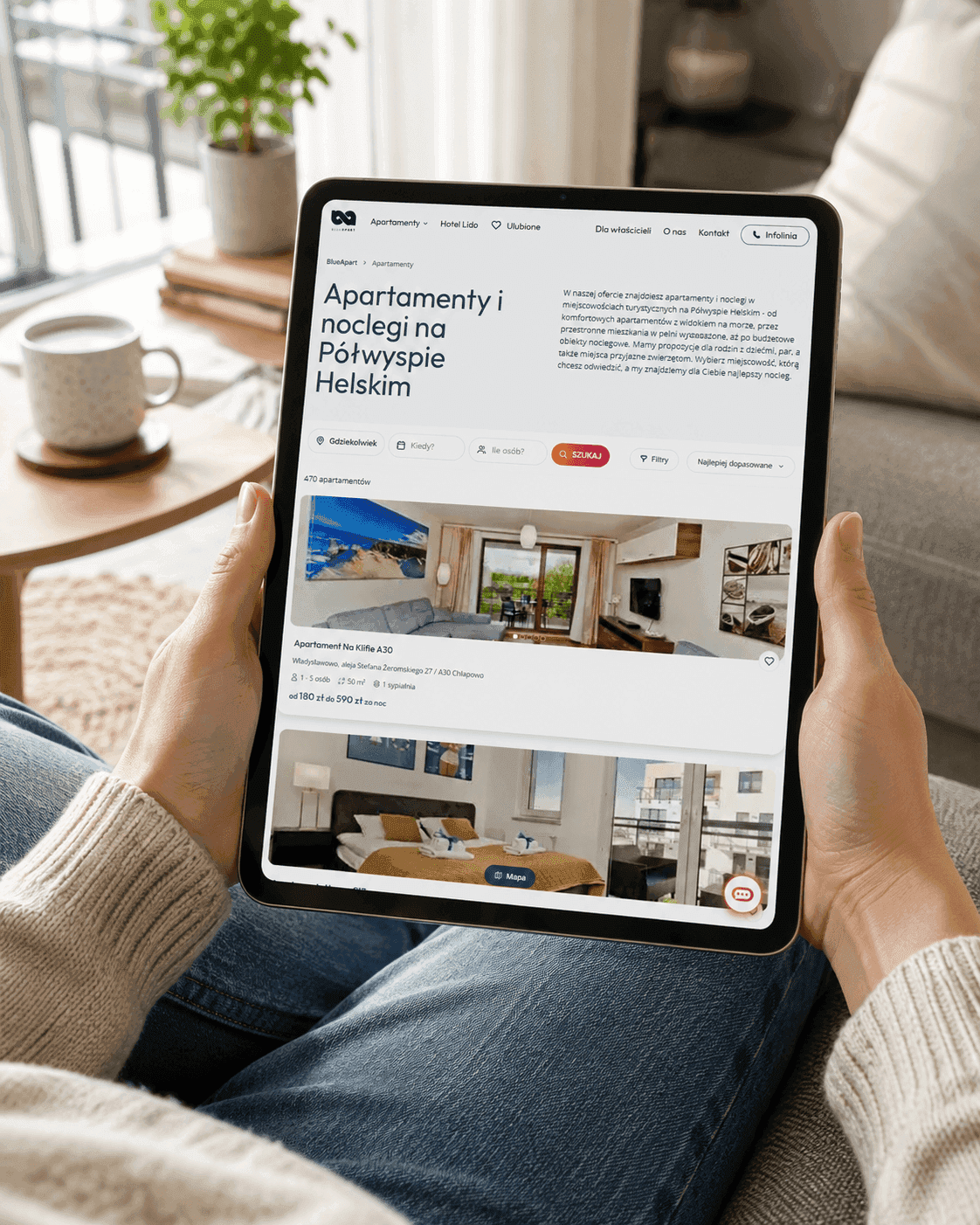
How we work
How building a website works and who's responsible for what
We start with the website's goal and its audience. We establish what users should learn and what action they should take — get in touch, send an inquiry, make a booking or go to a specific service. Only then do we design the look, and finally we build and launch.
On your side are the content, or the decision that we write it, graphic materials and the logo, and one person who signs off — a project with five equal reviewers gets stuck at the mockup stage. On our side are the design, the code, the launch and a handover with editing instructions.
What affects the timeline most isn't the technology, but whether the content is ready. With finished copy and materials, the build goes smoothly; when content is written along the way, it can take twice as long as the design work itself. That's the one thing worth preparing in advance.
Decisions
Decisions to make before you start, not halfway through
A custom design or a simpler solution? Not every company needs a large website designed from scratch. We match the scope to your goals, budget and plans for the site.
Who will edit the content? If nobody in the company has time for it, a full-featured CMS is a cost with no return. If marketing needs to publish every week, the lack of easy editing will hold up work for years.
How many pages at launch? It's better to launch with five polished pages than twenty filled with text nobody will read. You can add pages later; removing dead ones is harder, because there's always someone who thinks they're needed.
What not to do. Don't start by choosing the technology — start with what the website should achieve. Don't design only for large screens; most visits come from phones. And don't leave content until the end, because the content shapes the layout, not the other way around.
Scope
A company website as a tool, not a business card
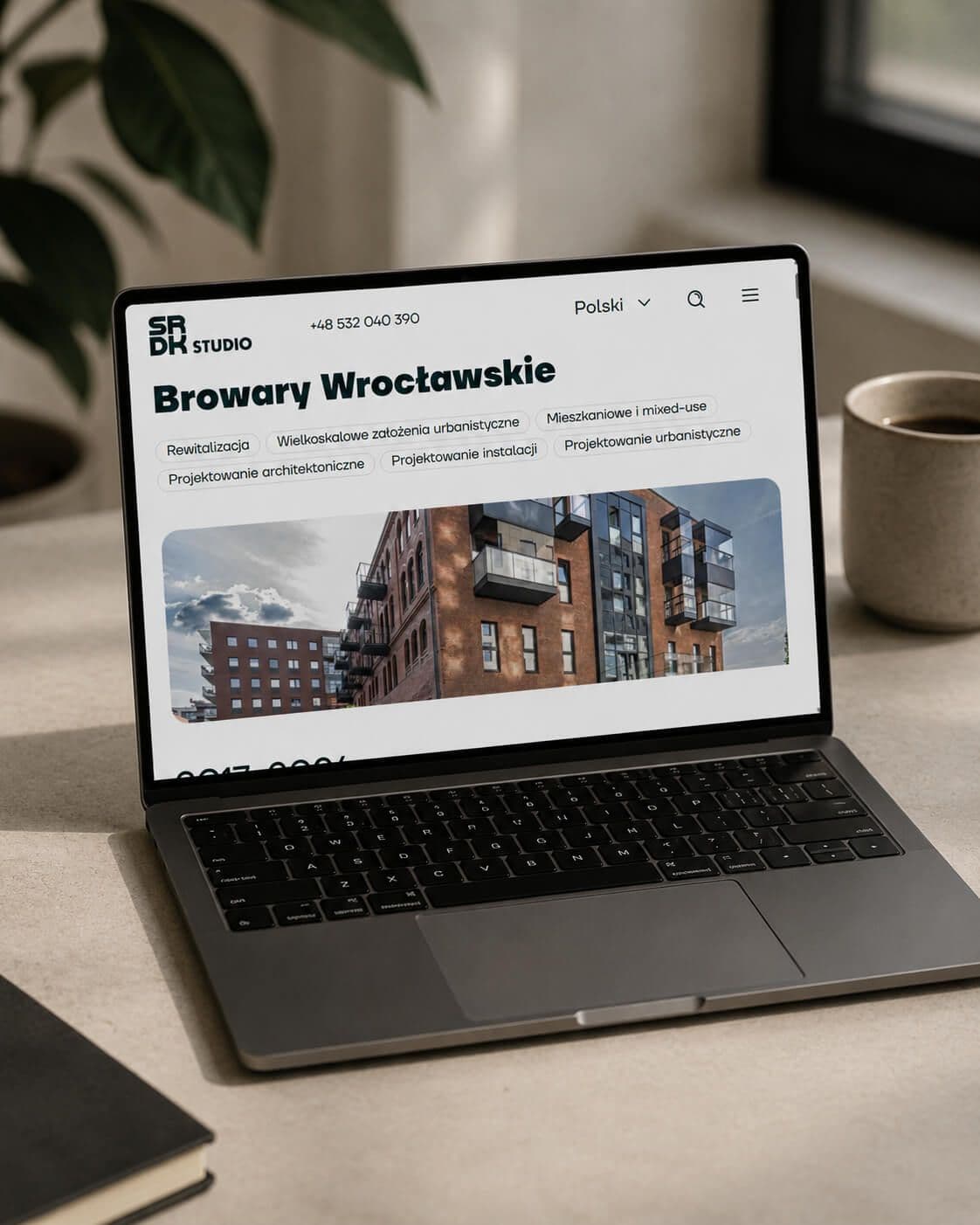
A good website doesn't stop at presenting the company. It should explain the offer clearly, build trust, guide users to the next step and lay solid foundations for attracting search traffic.
The visual design is created in Figma based on the company's brand identity — and if there isn't one, we sort out the basics: colors, typography, photo style. We show the mockups with real content and in the mobile version before development starts.
Technology
Next.js, headless CMS or Webflow? We choose the technology to fit the project
We don't start a project by choosing a framework. First, we look at who will manage the website, how often it will be developed and what features may be needed in the future. Next.js with a headless CMS works well where performance, flexibility and further development matter. Webflow may be a better choice when the site is simpler and the marketing team wants to make most changes on its own.
We recommend a solution that makes sense not only on launch day, but also several years later.Content and SEO
Websites built for SEO
We build SEO in from the moment we design the site structure. We take care of a logical information architecture, URLs, headings, internal linking, structured data, the sitemap and the technical side of indexing. We also optimize performance and Core Web Vitals, and prepare the site for future content growth.
After launch, we can analyze data from Google Search Console and analytics, and develop the website based on real user behavior and search visibility.Related services

Web Development
We design and build custom web applications - from an MVP that lets you quickly validate an idea to large platforms and systems developed over years. We build both the front end and the backend, APIs, databases, admin panels and integrations with external systems. We work with Next.js, React, Node.js, NestJS, Python, PostgreSQL and MongoDB, among others. We create solutions tailored to a specific business process: SaaS applications, internal systems, sales platforms, websites, marketplaces and CMS systems.
Learn moreSEO / GEO
We help increase website visibility in Google and in AI-generated answers. We combine technical SEO, content optimization and work on the site structure. We start with an audit and turn the most important recommendations into concrete changes in the code.
Learn moreE-commerce
We design and build online stores and e-commerce platforms tailored to your sales model and business processes. We work with off-the-shelf solutions as well as headless architecture and custom sales systems. We build e-commerce for B2C and B2B sales, large product catalogs, multiple markets and marketplaces. We integrate stores with ERP, WMS, CRM, PIM, payments and logistics, and design product configurators and custom purchase flows. We also take care of performance, technical SEO and preparing the platform for seasonal traffic peaks.
Learn moreUX/UI Design
We design UX/UI for web and mobile applications and B2B systems - from analyzing user needs and early wireframes to the finished interface and a design system in Figma. We don't design screens in isolation from the product. We look at user journeys, analytics data and technical constraints to create a solution that's easy to use and can be built efficiently. After the product launches, we can come back to heatmaps, session recordings, analytics and user interviews, so that the next changes are driven by data, not assumptions.
Learn moreFAQ
Questions we hear before building a website
- The price depends mainly on the project scope, number of unique views, features, integrations and whether we're also preparing the content. After a brief conversation, we can propose a scope and quote tailored to the project.
- The timeline depends on the size of the site and the availability of materials. Content, the number of people involved in sign-off, and additional features and integrations all have a significant impact on the schedule. We set a detailed plan before starting work.
- Yes. We can work with content the client provides or help prepare the site structure and copy with UX, sales and SEO in mind.
- Yes. We agree on the scope of editing before the project starts, and that's what we base the CMS and how we build each section on. After launch, we also hand over usage instructions.
- Yes. We incorporate the technical SEO fundamentals during the design and development phases — including heading and URL structure, performance, indexing, structured data and the sitemap. Ranking for competitive phrases, though, requires ongoing work on content and domain authority.
- Before the migration we analyze the current structure and URLs. We prepare redirects and take care of preserving valuable pages to reduce the risk of losing existing search visibility.
- Yes. We design with phones, tablets and desktops in mind, and test across different screen sizes before launch.
- The minimum is a clear description of what the company does and who it serves, proof in the form of case studies or reviews, and a visible, simple way to get in touch. On top of that, registration details, a privacy policy and a cookie notice are legal requirements. Everything else depends on the sales model: a pricing page makes sense where prices can be given honestly, and a blog where clients look for information before making a decision.