


Healthcare & Medicine / MedTech
For clinics, MedTech startups and telemedicine platforms, we build appointment booking, patient portals and integrations with practice management systems. Data requirements here are the strictest of any industry, yet the interface has to stay simple — it's used by patients of all ages. We design security and consents in from the very first sketch.
What healthcare software demands in practice
Healthcare is the sector with the strictest data requirements of any we work with — and at the same time the interface has to be simple, because it's used by patients of very different ages and conditions.
We most often talk about booking and managing appointments, telemedicine, access to test results and integrations with practice management systems. Communication with patients is a separate topic — reminders, documents, consents.
Medical data dictates the architecture
Health data requires special protection. Right from the design stage, we determine what information is really needed, who should have access to it and how user activity should be logged.
We plan the system architecture with permissions, encryption, backups and secure data storage in mind, among other things.Integrations with medical systems
A new tool in a healthcare facility doesn't replace the practice management system — it has to work with it: scheduling, patient records, billing. A project without mapped integrations ends with data being entered twice, which staff don't have time for. That's why we start defining the scope with a list of the systems the solution needs to talk to, and which data is the source of truth on which side.
Access to test results and records is, in turn, a test of trust: patients should be able to see their results without calling the front desk, but nobody except them and their doctor should. The patient portals we build combine convenience (results, visit history, downloadable documents) with strict access control and a full audit trail of who viewed the data and when.
See a selection of projects we delivered

A home-cooked meals marketplace with Wolt delivery – selling your own food legally
Client: HomeChefs
Industry: Food Industry / FoodTech

Moving from mobile to web without losing users or business logic
Client: SkinApe
Industry: Entertainment / GameTech
„We gave Boring Owl a document and sketches with our first vision of the app, and then an agile, iterative process of building the beta began. Over a few meetings, we came up with new ideas that quickly went into implementation and testing. The product was built in a very short time.”
Przemysław Tomczyk — Firm owner & Assistant Professor, Kozminski University
Review from ClutchThe basics
What's allowed and what isn't in medical software
MedTech covers very different things: from appointment booking and teleconsultations, through systems for healthcare facilities, to software that supports diagnostics. The scale of regulatory requirements grows sharply the closer a system gets to a medical decision — and that's the first thing to establish in any project. Booking, payments, patient communication and document workflows are areas where you can work normally, while following the rules for special category data. Systems that support diagnosis or treatment are a separate world, with medical device certification — and we're upfront about it when a project enters that territory.
In practice, the biggest untapped potential in healthcare facilities lies on the easier side. Appointment cancellations, reminders and access to results take more work off the front desk than any other part of the system.
How we work
How we approach healthcare projects
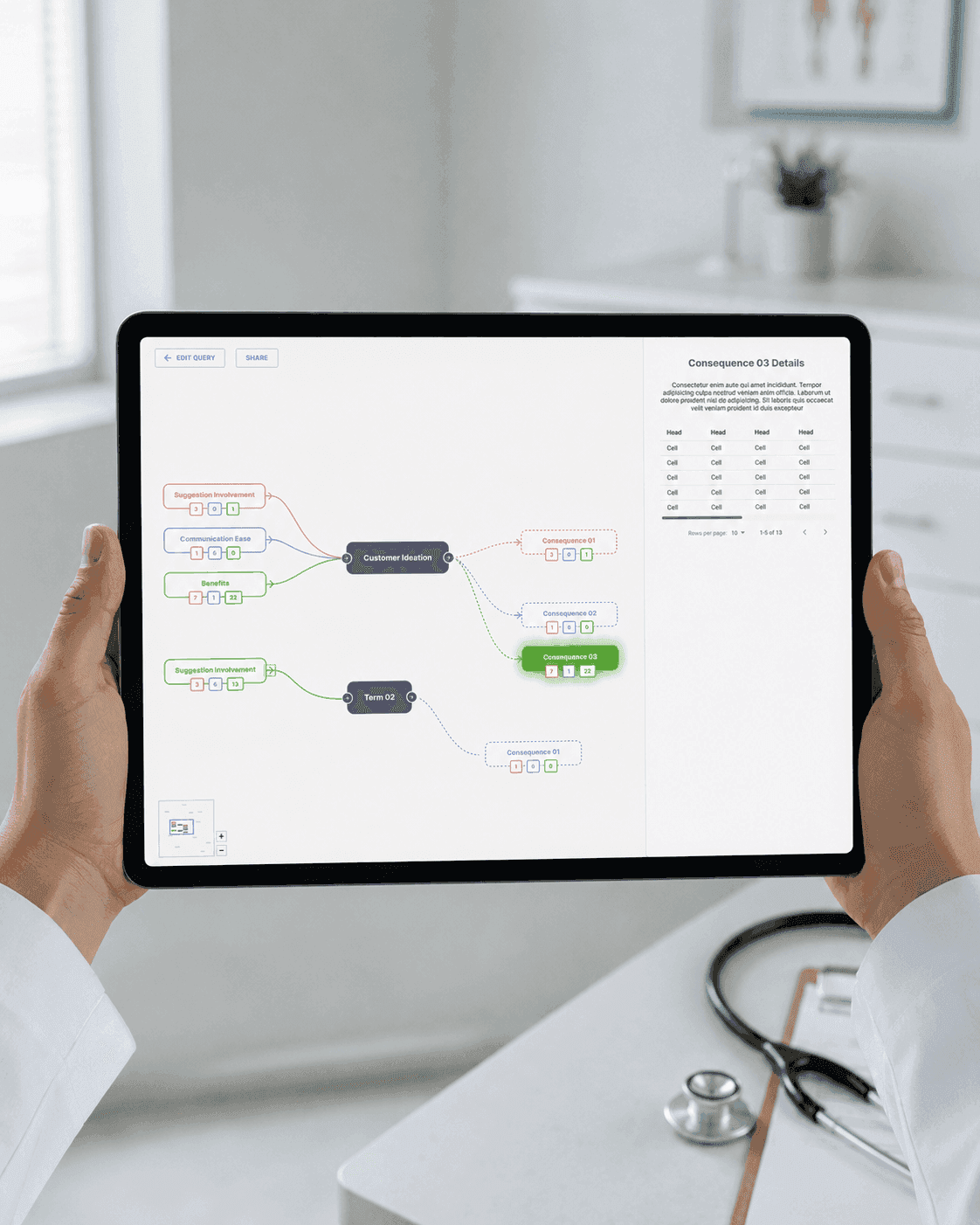
We start by understanding the process and the people who will use the system: patients, doctors, front desk staff and administrators. We look at where there's manual work, duplicated data or unnecessary complexity today. Then we define the scope of the solution, integrations, user roles and the key scenarios. Only then do we design the UX/UI and the system architecture.
We build with a strong focus on separating permissions and logging access to data — who viewed a patient's record and when. That's not an add-on but a foundation that's hard to add later.
On your side are the requirements that come from your practice, patient consents and decisions about the scope of data. On our side are architecture, development and deployment.
The timeline depends on the number of integrations with the facility's systems and the scope of data — the more special category data, the more safeguards and the longer the testing.
Decisions
Decisions to make at the start
Does the system touch medical decisions? If so, it falls under medical device regulations, and that changes the whole project — from documentation to how it's tested. This has to be answered before development starts, not halfway through.
What data not to store. Every health data field is an obligation. Booking an appointment doesn't require a diagnosis; a teleconsultation doesn't need the patient's medical history if the doctor already has it in the facility's system.
Who has access to what. Front desk, doctors, administration — three different scopes. A shared "reception" account means there's no way to tell who viewed the data.
What not to do. Don't test on real patient data. Don't email results without protection. And don't build a feature you're not sure you're allowed to have — the cost of rolling it back is higher here than anywhere else.
Scope
Health technology that stays simple for the user
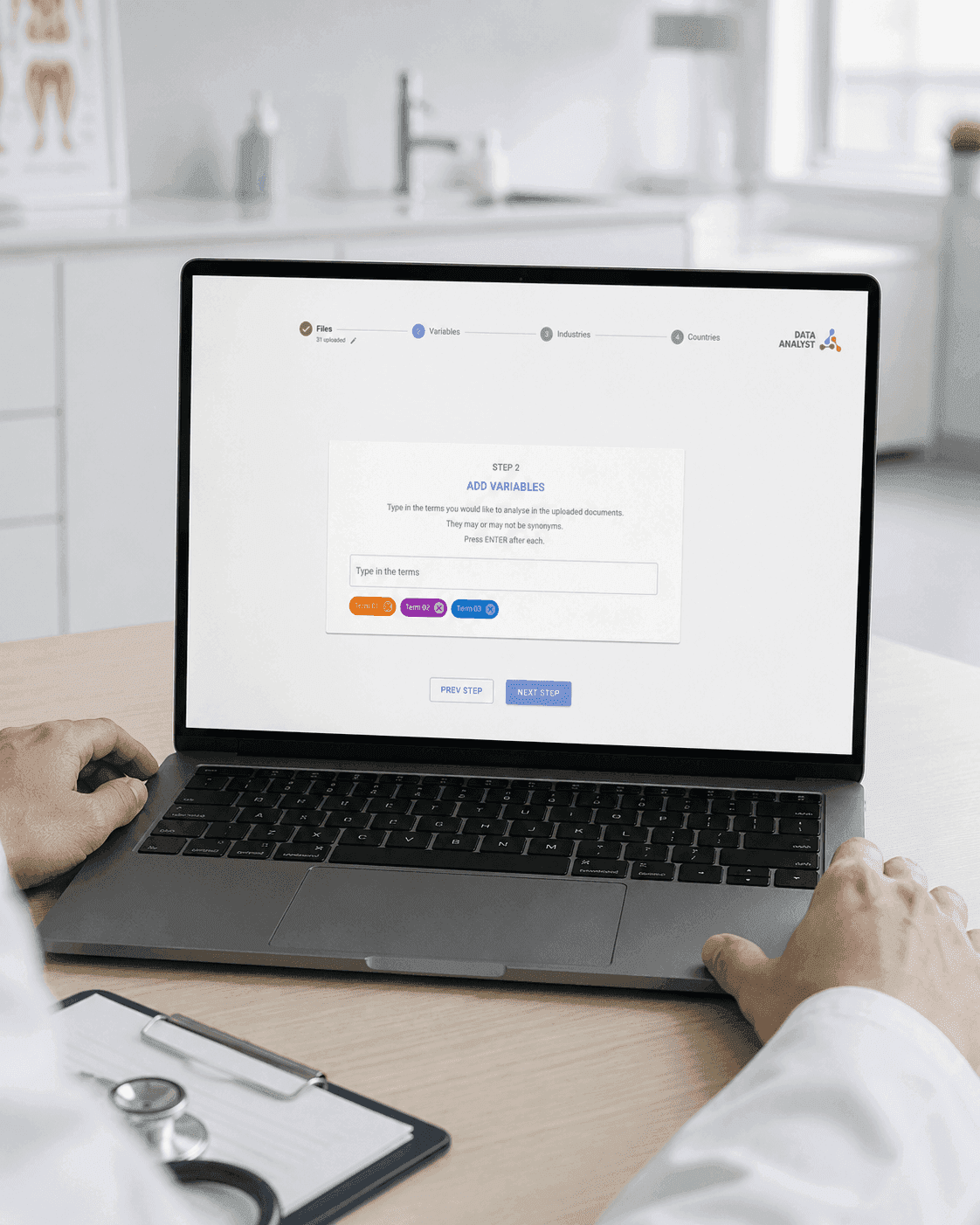
Patients often use a medical app in a hurry or under stress. That's why the interface should be as simple as possible: clear booking, clear messages, easy rescheduling and quick access to the information they need. We design systems so that technology makes contact with the facility easier instead of creating more barriers.
What we build
Medical apps and systems for healthcare facilities
- online appointment booking systems,
- patient portals,
- mobile and web apps for patients,
- dashboards for doctors, staff and administrators,
- telemedicine solutions,
- systems that support document workflows,
- integrations with existing medical software,
- AI tools for data analysis, process automation and supporting staff,
- apps that support health, prevention and building good habits.
We tailor the scope of the solution to the real needs of the facility, its users and its processes — not to a ready-made feature list.
Compliance
GDPR, security and architecture
We build data protection in from the system design stage. That applies to the scope of the information collected, user access, logging of operations, encryption and the environments used to build and test the application.
This way, security requirements are part of the product architecture from the very beginning of its development.FAQ
Questions we hear from healthcare
- We design custom web and mobile applications, appointment booking systems, patient portals, facility panels, telemedicine solutions and integrations with existing systems. We can build a new product from scratch or develop an existing solution.
- We can plan integrations with existing medical systems if they provide suitable interfaces and documentation. For services related to the P1 e-health system, the scope also depends on the specific process and technical requirements. We check this during the project analysis phase.
- That can't be determined solely by the type of application. The key factors are its intended purpose and features. An appointment booking or patient communication system will be assessed differently from software providing information used in diagnostic or therapeutic decisions. If the project may be subject to medical device requirements, it's worth establishing this before development begins.
- We start by limiting the data scope to what is actually needed. We then design user roles and permissions, access control, audit trails and appropriate technical safeguards. We select specific solutions to match the type of data, the system architecture and how it will be used.
- Yes, if the MVP scope is well defined. The first version should focus on the process that delivers the greatest value to users, while incorporating data, security and future integration requirements from the start. This means the product can be developed in stages without having to rebuild its foundations with each new feature.
- It depends on two things: the number of integrations with systems you already have, and the data scope. A booking system with a calendar, payment and reminders is a project measured in weeks. Each integration and each health data set adds time — not to coding, but to coordination, security measures and testing. You get scope and a ballpark estimate after the first conversation, without commitment.
- Yes, and for some documents it's already mandatory. The conditions are strict: a document must be signed so the author can be identified, secured against alteration after signing, and able to be issued to the patient together with a change history. This affects the database design — an entry is not overwritten, only corrected by a subsequent version, and the previous one remains. Adding this after the fact is a rebuild, not a fix.

Let's build digital products for your company together
Other industries
SEE ALL5 CASE STUDIES
Finance / FinTech
We design and develop digital solutions for financial services, insurance and lending companies and FinTech startups. We build online application forms, calculators, customer portals and custom systems, combining good UX with data security and a reliable architecture. We simplify processes that should feel simple to the user — even when complex rules, integrations and business requirements are running underneath.

8 CASE STUDIES
Real Estate / PropTech
For developers, real estate agencies, rental operators and PropTech companies, we build systems that bring order to sales, rentals and property data. We build custom CRMs, listing portals, booking systems, customer portals and analytics tools, among other things - integrated with the solutions your team already uses.
5 CASE STUDIES
Construction / ConTech
In construction and ConTech, we work with contractors, developers and design firms. We build construction project databases, job management systems and websites that bring order to B2B communication. Digitization arrives later here than elsewhere, so the starting point is often replacing paper and spreadsheets with one coherent system with a change history.

3 CASE STUDIES
Education / EdTech
We build e-learning platforms and LMS systems for EdTech startups, universities, training companies and language schools. Here, success is measured by completed courses, not by the length of the feature list — so we start with the learner's journey: the first visit, visible progress and getting back to learning that was interrupted two weeks ago. Payments, group licenses and reports all serve that one goal.

3 CASE STUDIES
Law / LegalTech
We design websites and custom software for law firms, in-house legal departments and LegalTech companies. We build calculators, qualifying forms, document workflow systems and solutions that make case handling more efficient, among other things. We automate repetitive processes and leave legal judgment to the lawyer.

2 CASE STUDIES
Automotive / Mobility
We work with parts manufacturers and distributors and automotive brands that sell online. We build stores and catalogs where customers get to the right part - by make, model and engine version, by OE number or by replacement. We make sure that expanding into new markets means configuring the existing platform, not building another store from scratch.