A home-cooked meals marketplace with Wolt delivery – selling your own food legally
Client: HomeChefs
Industry: Food Industry / FoodTech
We design and develop custom solutions for restaurants, food manufacturers, restaurant chains and FoodTech platforms. We build online ordering systems, marketplaces, product catalogs and integrations that help bring order to sales, product availability, payments and deliveries.
Our clients in food


In FoodTech, technology has to meet very specific business needs. Orders should reach the right place without being retyped, product availability has to be up to date, and data on ingredients, allergens and nutritional values must be easy to manage. Among other things, we build marketplace platforms, online ordering systems, product catalogs and solutions that support direct sales and integration with external services.
Delivery platforms bring reach, but they take your margin and your contact with the customer. Restaurants and producers that build their own channel — online ordering on their website, pickup or local delivery, a base of regular customers — win both back. The condition is an ordering path shorter than in the intermediary's app: a menu that's easy to read on a phone, payment in two taps, pickup times without having to call. For manufacturers and processors, the catalog and distribution side is more common: offers for retail chains and wholesalers, specifications, certificates, shelf life. A website that organizes this information for each buyer saves the sales team hundreds of emails with attachments.
The product itself is also specific in food: batches, use-by dates, allergens and nutritional values that have to appear on the product page in line with regulations. A catalog that stores this data in a structured way — rather than in free-text descriptions — makes it possible to filter it, update it in bulk and display it the same way across all sales channels.
Client: HomeChefs
Industry: Food Industry / FoodTech
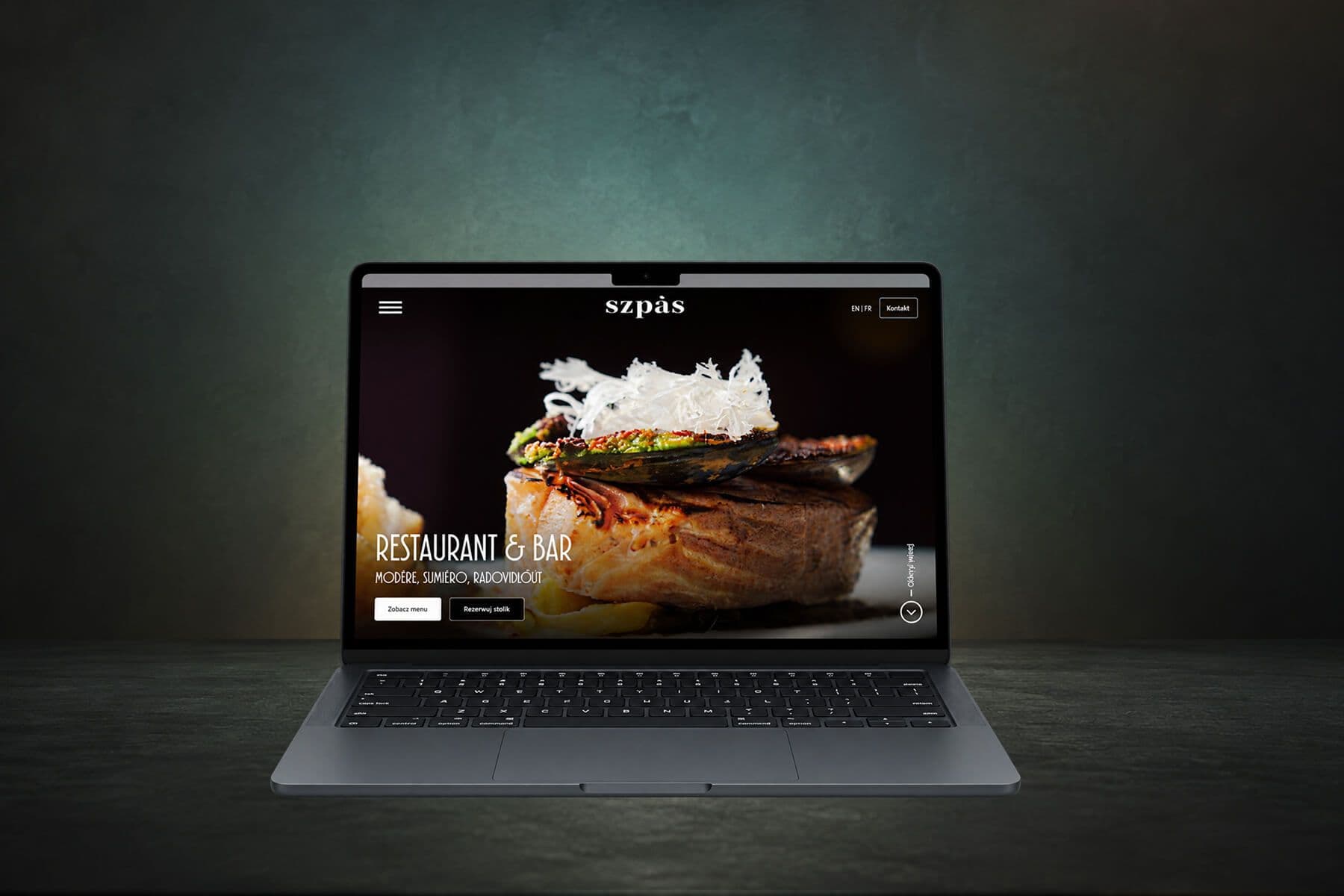
Client: BlueApart
Industry: Food Industry / FoodTech
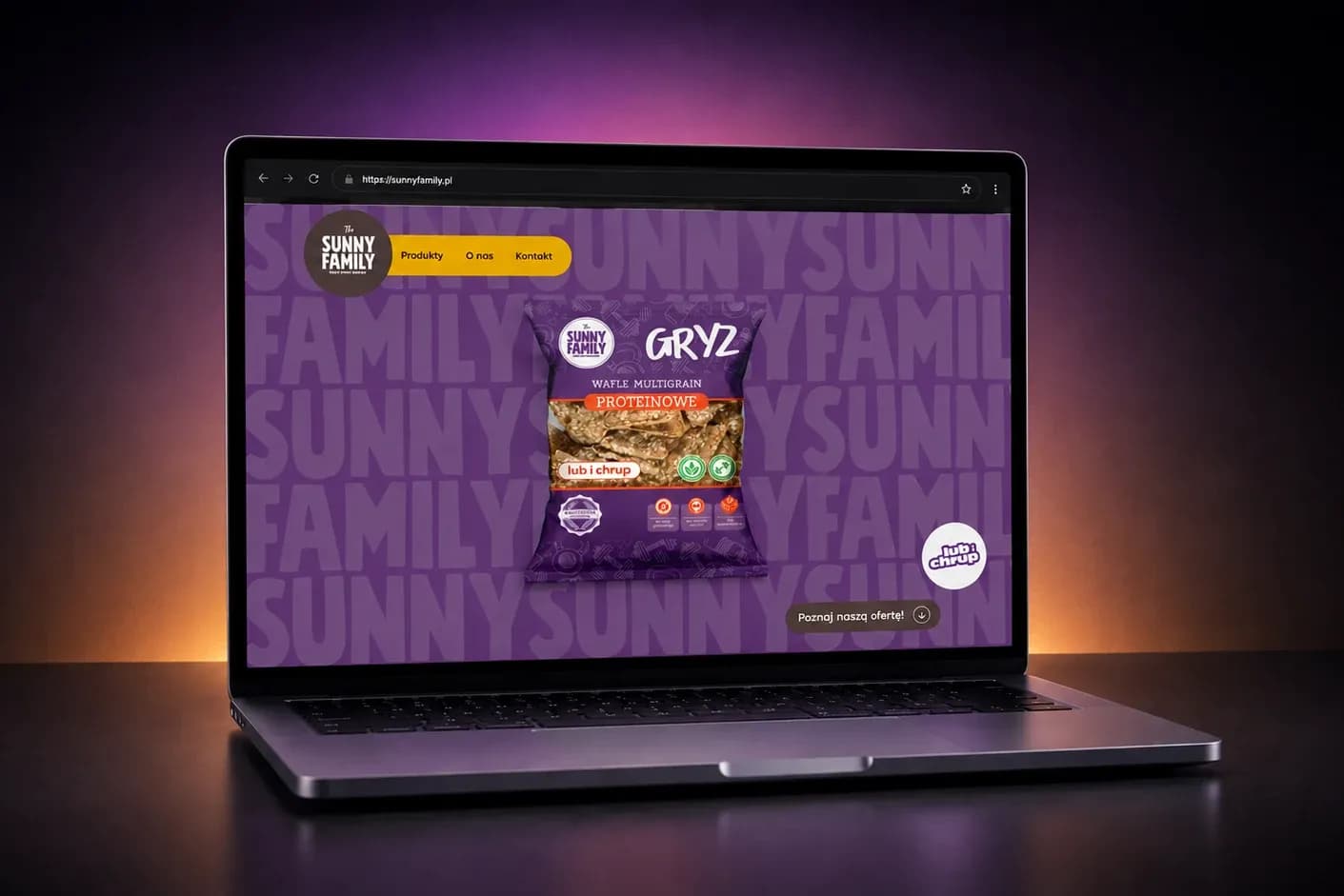
Client: Sunny Family
Industry: Food Industry / FoodTech
„Communication and post-launch support were first-class. At every stage of the project, I knew exactly where we stood.”
Anonymous — CMO, Marketing Agency
Review from ClutchThe basics
FoodTech covers selling and delivering food, running a venue, handling orders and everything that comes with a product with a short shelf life. That last feature rules the whole industry: an availability error doesn't mean a delay, it means wasted stock or an order that can't be fulfilled. The most common bottlenecks are scattered sales channels (your own website, delivery apps, phone), no shared availability between them and orders retyped by hand for the kitchen. Every additional channel without integration multiplies the number of mistakes rather than just adding to them.
What a system won't do: it won't shorten preparation time or replace decisions about the menu. But it can show what actually sells, when and in which combinations — and that usually changes the menu more effectively than intuition.
How we work
On your side are the menu with current prices and allergens, the contracts with delivery platforms and someone who knows how a kitchen shift runs. On our side are channel integrations, implementation and testing under peak conditions.
The timeline depends on the number of sales channels and on whether the delivery platforms offer integration under your partnership model — not all of them do, and not always.
Decisions
Which channels you integrate, and which stay manual. Integrating each channel has a cost; a channel that brings in 3% of orders may not be worth it. It's worth calculating the share before deciding.
Who manages availability. If the kitchen takes an item off the menu, that has to work across all channels at once. Not having a single source of availability is the most common cause of complaints in this industry.
Your own delivery or platforms. It's a business decision, but it changes the scope of the system: your own delivery requires route planning and communication with couriers, while platforms take that off your hands and take your margin and customer contact with it.
What not to do. Don't launch a new system on a Friday evening. Don't leave the kitchen without a fallback mode if the network goes down. And don't add a channel until the existing ones share availability.
Scope
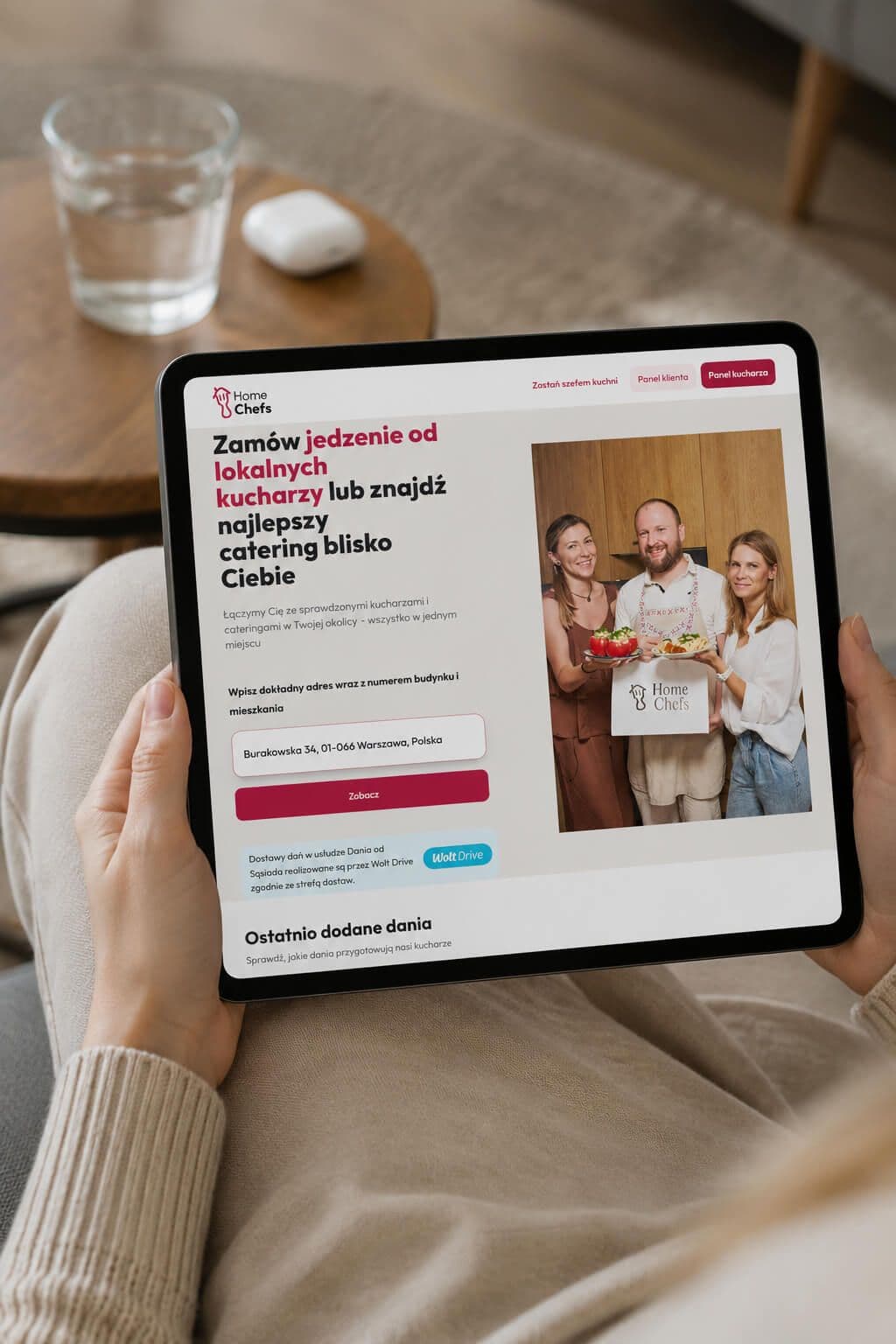
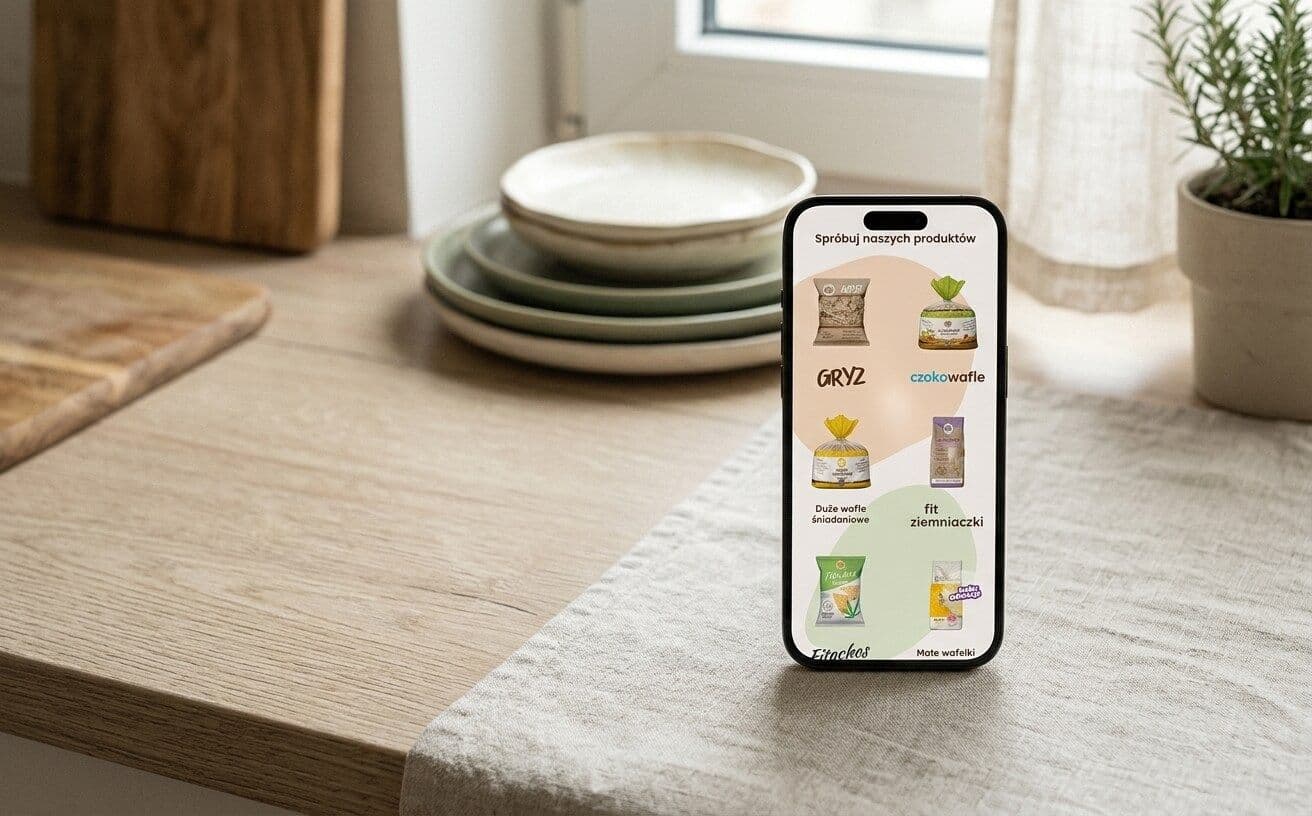
The scope varies, but we usually come in at one of three points: when sales go only through intermediaries and you need to build your own channel, when product data is scattered across files and emails, or when the business model requires a platform connecting two sides of a market. For HomeChefs, we built a marketplace for home-cooked meals where regulatory compliance was part of the product — selling food prepared at home has to meet sanitary and labeling requirements. For Sunny Family, we organized the product data and gave the team a catalog they update on their own.
What we build
Timing matters twice over here: an order has to go through quickly, and information that an item has sold out — instantly.
Compliance
When selling food, the required information should be part of the product structure, not just a text description. The system can make it easier to manage ingredients, allergens, nutritional values and other required information, among other things, and present them to users at the right point in the buying process.
When designing these solutions, we treat regulatory requirements as part of the system logic that needs to be accounted for at the product design stage.FAQ

We design and develop digital solutions for financial services, insurance and lending companies and FinTech startups. We build online application forms, calculators, customer portals and custom systems, combining good UX with data security and a reliable architecture. We simplify processes that should feel simple to the user — even when complex rules, integrations and business requirements are running underneath.

For developers, real estate agencies, rental operators and PropTech companies, we build systems that bring order to sales, rentals and property data. We build custom CRMs, listing portals, booking systems, customer portals and analytics tools, among other things - integrated with the solutions your team already uses.

In construction and ConTech, we work with contractors, developers and design firms. We build construction project databases, job management systems and websites that bring order to B2B communication. Digitization arrives later here than elsewhere, so the starting point is often replacing paper and spreadsheets with one coherent system with a change history.

We build e-learning platforms and LMS systems for EdTech startups, universities, training companies and language schools. Here, success is measured by completed courses, not by the length of the feature list — so we start with the learner's journey: the first visit, visible progress and getting back to learning that was interrupted two weeks ago. Payments, group licenses and reports all serve that one goal.

We design websites and custom software for law firms, in-house legal departments and LegalTech companies. We build calculators, qualifying forms, document workflow systems and solutions that make case handling more efficient, among other things. We automate repetitive processes and leave legal judgment to the lawyer.

We work with parts manufacturers and distributors and automotive brands that sell online. We build stores and catalogs where customers get to the right part - by make, model and engine version, by OE number or by replacement. We make sure that expanding into new markets means configuring the existing platform, not building another store from scratch.