

A home-cooked meals marketplace with Wolt delivery – selling your own food legally
Client: HomeChefs
Industry: Food Industry / FoodTech
PRODUCT
We design and build B2B and B2C marketplace platforms — from an MVP to full-scale multi-vendor systems. We build the buyer and seller sides, commission models, payments, integrations and operator tools. A marketplace is two products at once: one for the buyer and another for the seller — we design both, together with the settlement model.
Companies that trusted us


























The basics
A marketplace is a platform where many independent sellers sell, while the operator is responsible for the rules, payments and how transactions run. A store sells its own goods; a marketplace acts as an intermediary between the parties and earns from commission, subscriptions or both. The difference isn't in how the catalog looks, but in the number of processes underneath: seller sign-up and verification, their product ranges and stock levels, settlements, returns split between parties, disputes. These are what drive the cost of building one — and they don't appear in a quote for a regular store.
A marketplace makes sense when you have access to demand that individual sellers don't, or to a niche where nobody has brought supply together yet. Without one of these, you're left with a well-built platform where nothing happens.
Client: HomeChefs
Industry: Food Industry / FoodTech
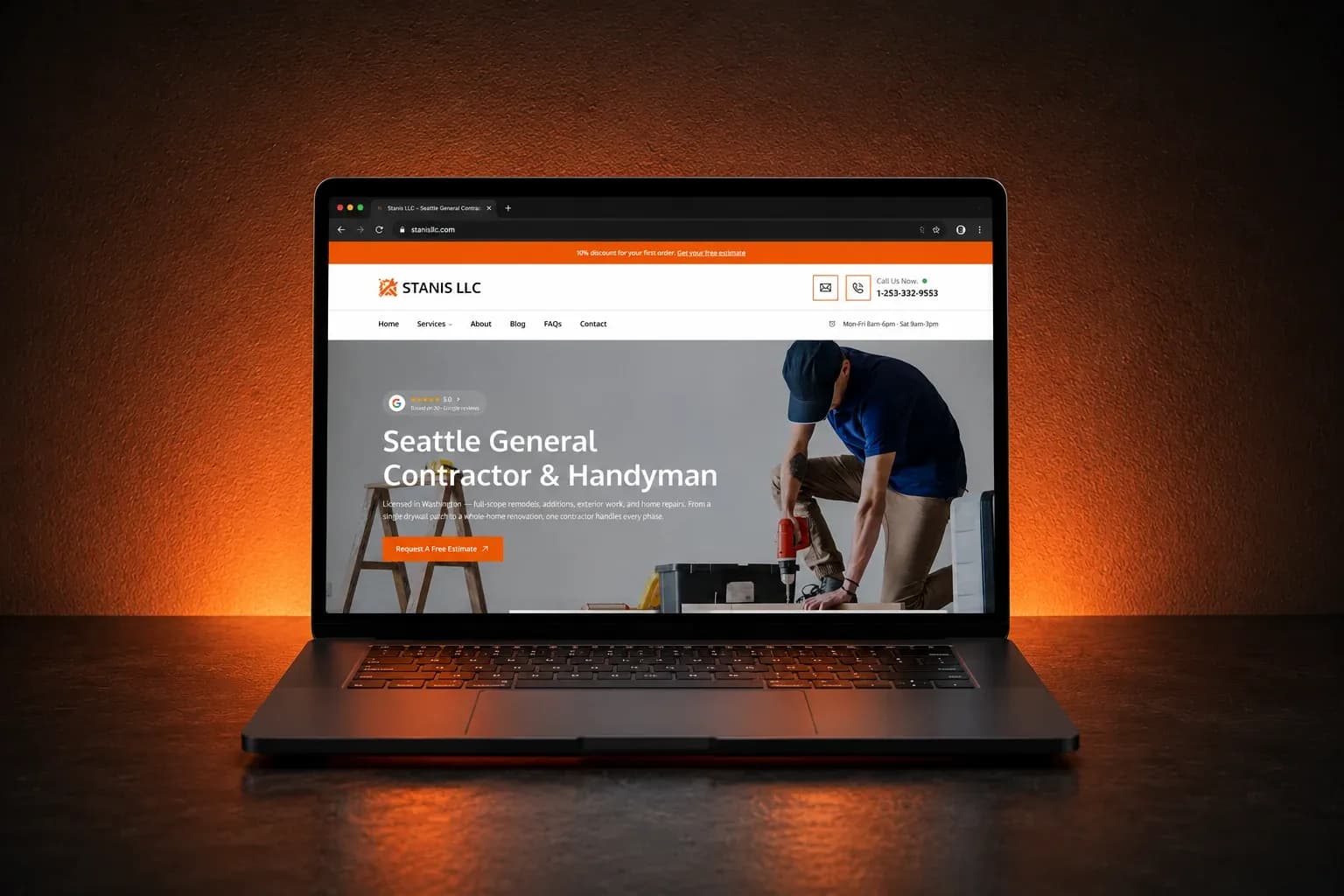
Client: Handyman ST
Industry: Construction / ConTech

Client: Baza Cosmetics
Industry: Beauty & Cosmetics / BeautyTech
„Our product works great and meets all our requirements — analyses are produced faster and more accurately, and data is collected automatically. What impressed us most was the team's expertise in designing and building applications.”
Michał Szpin — CEO, Pure Alpha Investments
Review from Clutch
How we work
We start with the settlement model, because it determines everything else: who collects payment from the buyer, when the seller gets paid, how refunds are split and who issues the invoice. Only once that's settled do we choose the payment provider — not every one supports splitting funds between multiple recipients in your model. Then come three views: the seller dashboard, the buyer side and the operator tools — listing moderation, dispute handling, reports. The last of these is the most often underestimated, and it determines how many people you need to run the platform.
On your side are the terms for working with sellers, the agreement with the payment provider and the decision on your returns policy. On our side are the platform, dashboards and integrations.
The timeline depends on the settlement model and on whether sellers add their products by hand or import them from their own systems. Import looks like an extra, but it can be what makes anyone willing to join.
Decisions
Which side to start with? A marketplace needs both sellers and buyers. Before launch, it's worth deciding which group is easier to win first and what value will convince them to use the new platform.
How do you calculate commission? Per item, per order, tiered by turnover — and what happens when a refund concerns an order that's already been settled with the seller. The more exceptions, the more expensive and slower this part of the system becomes.
How much automation in moderation. Approving every product by hand is doable with twenty sellers and unrealistic with two hundred. It's worth knowing from the start what scale you're building for.
What not to do. Don't build the full platform before checking whether sellers want to join — the first version can run on manual settlements. Don't put off the returns policy; with many sellers, it's not a detail. And don't copy the commission model of the big players, because they make money on a scale you won't have at the start.

Scope
A good marketplace platform has to be convenient for every party. Buyers need a clear catalog, search, payments and smooth order and returns handling. Sellers should be able to manage their offer, orders and settlements easily, and the marketplace operator needs control over commissions, moderation, users, disputes and reporting.
We design these areas as one coherent system, instead of treating the seller dashboard as an add-on to an online store.
Business model
The settlement model affects the platform's entire architecture. We define how commission is calculated, when funds reach sellers and how returns and complaints are handled.
We also design mechanisms that build trust between users, such as seller verification, ratings, listing moderation and transaction history.
Launch and supply
At the start, it's not worth automating every process. An MVP marketplace can handle some operations manually, which makes it faster to validate customer interest and how working with sellers will look.
We add further automation as the number of listings, orders and users grows. That way, the technology grows with the business instead of getting ahead of its real needs.
Platforms connecting owners, tenants and property managers — with listing search, bookings and online payments.
Real estate ↗
We design and build custom web applications - from an MVP that lets you quickly validate an idea to large platforms and systems developed over years. We build both the front end and the backend, APIs, databases, admin panels and integrations with external systems. We work with Next.js, React, Node.js, NestJS, Python, PostgreSQL and MongoDB, among others. We create solutions tailored to a specific business process: SaaS applications, internal systems, sales platforms, websites, marketplaces and CMS systems.
Learn moreWe design and build online stores and e-commerce platforms tailored to your sales model and business processes. We work with off-the-shelf solutions as well as headless architecture and custom sales systems. We build e-commerce for B2C and B2B sales, large product catalogs, multiple markets and marketplaces. We integrate stores with ERP, WMS, CRM, PIM, payments and logistics, and design product configurators and custom purchase flows. We also take care of performance, technical SEO and preparing the platform for seasonal traffic peaks.
Learn moreWe design UX/UI for web and mobile applications and B2B systems - from analyzing user needs and early wireframes to the finished interface and a design system in Figma. We don't design screens in isolation from the product. We look at user journeys, analytics data and technical constraints to create a solution that's easy to use and can be built efficiently. After the product launches, we can come back to heatmaps, session recordings, analytics and user interviews, so that the next changes are driven by data, not assumptions.
Learn moreFAQ