

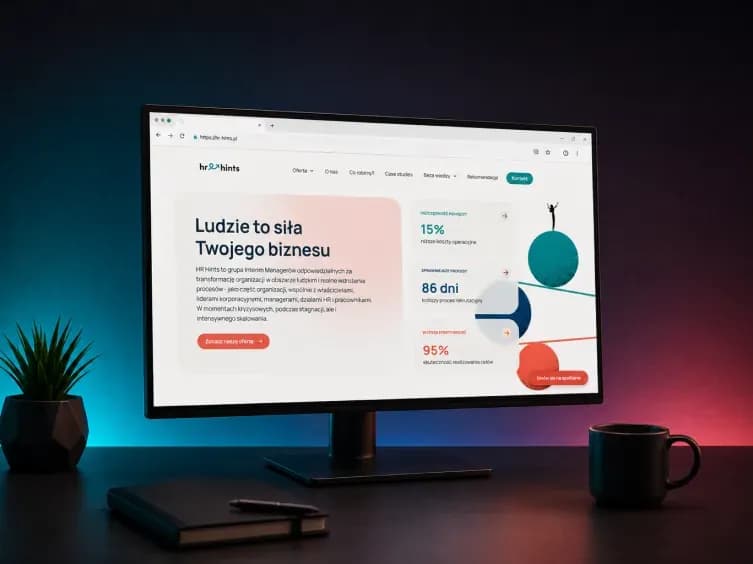
A Webflow redesign with a CMS – a website the team runs on its own
Client: HR Hints
Industry: HR / HRTech
We suggest no-code when the time and cost advantage is real — and we warn you when the platform will become a ceiling. We build websites and catalogs in Webflow so the client's team can update content without technical help. Automations: Make, Zapier, n8n; apps: Bubble; AI-assisted prototypes: Lovable.
Companies that trusted us


















The basics
No-code means building working solutions without writing code — in tools such as Webflow, Airtable or Make. Low-code is the same, with the option to add your own code where the ready-made building blocks aren't enough. For the client, the difference comes down to whether you can go beyond what the tool's creator anticipated.
These tools are good at things they usually don't get credit for: websites and landing pages the marketing team needs to change on its own, internal dashboards for team work, automated data flows between systems and prototypes for testing an idea before building it properly. In each of these cases, what matters is time to launch, not flexibility five years from now.
Client: HR Hints
Industry: HR / HRTech
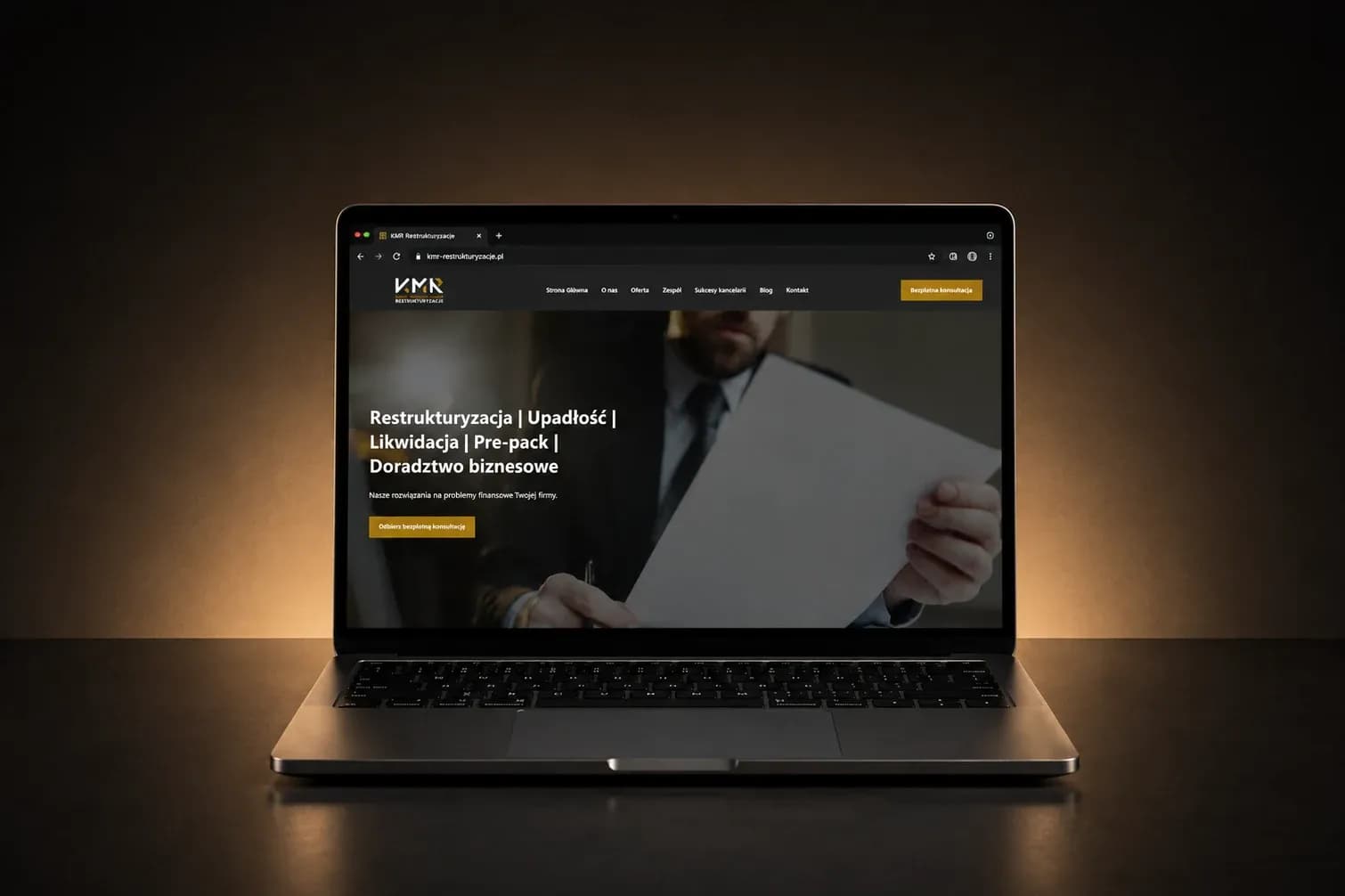
Client: KMR Restrukturyzacje
Industry: Law / LegalTech
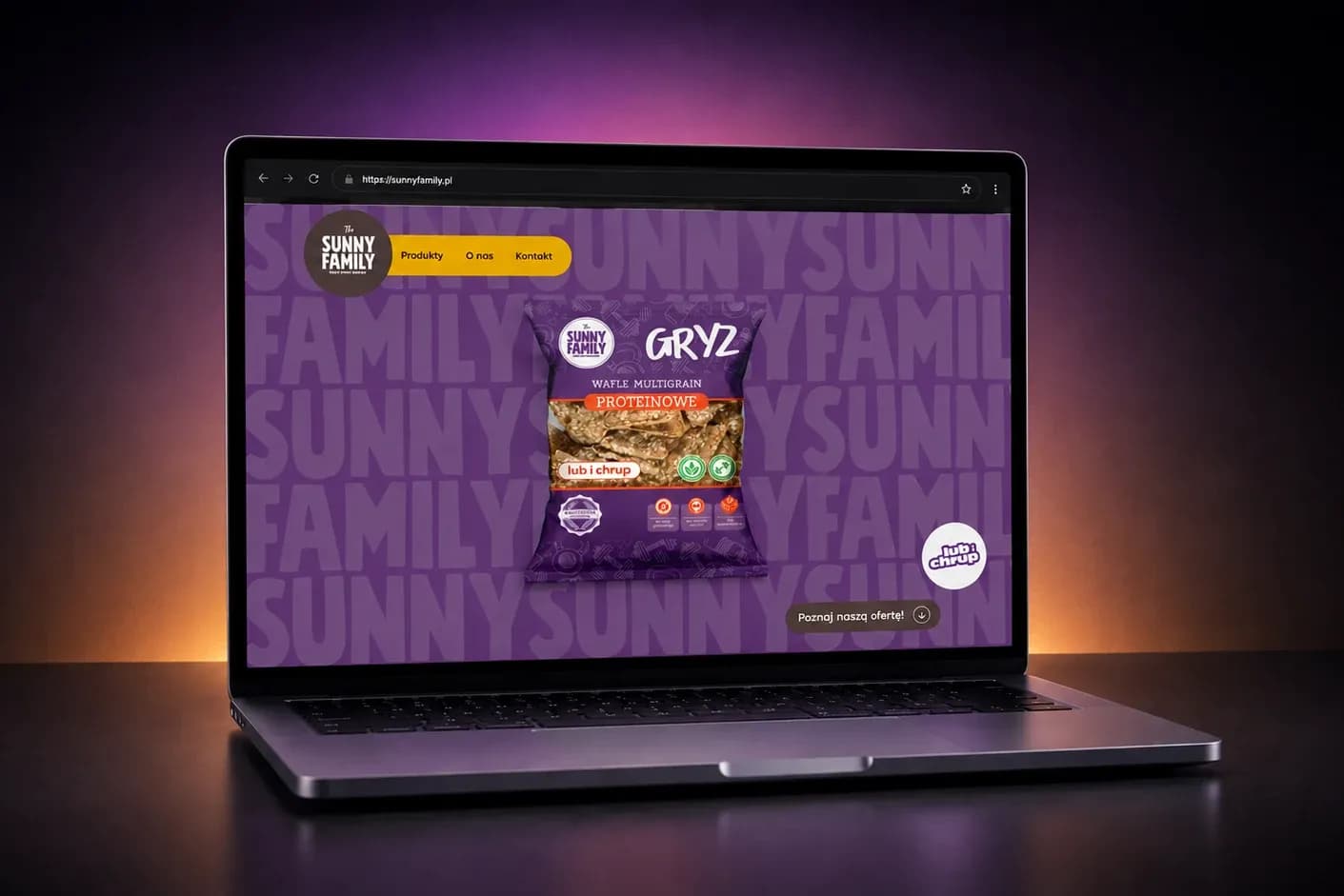
Client: Sunny Family
Industry: Food Industry / FoodTech
„The system they created for us is heading in the right direction to pay for itself, so overall, we're satisfied. They're a smaller company, which allows them to focus on us and have the flexibility to accommodate our needs.”
Michał Molicki — Co-Owner, Grow Creator
Review from Clutch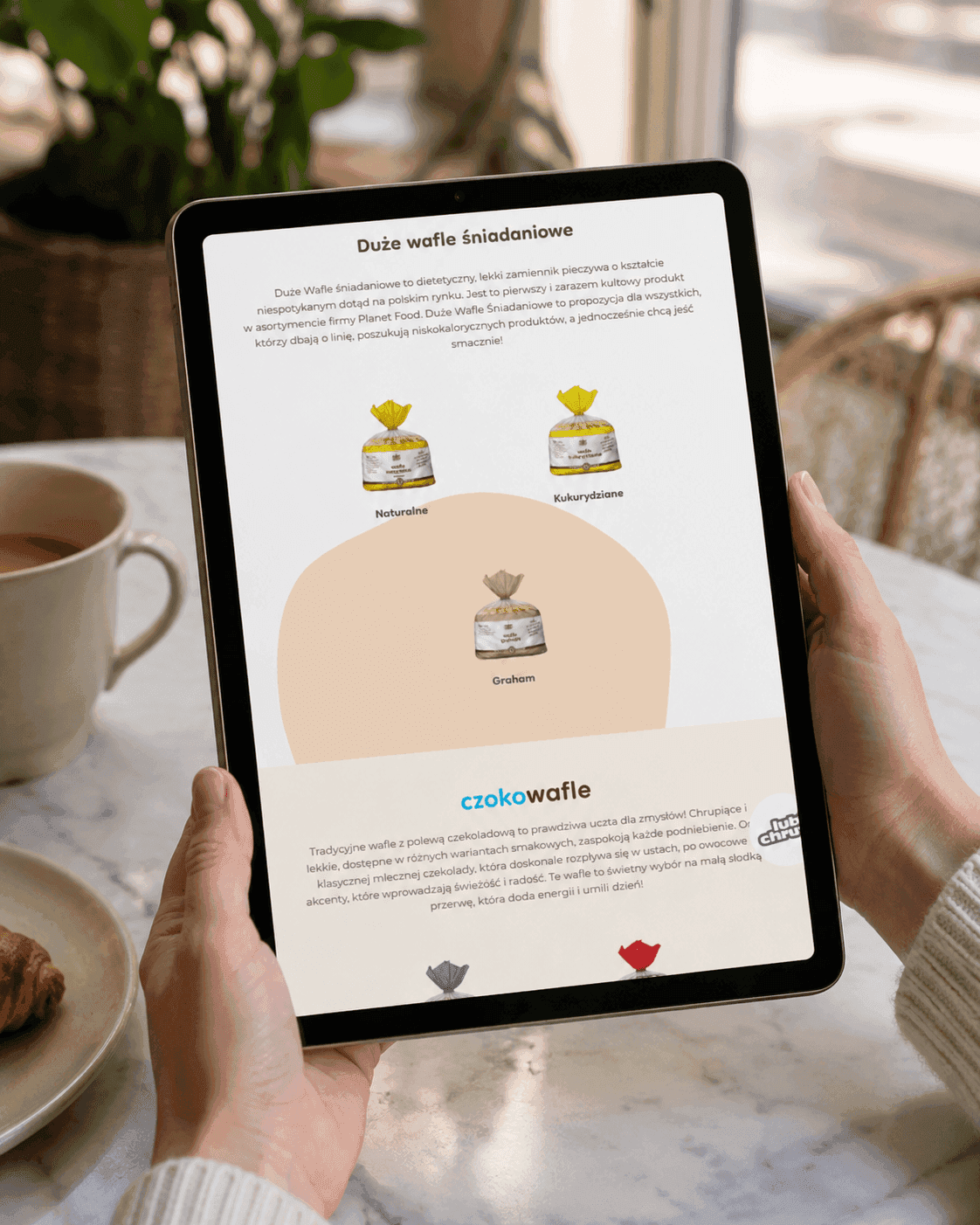
How we work
First, we analyze the process and check whether no-code really is the best solution. Then we choose the platform to fit the project's goal — not the other way around. We build, connect the integrations and test on real data. But the key part is the final stage: the handover. The whole point of no-code is that after launch your team changes things on its own. That's why we finish with training and a short guide, not just by handing over a login.
On your side, we need a description of the process and someone to take over the tool. On our side are choosing the tool, building, integrations and training.
The timeline depends on the number of integrations and on whether the process is already documented or we're still sorting it out — the latter usually takes longer than putting the solution together.
Decisions
Prototype or long-term solution. If it's a prototype to test an idea, the tool's limitations don't matter and only time counts. If it has to run for years, check in advance what happens when the number of users and data grows tenfold.
Subscription costs over the long term. No-code shifts the cost from a one-off build to an ongoing subscription, often one that grows with the number of records or users. At small scale it's clearly cheaper; at large scale the math can flip, and it's worth doing the calculation before deciding, not a year later.
How to get out when the tool is no longer enough. Check whether you can export your data in a usable form. A solution you can't take your data out of is a longer-term commitment than it seems when you sign up.
Scope
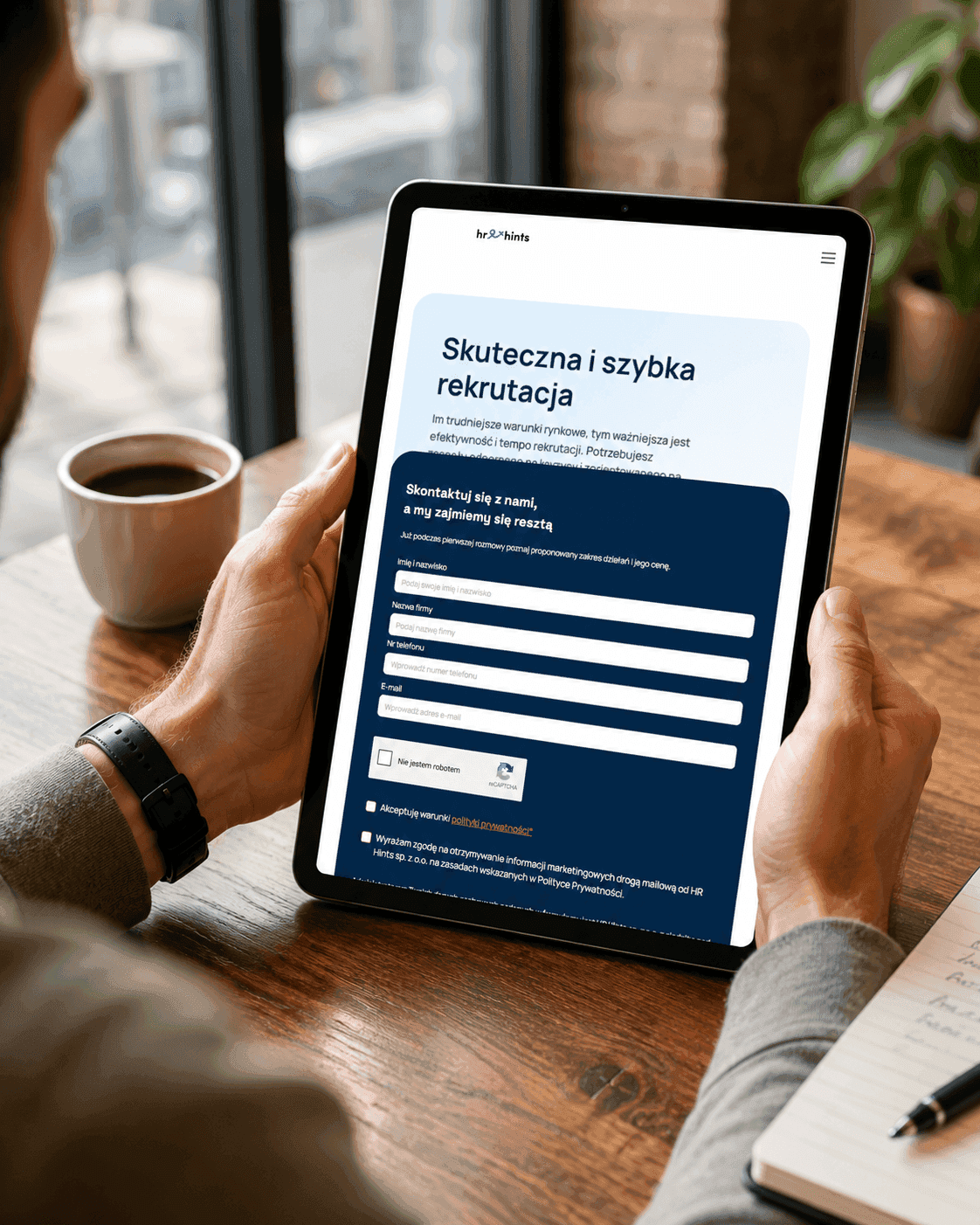
We suggest no-code when the time and cost advantage is real and the platform won't become a ceiling — and we warn you when it will. For Sunny Family, we built a product catalog on Webflow that the client's team updates without technical help. The HR Hints redesign in Webflow with a CMS put the website in the hands of the marketing team.
We connect automations with Make, Zapier and n8n, build apps in Bubble and create AI-assisted prototypes in Lovable. When a project outgrows the platform, we prepare a no-code → custom migration instead of building workarounds.
We build no-code websites on Webflow: the client gets a visual content editor, while we take care of structure, performance and SEO.
When no-code wins
No-code and low-code work well where what counts is getting quickly from an idea to a working solution. Instead of investing straight away in full-scale development, you can launch an MVP, test a process with users or automate a task that currently requires manual work.
If the solution proves itself, you can keep developing it or — when the need arises — move to a custom technology.

Platform limits
Every platform has a ceiling: CMS collection limits, no custom business logic, performance with a large catalog, integrations that need workarounds. We know these limits from experience — that's why, with every no-code implementation, we point out which requirement is pushing the project toward the wall and how much moving to a custom solution would cost.
If the platform stops being enough, we can plan a migration to a custom solution that preserves your data, URLs and key SEO elements.
For recruitment agencies, HRTech startups and HR departments, we design software that supports recruitment, onboarding and employee services.
HR / HRTech ↗
FAQ

We design and build custom web applications - from an MVP that lets you quickly validate an idea to large platforms and systems developed over years. We build both the front end and the backend, APIs, databases, admin panels and integrations with external systems. We work with Next.js, React, Node.js, NestJS, Python, PostgreSQL and MongoDB, among others. We create solutions tailored to a specific business process: SaaS applications, internal systems, sales platforms, websites, marketplaces and CMS systems.
Learn moreWe design UX/UI for web and mobile applications and B2B systems - from analyzing user needs and early wireframes to the finished interface and a design system in Figma. We don't design screens in isolation from the product. We look at user journeys, analytics data and technical constraints to create a solution that's easy to use and can be built efficiently. After the product launches, we can come back to heatmaps, session recordings, analytics and user interviews, so that the next changes are driven by data, not assumptions.
Learn moreWe design and build online stores and e-commerce platforms tailored to your sales model and business processes. We work with off-the-shelf solutions as well as headless architecture and custom sales systems. We build e-commerce for B2C and B2B sales, large product catalogs, multiple markets and marketplaces. We integrate stores with ERP, WMS, CRM, PIM, payments and logistics, and design product configurators and custom purchase flows. We also take care of performance, technical SEO and preparing the platform for seasonal traffic peaks.
Learn more