

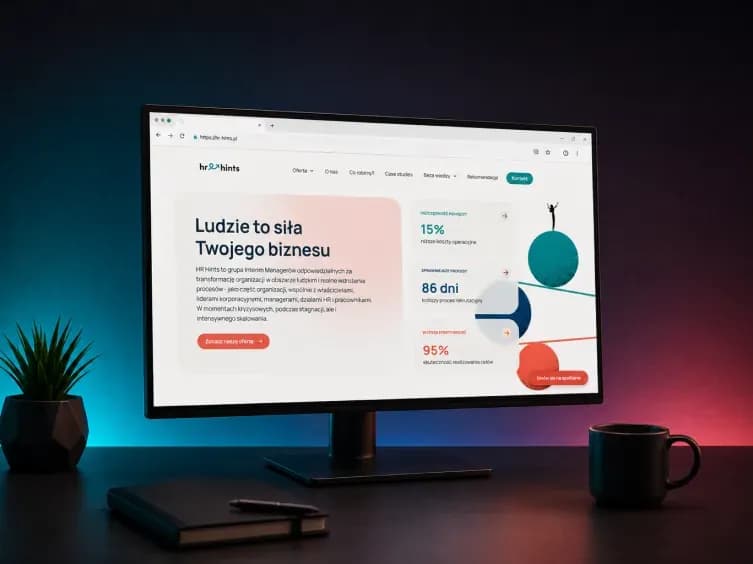
A Webflow redesign with a CMS – a website the team runs on its own
Client: HR Hints
Industry: HR / HRTech
For recruitment agencies, HRTech startups and HR departments, we design software that supports recruitment, onboarding and employee services. We bring processes scattered across systems, spreadsheets and email together into one solution that fits the way your team works.
Our clients in HR

As a company grows, standard HR tools don't always keep up with its processes. Extra spreadsheets, manual tasks, separate forms and information stored in several places start to pile up.
We design custom HR systems and develop and integrate existing ones. They can cover recruitment, onboarding, document workflows, employee requests, training or communication with candidates. You don't always need to build an entire system from scratch. Sometimes the best solution is an additional module or an integration that complements the tools the team already uses.Off-the-shelf tools assume one universal recruitment process. But an agency works differently from an HR department in a manufacturing company, and recruiting IT specialists works differently from high-volume hiring. When a company starts running the process alongside the tool — in spreadsheets and emails — that's a sign the tool has lost. So we start building a custom system by mapping the process as it really is, exceptions included — and only then do we design the interface.
An HR company's external visibility is a separate thread: a consultancy's or agency's website has to be updatable without a developer, because the offer and content change week to week. That's how we rebuilt the website of an HR consultancy — on tools the team runs on its own. The second stream is documents: contracts, annexes, consents, medical checks, health and safety training. Paper-based workflows end in binders and the question "did that definitely come back signed?" A digital workflow with e-signatures and automatic reminders takes the most mechanical part of the work off the HR team — and gives employees one place where they can see everything that concerns them.
An internal tool has no marketing to make people use it — either it's more convenient than a spreadsheet, or it dies. The interface isn't cosmetic here: what counts is the number of clicks in tasks repeated every day, sensible defaults and a system that suggests the next step. We handle this part of the work as part of UX/UI design, testing with the people who will actually use the tool.
Client: HR Hints
Industry: HR / HRTech
„Automating schedules and budget management has genuinely made our marketing more efficient — the system made that possible. The team knows the technologies they work with inside out and gives good advice.”
Michał Słotwiński — Head of Customer Success, Semcore
Review from ClutchThe basics
HRTech covers recruitment, onboarding, time tracking, leave requests, performance reviews and training. Automation pays off quickly here, because much of the work is about document workflows and keeping track of deadlines. The most time is usually saved in three areas: leave requests with an automatic approval workflow, onboarding new hires with a checklist instead of relying on a manager's memory, and one place with up-to-date employee data.
Technology should take administrative work off the team's plate, but not replace decisions that require human judgment — such as development conversations or choosing a candidate.
How we work
First, we map the process together with the people who actually use it. We look at where data is retyped by hand, where delays happen and which tasks take up most of the team's time. Then we define the scope of the first rollout. Instead of digitizing all of HR at once, it's often better to start with one high-impact process — such as recruitment, onboarding or request workflows.
On your side are the rules (who approves and in what order), employee data and decisions about who can see what. On our side are implementation, payroll and HR system integrations, and training.
The timeline depends above all on the number of exceptions. A company with a single approval pattern can roll out quickly; a company where every department has its own rules first has to decide which of them stay.
Decisions
How many exceptions you carry over. Every exception in the approval workflow is a separate path to build and maintain. Rolling out a system is often the best opportunity to ask whether they're all still needed.
Who can see employee data. The manager, HR and the employee themselves — three different scopes. Excessive visibility in HR has consequences that other systems don't.
Whether data flows to payroll and HR records automatically. If not, someone will be retyping it — and then some of the benefit disappears. It's an integration worth settling at the start, because it depends on what the HR system exposes.
What not to do. Don't automate performance reviews in the hope that they'll replace a conversation. Don't collect data "for the future". And don't implement an approval workflow nobody follows in practice — this is a chance to simplify it, not set it in stone.
Scope
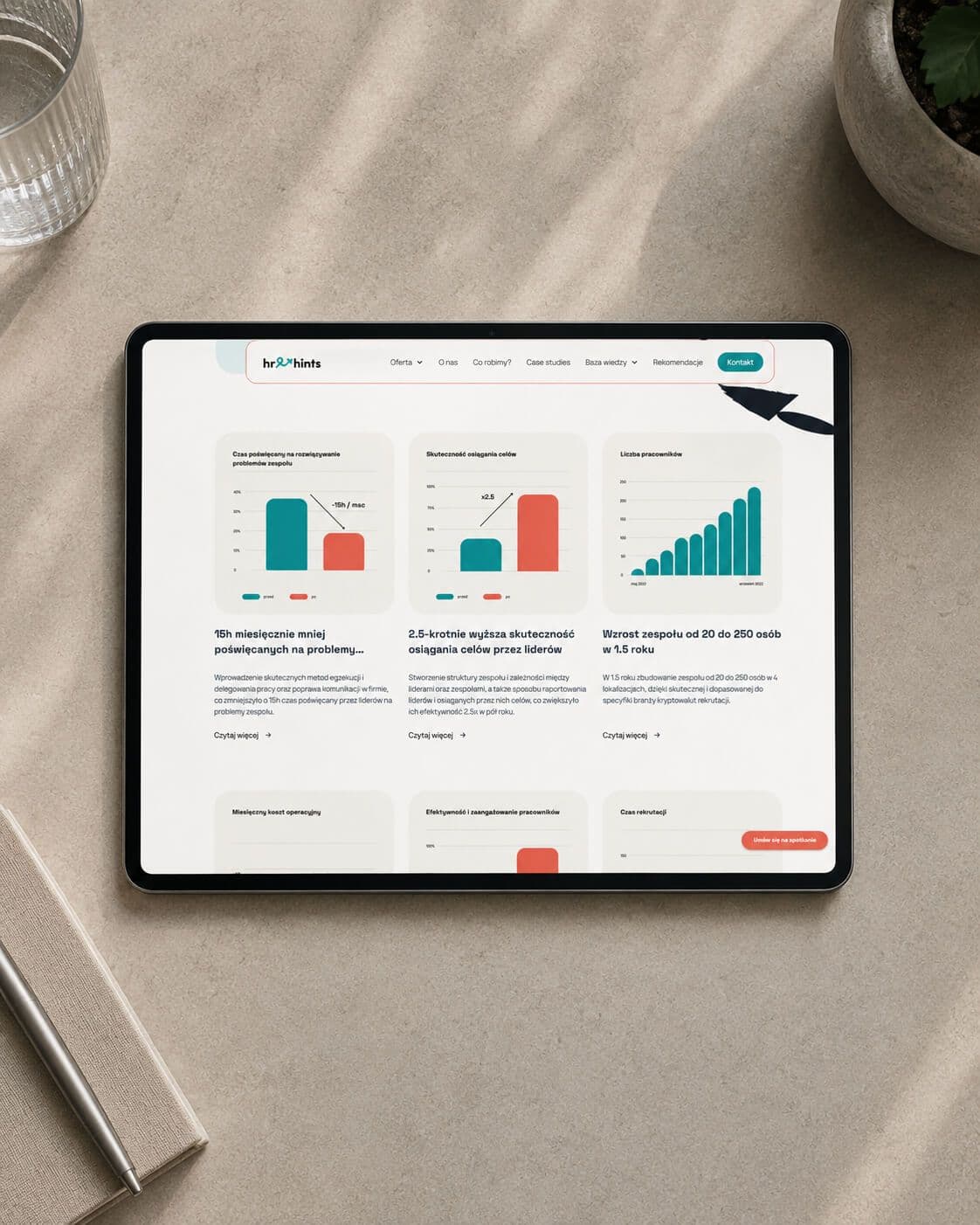
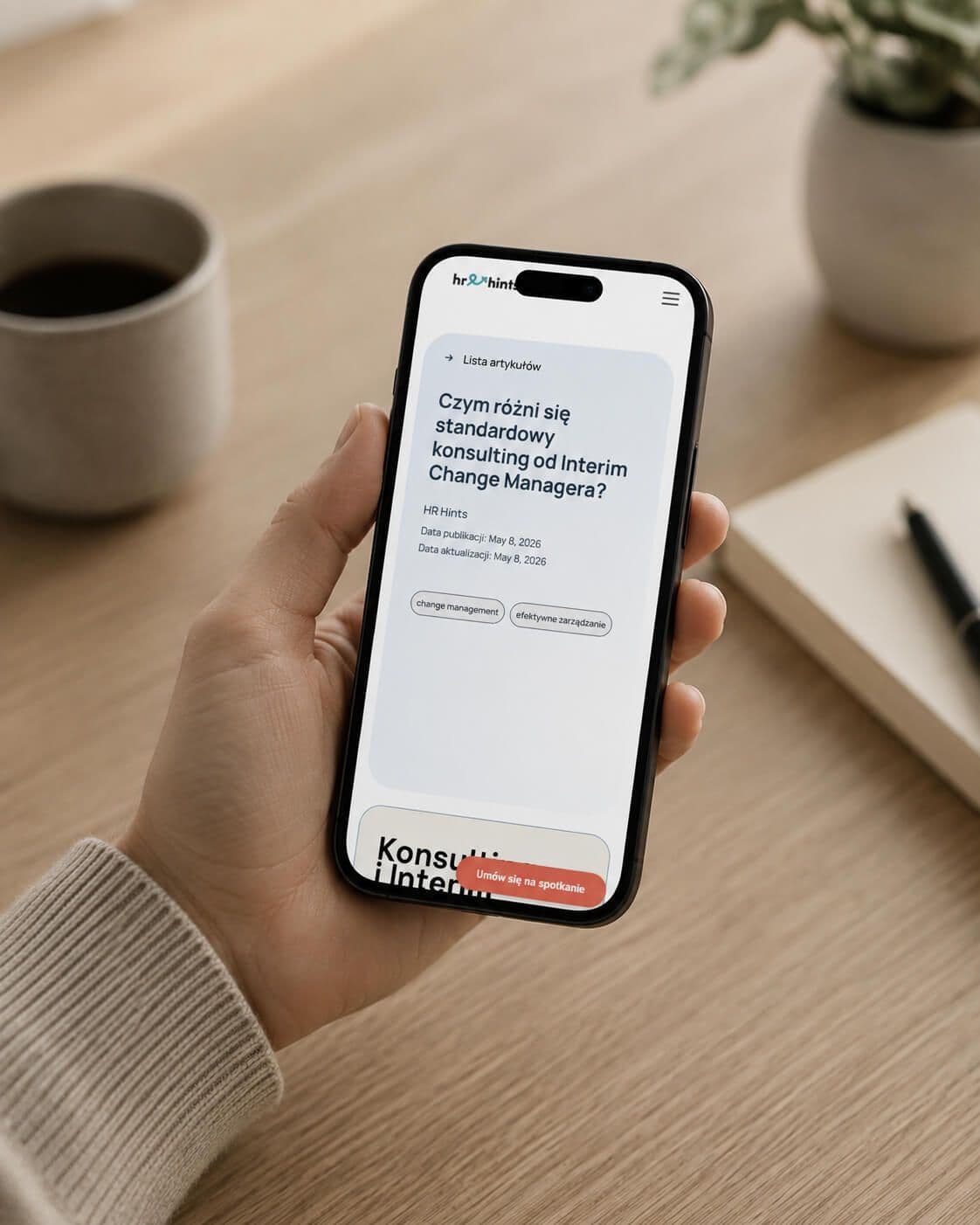
For HR Hints, we designed and launched a new Webflow website with a CMS, which lets the team publish and update content on its own without involving a developer.
In HR and HRTech projects, we work both on solutions for candidates and employees and on internal tools that make HR teams' everyday work easier.What we build
We design and develop:
In recruitment, a simple application path is especially important. Candidates should be able to find the right job quickly, submit the required information and know what will happen at the next stages of the process.
Candidate data
HR systems process data that requires special care, so we build security and access rules in from the design stage. Depending on the process, the solution can support different permission levels, an audit history, data retention rules, a consent register and automatic actions based on the organization's policy, among other things.
FAQ

We design and develop digital solutions for financial services, insurance and lending companies and FinTech startups. We build online application forms, calculators, customer portals and custom systems, combining good UX with data security and a reliable architecture. We simplify processes that should feel simple to the user — even when complex rules, integrations and business requirements are running underneath.

For developers, real estate agencies, rental operators and PropTech companies, we build systems that bring order to sales, rentals and property data. We build custom CRMs, listing portals, booking systems, customer portals and analytics tools, among other things - integrated with the solutions your team already uses.

In construction and ConTech, we work with contractors, developers and design firms. We build construction project databases, job management systems and websites that bring order to B2B communication. Digitization arrives later here than elsewhere, so the starting point is often replacing paper and spreadsheets with one coherent system with a change history.

We build e-learning platforms and LMS systems for EdTech startups, universities, training companies and language schools. Here, success is measured by completed courses, not by the length of the feature list — so we start with the learner's journey: the first visit, visible progress and getting back to learning that was interrupted two weeks ago. Payments, group licenses and reports all serve that one goal.

We design websites and custom software for law firms, in-house legal departments and LegalTech companies. We build calculators, qualifying forms, document workflow systems and solutions that make case handling more efficient, among other things. We automate repetitive processes and leave legal judgment to the lawyer.

We work with parts manufacturers and distributors and automotive brands that sell online. We build stores and catalogs where customers get to the right part - by make, model and engine version, by OE number or by replacement. We make sure that expanding into new markets means configuring the existing platform, not building another store from scratch.