

- CLIENT:
- SAO
- INDUSTRY:
- Construction / ConTech
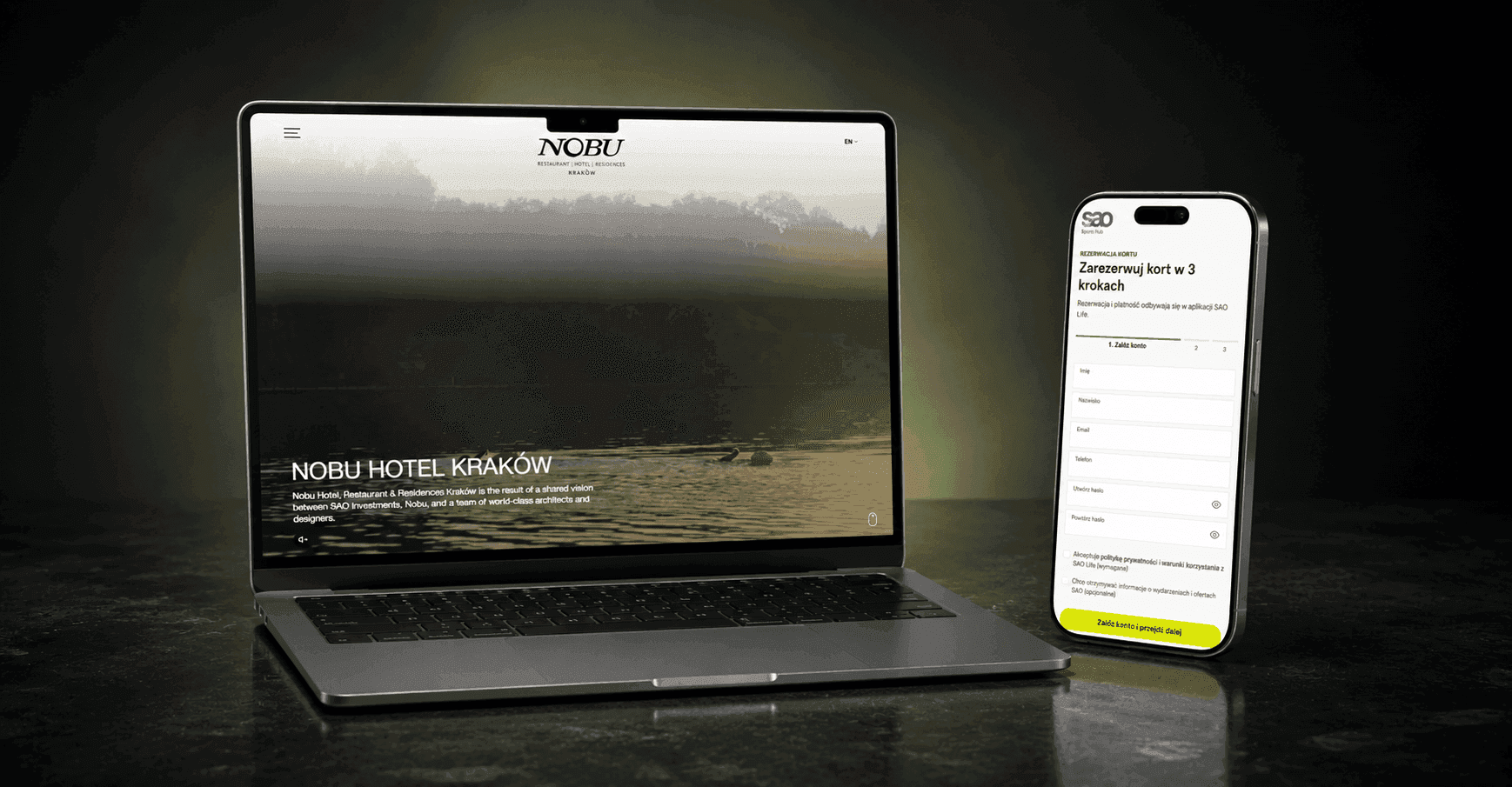
From the Nobu hotel to a sports club – five SAO group websites on a shared architecture
Project summary
- CLIENT
- SAO
- TEAM
- Front-end Developer
- Back-end Developer
- UX/UI Designer
- Project Manager
- Marketing Specialist
- Tester
Results
Pages assembled from ready-made blocks
a dozen or so reusable section components
Five websites in one panel
a single CMS handles all of the group's communication
Ready for multiple languages
multilingual support built into the architecture from day one
Introduction
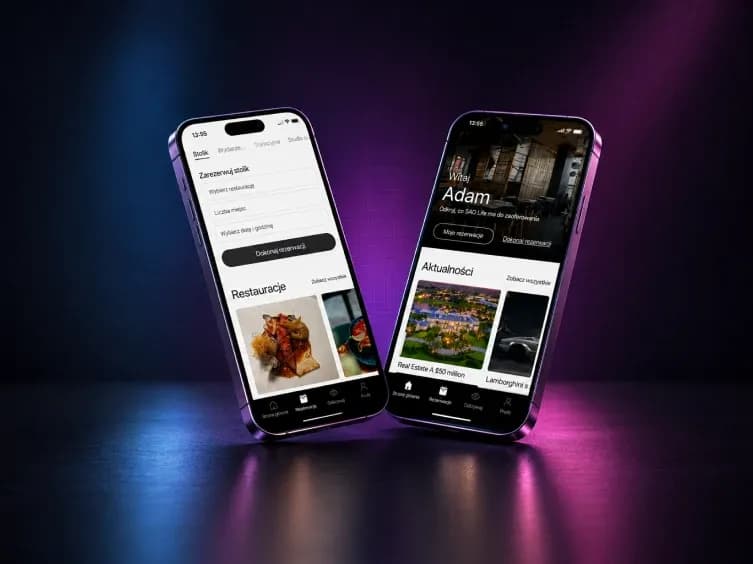
SAO Investments is a Kraków-based developer and investor that has been active in the premium real estate market for more than twenty years. Our collaboration began earlier with the SAO Life mobile and web app. The SAO group runs several brands and projects across different areas - from investment and real estate, through hospitality and culture, to sports and lifestyle. Each needs its own messaging, visual identity and independent website. At the same time, building a separate CMS and a separate way of managing content for every new brand would mean duplicated solutions, higher maintenance costs and more complicated work for the client's team.
That is why we created one central Strapi-based environment for managing five independent websites.
CHALLENGE
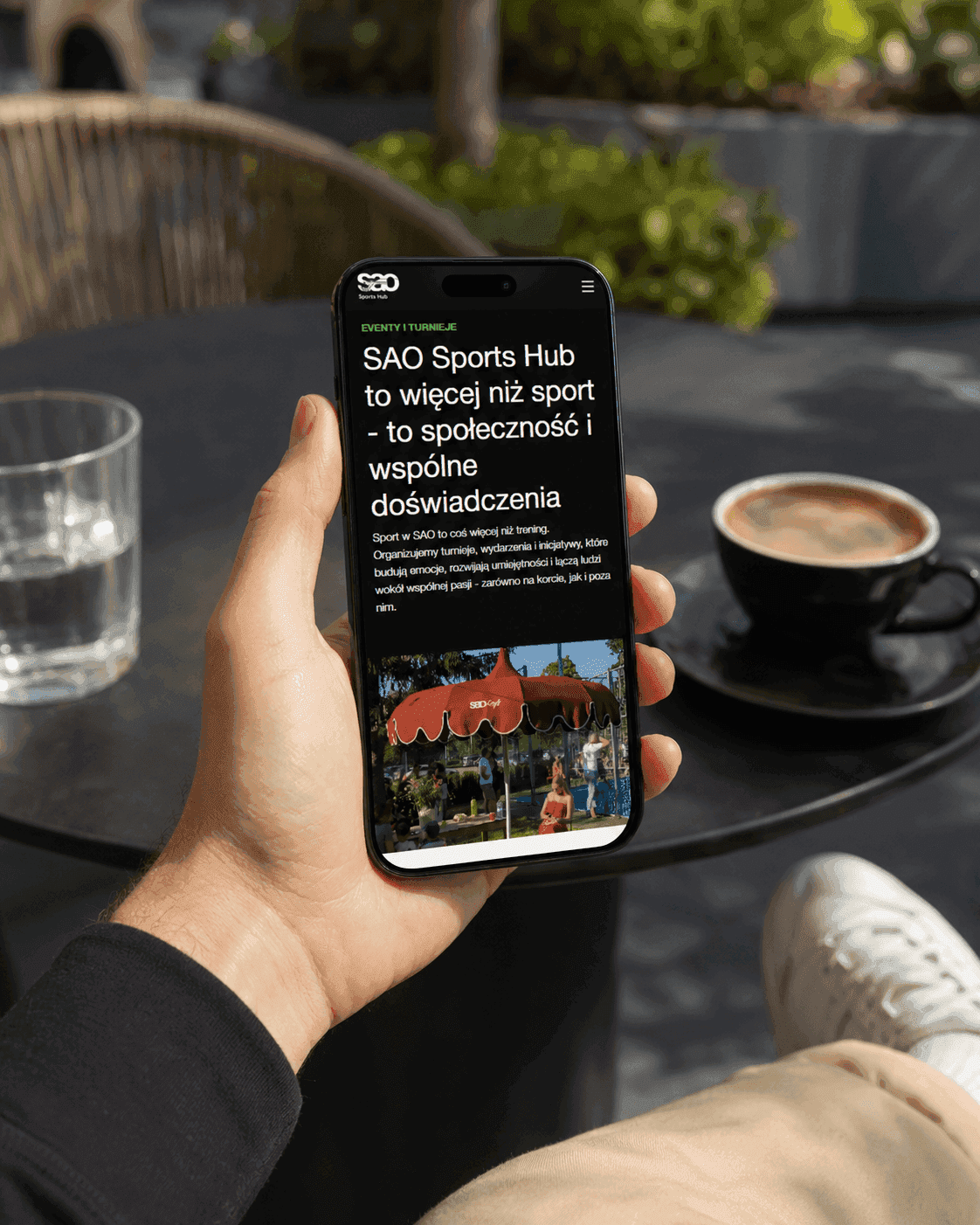
SAO is not a single brand with a single website. It is a growing ecosystem of projects aimed at different audiences and serving different business goals. The websites differ in information structure, visual identity, the type of content they publish and the features they need. Yet all of them have to be easy for one team to manage day to day.
So the challenge was not just to build several independent websites, but to design a system that would:
- make it possible to manage five websites from one place,
- preserve each brand's visual and functional independence,
- let the team create and edit pages on its own,
- reduce the need to involve developers for content changes,
- allow proven elements to be reused,
- be ready for the SAO ecosystem to keep growing.
We didn't want to build five identical sites from one template. Our aim was a shared technology foundation that still lets each brand keep its own character.
SOLUTION
We built a multisite architecture that serves multiple domains and is powered by a single headless CMS in Strapi.
- Frontend - Next.js with the App Router and React.js, a visual layer built with Tailwind CSS and icons from lucide-react.
- Backend and CMS - The backend is Strapi headless CMS, which holds the content of all the group's websites.
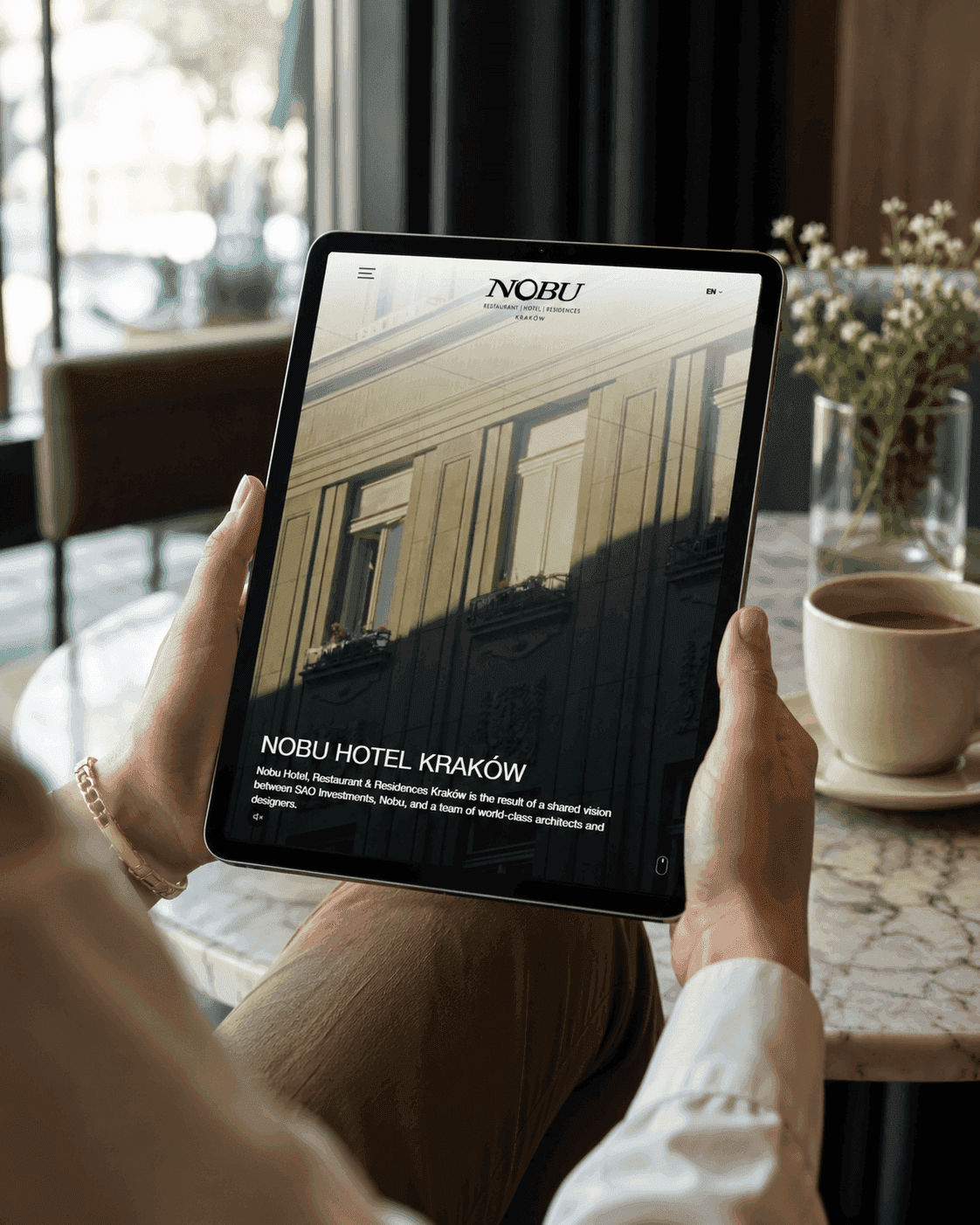
- Multilingual support - Routing has supported language versions from day one. The Nobu website, which runs in English and Polish, already uses it, and the mechanism is ready for every new domain.
- Analytics - We connected the commercial websites to Google Tag Manager, GA4 and Microsoft Clarity, each with its own IDs.
- Component library - Pages are not rigid templates with fields to fill in. In Strapi, we prepared a library of ready-made sections that the client uses like building blocks to assemble pages in any order.
KEY FEATURES
- Multisite architecture - one Next.js application serving many domains and brands. Adding another group website means connecting a domain and adding content, with no separate deployment.
- One Strapi panel for the whole group - five websites managed from one place, by one team, with one set of permissions.
- A component library instead of rigid templates - a dozen or so ready-made section types the client uses to build any page and arrange in any order. The same set of blocks powers every website in the group.
- Contact and sign-up forms - a consistent form component that works across all domains.
- A shared media library - photos and videos uploaded once and used on any of the group's websites.
- Multilingual readiness - routing that supports language versions on every domain, currently used by Nobu Kraków.
RESULTS
- Efficient management of five independent websites from a single, central CMS.
- More flexibility in creating and developing pages thanks to a library of reusable components in Strapi.
- Less time needed to publish changes and new content, without involving the development team.
- Each brand keeps its own character while sharing a common technology foundation.
- A scalable architecture that allows more websites and features to be added within one ecosystem.
SUMMARY
For SAO, the point was not to build several websites as separate projects. This project is the next stage of our collaboration with the brand. After launching SAO Life, we extended SAO's digital ecosystem with a shared backend for managing its websites. The aim was to design a system that lets the client manage a growing portfolio of brands in a consistent, convenient and scalable way. So we built a central Strapi CMS that serves five websites and prepared a component library that makes it possible to assemble and develop pages without coding every view from scratch.
The SAO team now has one place to manage the entire ecosystem, without limiting the individual character of each brand. This approach combines two things that often pull in opposite directions: centralized management and the freedom to create independent digital experiences.
As a result, new websites and pages don't require building the technology foundation from scratch. They are built on a foundation that can grow along with SAO's portfolio.
Technologies used
- FRONTEND
one application serving multiple domains, with server-side rendering and fast page loads
- FRONTEND
building the interface and section components used across all websites
- FRONTEND
a consistent visual layer and fast view building
- BACKEND
headless CMS managing the content of all five group websites from one panel
Similar case studies
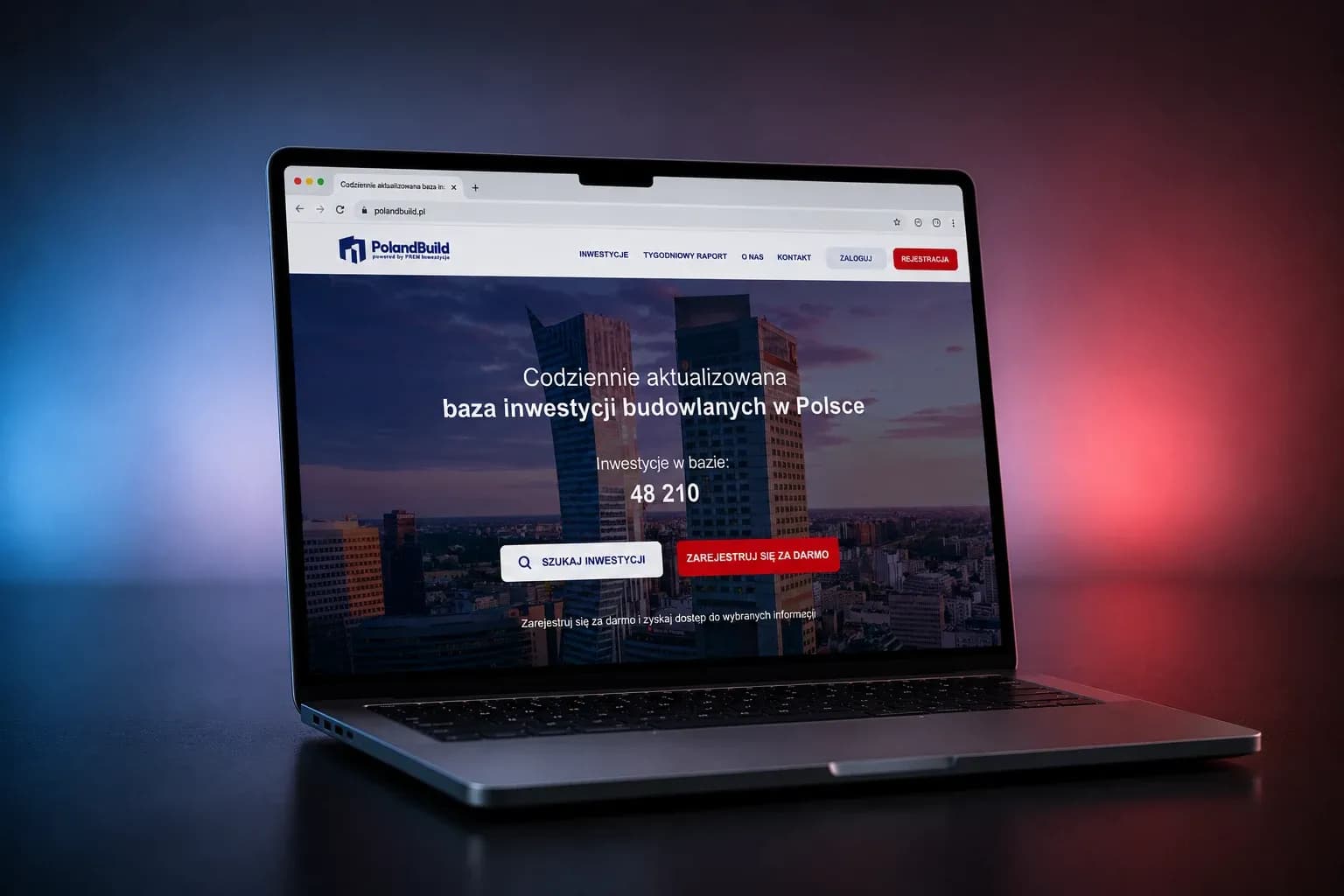
A subscription-based database of 40,000 construction projects
Client: PolandBuild
Industry: Construction / ConTech