




























PIM
We design and implement PIM systems that bring descriptions, attributes, variants, images and translations together in one place. We integrate them with ERP systems, online stores and marketplaces, so data can be updated once and used across many sales channels.
Companies that trusted us
The basics
When is it worth implementing a PIM system?
PIM (Product Information Management) is a system for managing product information centrally. It brings names, descriptions, specifications, images, translations, variants and category assignments together in one place, then makes them available to stores, marketplaces, catalogs and other channels. It's worth considering a PIM when data on the same products is spread across many files and systems, updating it takes more and more time, or different sales channels start showing different versions of the same information.
With a small catalog, one sales channel and one language, a separate PIM system often isn't necessary. As the number of products, markets, data sources and people working on the offer grows, it quickly becomes more important.
See the PIM projects we delivered for clients
„We were impressed by their experience and commitment. At every stage of the project, the team was ready to answer all of our questions and suggest valuable solutions.”
Tomasz Szpin — Director, GlobalParts-UK Limited
Review from Clutch
How we work
What implementation looks like and where the data comes from
The first stage is the data model: which attributes a product has, which are common to all products and which depend on the category. This is work with the people responsible for the product range, not with developers — and it's what decides whether the PIM will be useful. Then comes importing data from current sources, setting up the editorial workflow (who fills in data, who approves it, what blocks publication) and connecting the output channels. Each channel has different requirements for format and set of fields — mapping these differences is a separate, concrete stage.
On your side are your current data in whatever form, the decision on the category structure and naming the person responsible for completeness. On our side are the model, implementation, imports and channel integrations.
What affects the timeline most isn't the number of products, but the number of attributes and how inconsistent the current data is. Ten thousand products described the same way are easier than a thousand described in five different ways.
Decisions
Decisions that determine whether your data actually gets organized
Who owns completeness. A PIM shows what's missing — but it won't fill it in on its own. Without one person responsible for making sure products don't go on sale incomplete, the system becomes just another place full of gaps.
Which field is the source of truth. If the price lives in the ERP, the PIM should pull it from there, not store its own version. Settling this for every attribute looks like a formality, but it's what separates order from a third copy of the data.
How many attributes at the start. A model with two hundred fields looks complete and is impossible to fill in. It's better to start with the ones that actually go to sales channels and add more as needed.
What not to do. Don't import data without reviewing it — the PIM will lock in the mess instead of cleaning it up. Don't build separate category structures for each channel. And don't treat the PIM as an image store; it's a data system, and a media library has different requirements.
Scope
An off-the-shelf system or a custom solution
We start implementation with an audit of where the data comes from today: the ERP, spreadsheets, supplier catalogs, descriptions written by hand by the sales team. Only then do we choose the tool — because the most common reason PIM implementations fail is a model dreamed up at a desk that half the product range doesn't fit into.
Off-the-shelf PIM systems assume a certain way of describing products. If your range fits that, they're faster and cheaper to implement. A custom solution makes sense when the data model is unusual — complex variants, configurable products, dependencies between SKUs — or when the PIM needs to be part of a larger system rather than a standalone tool.
Data quality
Data quality and completeness control
A PIM lets you define mandatory attributes for each category, validate their values and check that product pages are complete before publishing. In large catalogs, the system automatically flags gaps and errors, so the team deals with exceptions instead of checking every product by hand.
We can also automate importing data from suppliers and map different formats to a shared product information model.
Channels
Data tailored to every sales channel
An online store, a marketplace, a B2B catalog or printed materials may each need different information and formats. A PIM lets you manage them centrally and then send the right set of data to each channel.
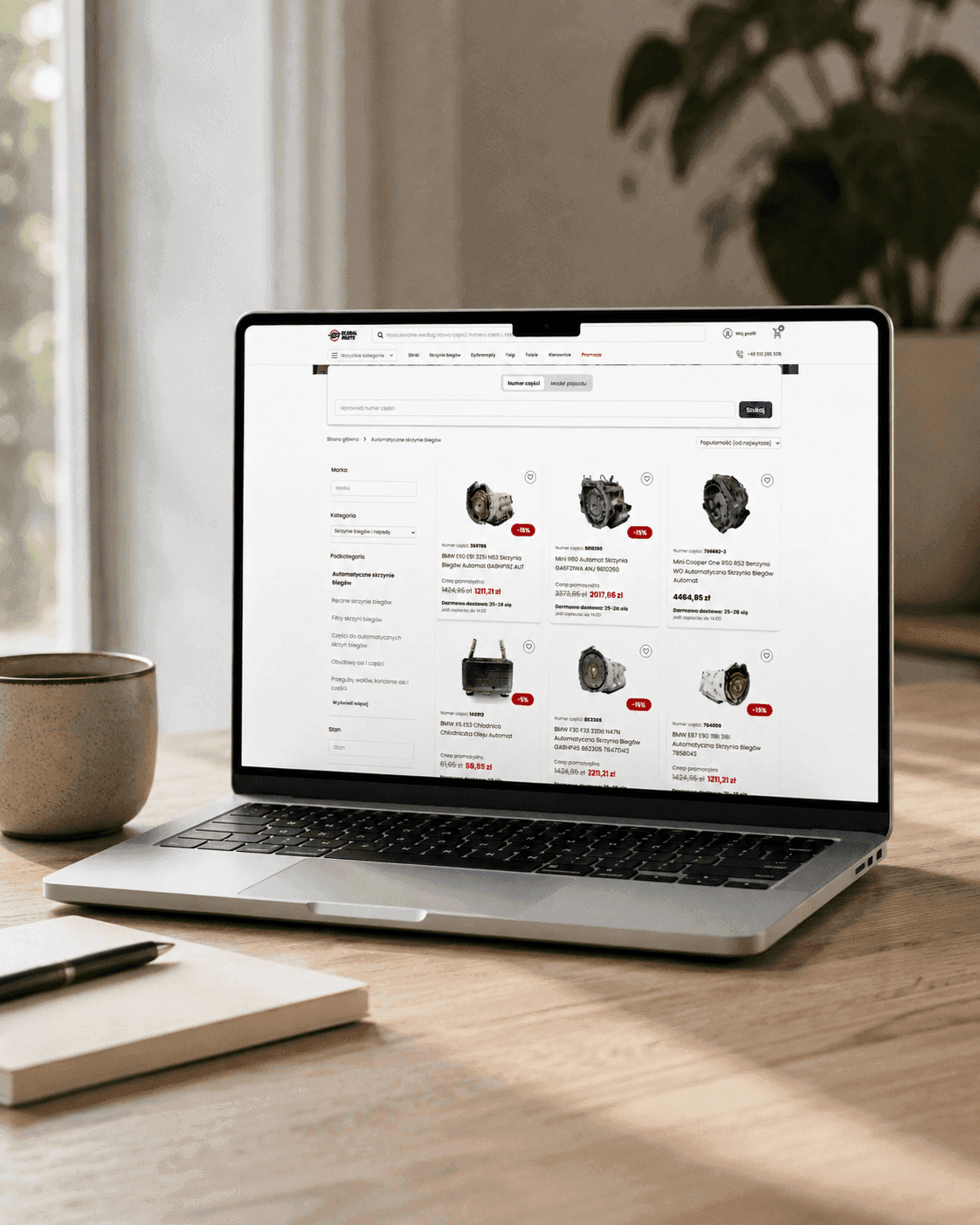
When selling internationally, the same system can also manage language versions and market-specific information — without creating more copies of files. Selling in 9 markets, as Global Parts does, also means language and currency versions kept in the data, not in copies of files.

FAQ
Questions we hear before a PIM implementation
- PIM (Product Information Management) is a system for centrally managing product information. It lets you collect, complete, organize and publish product data across multiple sales channels from one place.
- PIM is worth considering when a company manages a large or complex catalog, sells across multiple channels or markets, or uses multiple data sources. A common signal is when updating products in spreadsheets and different systems starts taking a lot of time and causing errors.
- ERP primarily manages the company's operational processes — pricing, inventory levels, orders and accounting, for example. PIM focuses on the information that describes a product and prepares it for use across sales channels. Both systems can be integrated with each other.
- PIM can be connected with ERP, an online store, marketplaces, supplier systems, databases and other tools used in the business. The scope of integration is matched to the existing ecosystem and product management process.
- The cost depends on the project scope, the structure and quality of existing data, the number of integrations, sales channels and the processes and automations required. A specific quote is possible after we understand the current product information management setup.
- The timeline depends mainly on the complexity of the catalog, data quality, the number of sources and the integrations involved. Before starting work we analyze these elements and use them to define the scope and implementation plan.
- We match it to the data model. An off-the-shelf PIM assumes a certain way of describing products — if the range fits within it, implementation is faster and cheaper. We choose a custom solution for unusual data models — complex variants, configurable products, dependencies between items — or when the PIM needs to be part of a larger system.
- Every supplier sends something different: a spreadsheet, an XML file, a feed, sometimes a PDF. We build the mapping from the supplier's format to your data model once, and subsequent deliveries are processed automatically, with a report showing what couldn't be matched. Separately we handle duplicate detection and the situation where two suppliers describe the same product differently.