

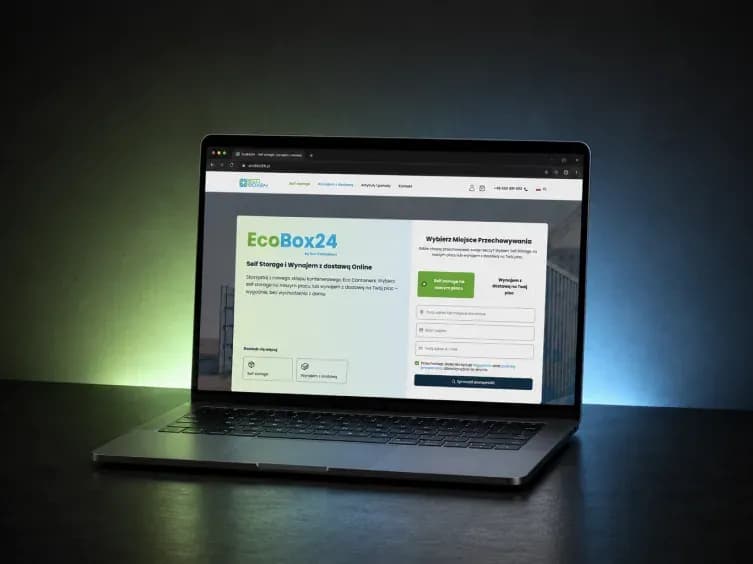
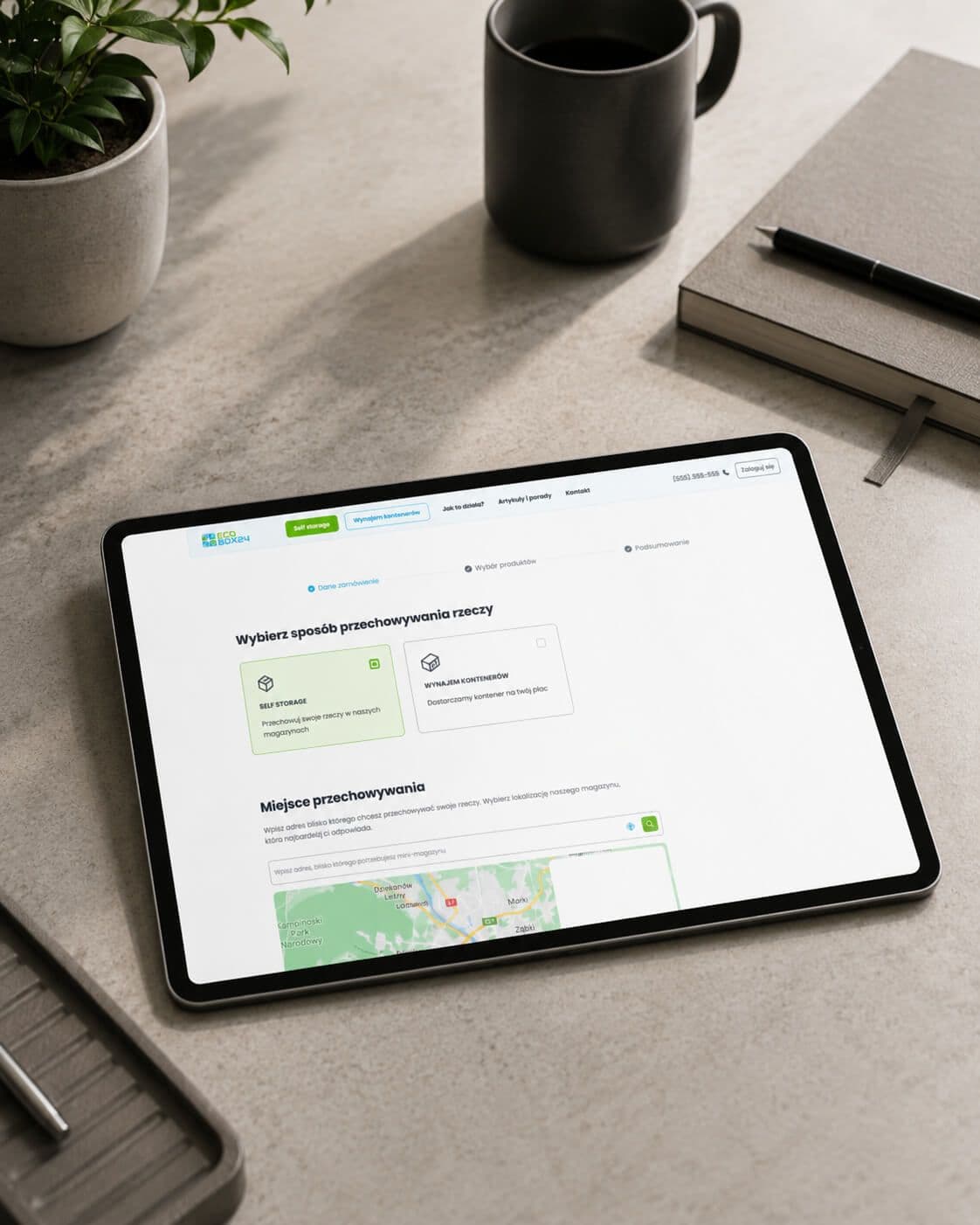
Renting storage in minutes instead of days – automated contracts and payments
Client: Balticon S.A.
Industry: Logistics / LogTech
We streamline and digitize processes that currently rely on Excel, email, paper documents and retyping data by hand. We automate the flow of documents, payments and information, integrate existing systems and build custom applications where they're truly needed. We start by analyzing processes, so we can first roll out the changes that take the most load off your team and deliver the fastest business results.
Companies that trusted us
























The basics
Digital transformation means replacing processes that rely on people's memory, spreadsheets and email with ones that have a single source of data and run on their own wherever no human decision is needed. The term is broad, but the substance is narrow: the same work should take less time and be repeatable without depending on a particular person. It's easier to recognize when it's needed than to define it:
It's worth saying straight away what digital transformation isn't: buying a system. A tool rolled out on top of a disorganized process gives you the same mess, only more expensive and harder to change. The order is the reverse — first understand and simplify the process, and only then automate it.
Client: Balticon S.A.
Industry: Logistics / LogTech
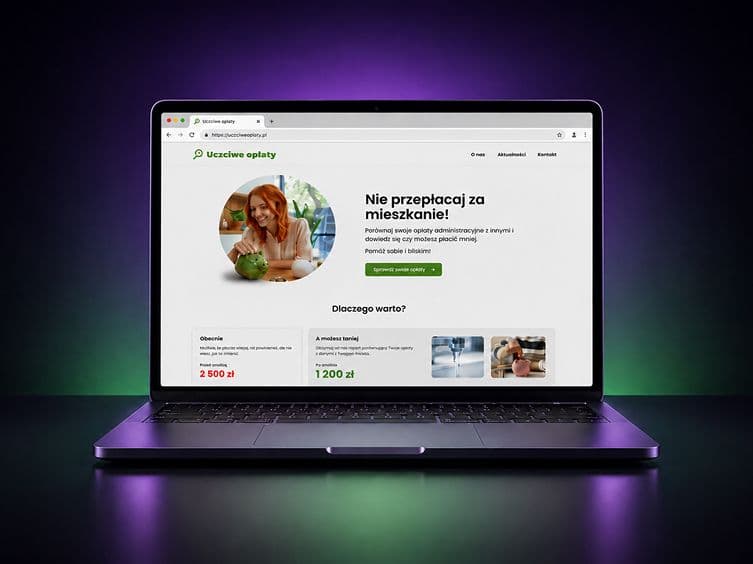
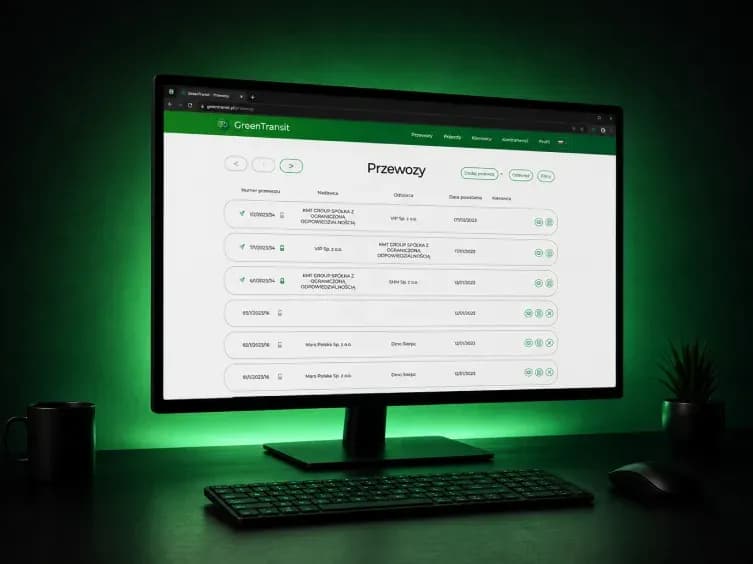
Client: Green Transit
Industry: Logistics / LogTech
„Our product works brilliantly and meets all our requirements. Analyses are now produced faster and more accurately. What impressed us most was the team's knowledge of designing and building applications.”
Michał Szpin — CEO, Pure Alpha Investments
Review from Clutch
How we work
We start by mapping how work really gets done — with the people who do it, not from a description in the rulebook. This produces a list of places where data is retyped by hand, where people wait for someone's decision or repeat the same task. We add an estimated time to each one: that's the basis for choosing what to do first. Then we pick one process — the one with the best ratio of time saved to difficulty — and see it through to the end. The first rollout should show results within a few weeks, not after a year. Only then do we plan the next ones, because the conversation about priorities is then based on results rather than promises.
We choose tools to fit the task: sometimes it's integrating existing systems, sometimes an off-the-shelf automation tool, sometimes a custom application. On your side, we need the involvement of the people who carry out the process and a decision-maker who can settle disputed points. On our side are the map, the recommendations, the rollout and training.
The timeline depends on the number of processes, how ready the organization is to change its habits and whether the systems that need connecting can be connected at all.
Decisions
Where to start. Not with the most important process, but with one that delivers a visible result quickly and involves people who are willing to change. The first rollout either builds trust in everything that follows or destroys it.
Automate, or simplify first. An automated bad process is worse than a manual bad process, because it's faster and harder to change. Before we connect anything, it's worth checking whether half the steps are still needed at all.
An off-the-shelf tool or your own solution. Off-the-shelf wins when the process is typical — and then adapt the process to the tool, not the other way around, because modifying an off-the-shelf system is the most expensive route possible. A custom solution makes sense where the process is your competitive advantage.
What not to do. Don't start by buying a system. Don't automate a process nobody can describe. And don't leave out the people who carry it out — a rollout decided over their heads comes back as a parallel workflow in a spreadsheet.
Scope
The scope varies, but similar patterns keep coming up:
Each of these elements can be implemented on its own, and that's usually exactly what we do.
Digitized processes get a foundation that can be maintained for years: applications in Next.js and Node.js on PostgreSQL — technologies with a large pool of specialists and no dependence on anything exotic.
Systems
Not every process requires building a new system. Often the biggest impact comes from connecting the tools the company already uses — ERP, CRM, PIM, a booking system, accounting or other applications. We integrate systems so that data flows between them automatically. Information entered in one place can move on without being retyped, cutting working time and the risk of errors. We plan further integrations and automations by their business impact — starting with those that remove the most manual work or unblock further growth.
People and rollout
Even a technically sound solution won't deliver results if it makes everyday work harder. That's why we involve the people who actually work with the process in the project. We run workshops, test the solution with users and prepare the team for a new way of working. Where needed, we roll out in stages.
We measure the results with concrete indicators, such as process lead time, the number of manual tasks or the number of errors that need to be investigated.We build custom software for logistics, transport and freight forwarding companies and warehouse operators.
Logistics / LogTech ↗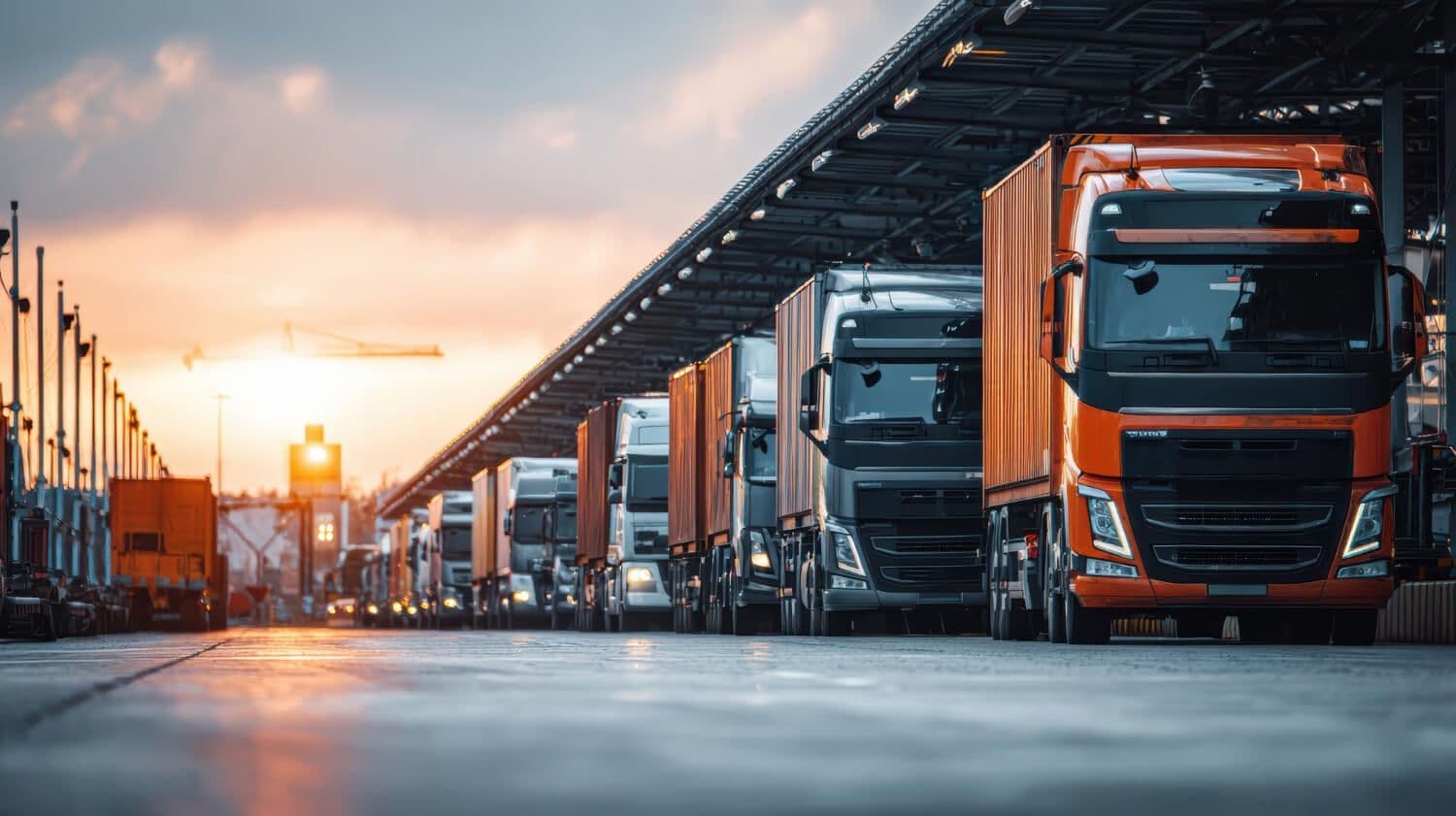
FAQ

We design and build custom web applications - from an MVP that lets you quickly validate an idea to large platforms and systems developed over years. We build both the front end and the backend, APIs, databases, admin panels and integrations with external systems. We work with Next.js, React, Node.js, NestJS, Python, PostgreSQL and MongoDB, among others. We create solutions tailored to a specific business process: SaaS applications, internal systems, sales platforms, websites, marketplaces and CMS systems.
Learn moreWe design UX/UI for web and mobile applications and B2B systems - from analyzing user needs and early wireframes to the finished interface and a design system in Figma. We don't design screens in isolation from the product. We look at user journeys, analytics data and technical constraints to create a solution that's easy to use and can be built efficiently. After the product launches, we can come back to heatmaps, session recordings, analytics and user interviews, so that the next changes are driven by data, not assumptions.
Learn moreWe design and build online stores and e-commerce platforms tailored to your sales model and business processes. We work with off-the-shelf solutions as well as headless architecture and custom sales systems. We build e-commerce for B2C and B2B sales, large product catalogs, multiple markets and marketplaces. We integrate stores with ERP, WMS, CRM, PIM, payments and logistics, and design product configurators and custom purchase flows. We also take care of performance, technical SEO and preparing the platform for seasonal traffic peaks.
Learn more